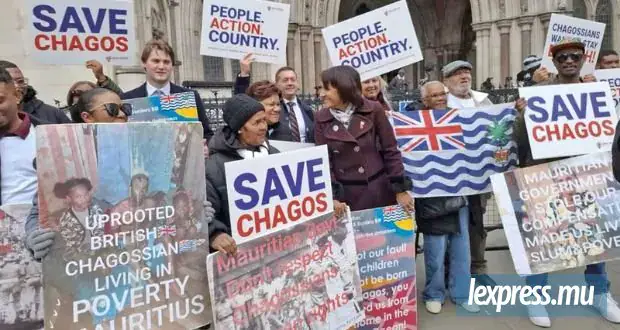
The UK Court of Appeal has rejected appeals from three Chagossians challenging the way the British government negotiated a sovereignty agreement with Mauritius. The court ruled that London was not legally required to re-examine residence restrictions imposed in 2004. This decision marks the second judicial setback for the claimants in eight months. The case involves Bertrice Pompe, Michel Mandarin, and his son Misley, who disputed the process leading to the May 22, 2025 agreement.
The claimants had sought a judicial review, which would have allowed British courts to examine the legality of the government's decision. They argued that London failed to adequately consult Chagossians, acted irrationally, and infringed on their fundamental rights. However, the judge, Stacey, denied them permission on March 10, 2026, citing the government's foreign policy prerogatives. The Court of Appeal's decision, delivered by Lady Justice Andrews, upholds this ruling.
The Chagossians had emphasized the changed circumstances since the 2004 residence restrictions. They argued that the 2025 agreement, which allows Mauritius to implement a resettlement program on certain islands, constitutes a fundamental change. The claimants believed that British authorities should have re-examined the old restrictions before transferring sovereignty. However, Lady Justice Andrews found that this evolution does not establish a legal obligation for London to re-examine the 2004 restrictions.
The court acknowledged the "long and shameful" history of the archipelago, including the forced expulsion of Chagossians to make way for the US and UK military base on Diego Garcia. However, Lady Justice Andrews distinguished this history from the legal issues at hand. She ruled that the appeals primarily contest the process leading to the treaty, an area where courts cannot intervene based solely on disagreement with the government's diplomatic choices.
The decision does not constitute political approval of the agreement between London and Port-Louis or a challenge to Mauritius' claimed sovereignty. The issue of the Chagossians' actual return to their ancestral lands remains intact. The claimants may now pursue their case before the UK's Privy Council.
The British government's handling of the Chagos issue has been criticized for its treatment of the Chagossian people. The 2025 agreement allows for possible resettlement on outer islands, but the UK's position on the matter remains unclear. The Court of Appeal's ruling underscores the challenges faced by the Chagossians in their quest for recognition and repatriation.
The case highlights the complexities of international diplomacy and the limits of judicial intervention. The Chagossians' struggle for justice and recognition continues, with their advocates pushing for a resolution to the long-standing dispute. The UK and Mauritian governments must now navigate the implications of the Court of Appeal's decision.
Key points
- The UK Court of Appeal has rejected Chagossian appeals over the sovereignty agreement with Mauritius.
- The court ruled that London was not legally required to re-examine residence restrictions imposed in 2004.
- The decision marks the second judicial setback for the Chagossian claimants in eight months.