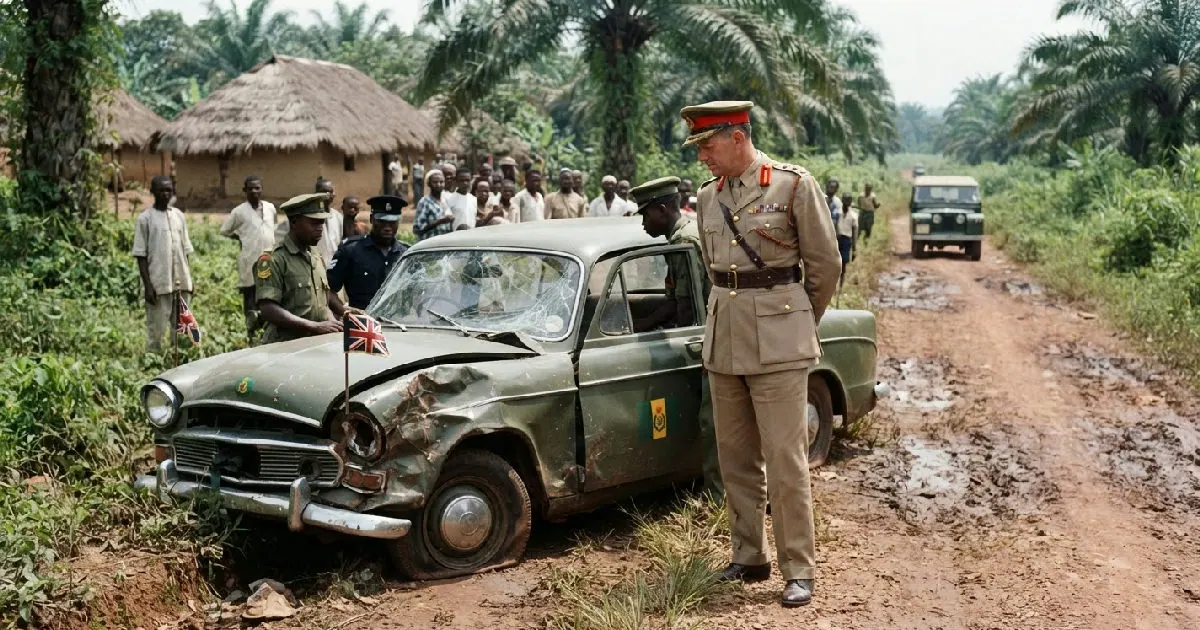
Brigadier Frank Job Goulson, a 48-year-old British officer, died on March 11, 1962, in a road accident between Enugu and Lagos, Nigeria. His death, less than two years after Nigeria's independence, highlighted the lingering influence of colonial powers in the nation's military. Goulson's military career began in 1935, and he served in various parts of the world, including Europe and Asia, during World War II. He was awarded the Distinguished Service Order and was an Officer of the Order of the British Empire.
Nigeria had declared independence on October 1, 1960, but the country's military leadership still relied heavily on British officers. Major-General Norman Leslie Foster, a British officer, continued to serve as General Officer Commanding (GOC) even after independence. Goulson was appointed as interim GOC, bridging the gap between Foster and the incoming Major-General Christopher Earle Welby-Everard. This arrangement underscored the significant presence of British officers in post-independence Nigerian military leadership.
Goulson's fatal journey began on a Sunday, March 11, 1962, as he travelled from Enugu to Lagos, a routine trip connecting two key Nigerian cities. The details of the crash remain largely unpublicised, but his sudden death was a personal tragedy that also reflected the state of Nigeria's military autonomy and its ongoing transition. His death was recorded in the June 1962 edition of The Poacher, the regimental journal of the 2nd East Anglian Regiment.
Goulson's death occurred just weeks before Major-General Christopher Earle Welby-Everard was to assume command in April 1962. Welby-Everard, another British officer, succeeded Goulson in the GOC position, continuing the pattern of British leadership in the Nigerian Army. This progression illustrates the continued involvement of British officers in the leadership of the Nigerian Army during the early independence period.
The circumstances of Goulson's death highlighted an uncomfortable truth: Nigeria, despite its independence, still relied heavily on its former colonisers to lead its most vital defence institution. This period coincided with significant crises in the First Republic, adding to the nation's foundational challenges. His death served as an accidental punctuation mark in Nigeria's journey towards true military independence.
Goulson's story serves as a potent reminder that independence is rarely a clean, immediate break from the past. The infrastructure of power, systems, and personnel of the former colonial ruler can persist for years, even decades. True sovereignty is built brick by painstaking brick, and the echoes of empire can linger in unexpected corners, influencing a nation's trajectory long after the flags have changed.
The legacy of Goulson's service and his untimely death underscores the complexities of Nigeria's transition to independence. The country's military leadership continued to evolve, but the early years of independence were marked by a gradual shift towards indigenous leadership. The story of Brigadier Goulson provides a unique perspective on this period, highlighting the challenges of building a fully indigenous command structure from scratch.
Key points
- British Brigadier Frank Job Goulson's fatal car crash in 1962 exposed Nigeria's ongoing reliance on colonial powers in its military leadership.
- Nigeria's military leadership in the early 1960s was still dominated by British officers, despite the country's independence.
- Goulson's death served as a reminder that true sovereignty is built gradually, and the echoes of empire can linger long after independence.