The Royal Air Force (RAF) of Britain is taking steps to enhance its defenses against drone threats by installing Kevlar nets at its air bases. This move comes in response to Iranian threats targeting British air bases in England and growing European concerns over mysterious drone incursions above airports. The UK Ministry of Defence has announced an additional investment of 470 million pounds to strengthen physical protection, surveillance systems, and counter-drone capabilities.
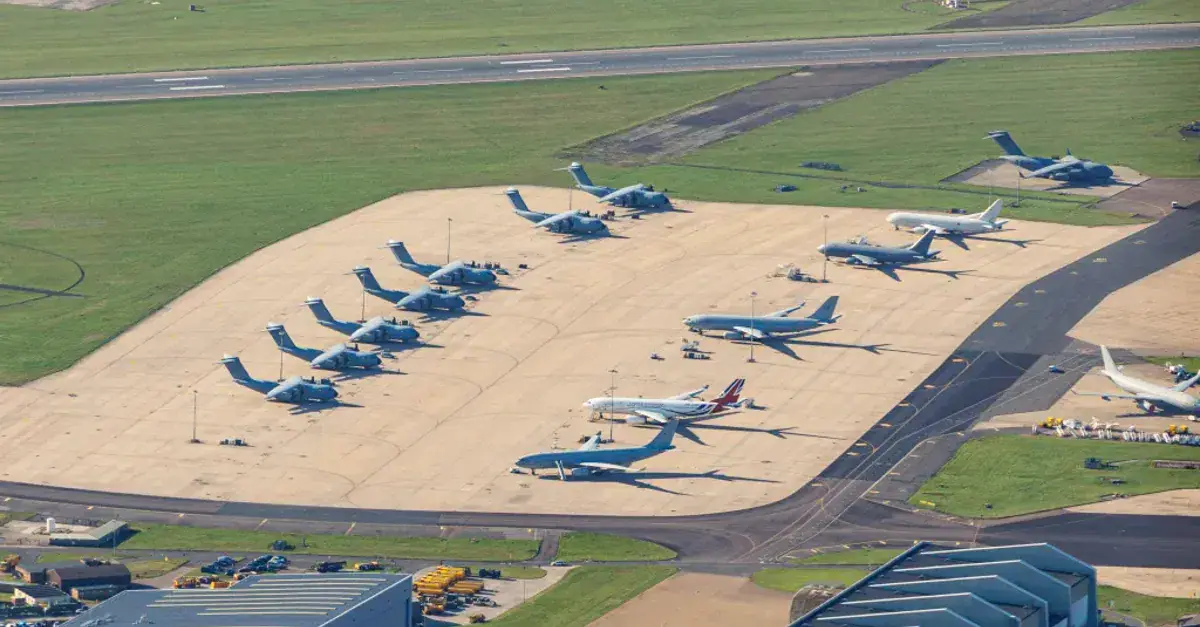
The investment will be used to bolster the security of air bases and equipment, with a focus on protecting fighter jets parked on open runways. Britain's military has already invested 15 million pounds in this area and imposed restrictions on airspace above 44 critical defense sites. Experts note that while Cold War-era bunkers were designed to accommodate small fighter jets at night, larger aircraft and tankers remain vulnerable to drone attacks on open runways.
The use of Kevlar nets, similar to those used in Ukraine, has become a pressing necessity. The RAF's Air Chief Marshal, Sir Harv Smith, has called for drills on dispersing aircraft and deploying them across the country to avoid losing them in a single strike. Recent security incidents at British air bases have raised tensions, including the evacuation of some KC-135 tankers and three CV-22 Osprey aircraft from RAF Lakenheath and RAF Mildenhall in November.
The UK's move to enhance its defenses is part of a broader effort to counter the growing threat of drones. The Pentagon has also accelerated the development of counter-drone defenses, following Ukraine's successful use of "spider web" tactics to destroy at least 10 Russian bombers. The US Air Force has established a joint task force and expanded the use of physical barriers and nets at its bases since January.
The US Air Force has also launched an operation to install protective nets to shield F-35 fighters at Tyndall Air Force Base in Florida. General Kenneth Willsbach, the US Air Force's chief of staff, described the installation of protective nets as an effective and low-cost solution to prevent cheap drones from destroying multi-billion-dollar aircraft.
The RAF's investment in Kevlar nets and other counter-drone measures reflects the growing concern over the vulnerability of air bases to drone attacks. The UK Ministry of Defence has emphasized that the security of its bases, equipment, and personnel is a top priority. The use of Kevlar nets and other defensive measures is seen as a necessary step to protect Britain's military assets.
The development of counter-drone technologies is an ongoing effort, with the US and UK militaries working to stay ahead of the evolving threat. The use of Kevlar nets and other physical barriers is just one aspect of a broader strategy to protect air bases and aircraft from the growing threat of drones.
Key points
- The UK's Royal Air Force is investing $470 million to enhance its defenses against drone threats.
- The investment will be used to install Kevlar nets and strengthen surveillance systems.
- The move is part of a broader effort to counter the growing threat of drones.
Reporting sources
- Al-Qahera News · Al-Qahera News