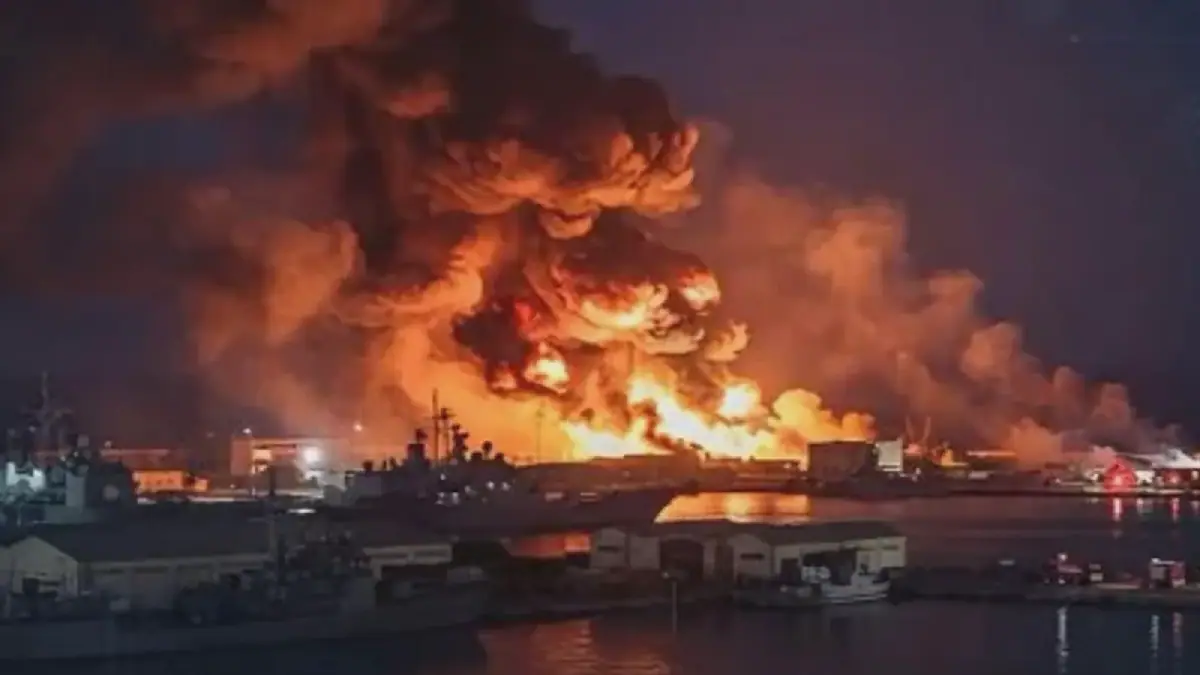
A report by The National, published on November 26, revealed that a drone attack on the Russian warship "MERCURY" inside Benghazi's naval base exposed the extent of the divisions and lack of trust between Libya's eastern and western factions. The attack, which occurred on Sunday, targeted the warship docked in the naval base off the entrance to the port, causing it to capsize and partially sink. A second attack was launched on a Russian cargo ship, "ANGARA", off the coast, before it managed to reach the port while on fire.
The incident drew similar reactions from the rival factions, with the Government of National Unity in Tripoli rejecting the use of Libya as a battleground for international conflicts, warning of the consequences of illegitimate foreign forces. The eastern administration called for a UN investigation, demanding that the UN mission conduct an independent probe, arguing that the incident highlights the need for unified state institutions.
In response to the incident, the House of Representatives launched an initiative to unify institutions and prepare for elections, calling on the High Council of State to form a joint committee within a week. However, analysts have expressed skepticism that this initiative will lead to a significant breakthrough in the political stalemate.
According to Virginia Colomby, a governance professor at the University of Louis Bruma, the convergence of positions on sovereignty does not necessarily translate to a genuine opportunity for reunification. She warned that the attack may harden positions and make it more challenging to reach a political settlement.
Analysts have questioned the likelihood of unifying the military institution, citing the complex relationships between Libya's factions and external actors. The identity of those who carried out the attack remains unclear, with speculation surrounding potential Ukrainian involvement.
The incident has raised concerns about the security situation in Libya, particularly in Benghazi, which has been a stronghold of the eastern faction. The attack has also sparked fears that Libya may become a proxy battleground in the conflict between Russia and Ukraine.
The divisions between Libya's rival factions are fueled by their relationships with external actors, with the eastern faction maintaining close military ties with Russia and the western faction seeking to develop relations with both Russia and Turkey.
Key points
- The drone attack on the Russian warship in Benghazi exposed the deep-seated divisions and lack of trust between Libya's rival eastern and western factions.
- The incident has raised concerns about the security situation in Libya and the potential for the country to become a proxy battleground in the conflict between Russia and Ukraine.
- The rival factions' relationships with external actors, including Russia and Turkey, continue to fuel the divisions and hinder efforts towards reunification.
Reporting sources
- "ذا ناشيونال": ضربة بنغازي تكشف هشاشة الثقة بين طرفي الانقسام الليبي · Libya Al Ahrar TV