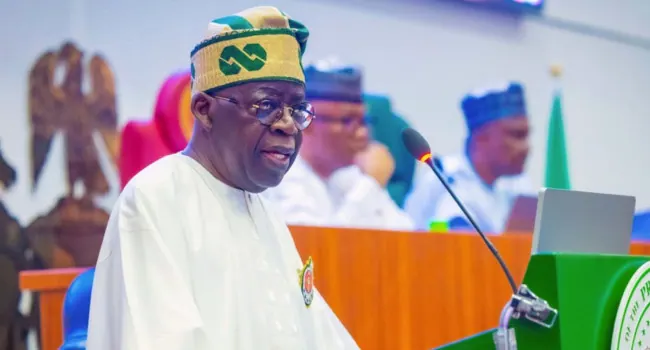
President Bola Ahmed Tinubu has emphasized that bringing down the cost of living remains a top priority for his administration. In his Independence Day address to Nigerians, marking the country's 66th anniversary, Tinubu outlined his vision for economic reform and growth. He acknowledged that Nigeria has faced numerous challenges, including war, military rule, economic crises, insecurity, and political upheaval, but expressed optimism about the country's resilience and potential for growth.
Tinubu reflected on Nigeria's history, recalling that 66 years after the country's flag was first raised, Nigeria remains committed to building a united, strong, and prosperous nation. He paid tribute to various groups, including farmers, traders, teachers, young entrepreneurs, and members of the Armed Forces and security services, who have contributed to the country's stability and development. The President emphasized that Nigeria's founding fathers fought not only for independence but also for the freedom to shape the country's destiny and build a better life for its citizens.
In his address, Tinubu defended the economic reforms implemented by his administration, stating that they were necessary to address longstanding weaknesses in the economy. He argued that the reforms did not create Nigeria's economic problems but rather addressed distortions that had deepened over time. The President used the analogy of a patient with cancer, explaining that difficult treatment was required to address the underlying disease rather than just alleviating its symptoms.
Tinubu emphasized that his administration has chosen to implement painful but necessary reforms, likening it to "excising the cancer" of economic distortions. He resisted calls to abandon the reforms and return to the previous subsidy regime, describing it as an "abuse of addictive subsidies." The President expressed confidence that the economic outlook has improved three and a half years after the reforms began, citing economic growth and contributions from both the oil and non-oil sectors.
According to Tinubu, the government aims to achieve its goals by reducing the cost of producing and moving goods and services across the country. This, he believes, will help bring down the cost of living and improve the standard of living for Nigerians. The President expressed optimism about the country's future, stating that Nigeria has moved from correcting economic distortions to a new phase centered on shared prosperity.
Tinubu highlighted the progress made so far, citing economic growth of more than four percent in 2026 and a substantial decline in oil theft. He attributed these gains to the reforms implemented by his administration and expressed confidence that the country is on the right path. The President emphasized that the government must remain committed to its reform agenda to ensure sustained economic growth and development.
As the country looks to the future, Tinubu reiterated his administration's commitment to delivering on its promise to build a united, strong, and prosperous nation. He emphasized that the government will continue to work towards creating opportunities, dignity, and a better life for all Nigerians. With a renewed focus on shared prosperity, the President expressed optimism that Nigeria will achieve its goals and become a beacon of hope for the region and the world.
Key points
- President Tinubu's administration prioritizes reducing the cost of living by addressing economic distortions and promoting shared prosperity.
- Tinubu defends economic reforms, citing progress in economic growth and decline in oil theft.
- The President emphasizes the need to resist calls to abandon reforms and return to the previous subsidy regime.