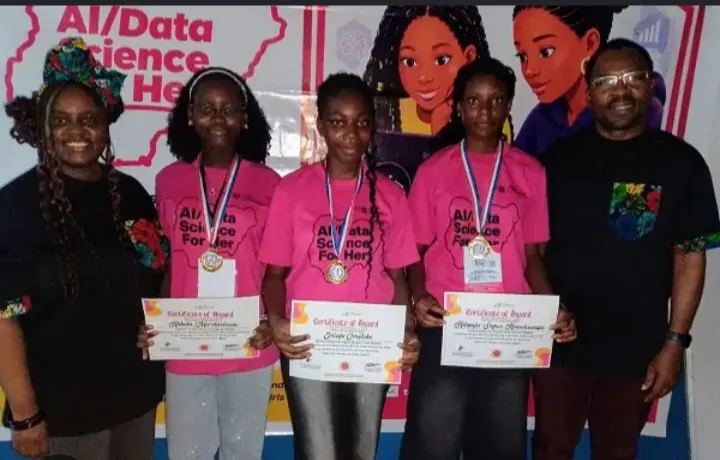
A recent programme in Nigeria aimed to bridge the country's STEM gap by training high school girls in artificial intelligence and data science. The AI/Data Science for Her 2026 programme, organised by Tech Girls Club, took place across six geopolitical zones in Nigeria. Esther Olabiyi, an SS3 student from Ibadan Grammar School, was one of the participants. She gained new skills in programming, Python, and Microsoft Excel within five days. Olabiyi's experience highlights the challenges girls face in accessing technology and the need for practical training.
The programme was supported by a 2026 Bridging the Future grant from the NeurIPS Foundation. The foundation aimed to train 300 Nigerian high-school girls in AI and data science fundamentals. According to Wonderful Osalor, Project Manager of the programme, participants had varying levels of exposure to technology. Some had regular access to computers, while others came from schools without adequate facilities. The programme provided a level playing field for all participants.
The AI/Data Science for Her programme addressed the issue of limited exposure to technology and inadequate infrastructure. Osalor noted that once the girls were given the right knowledge, tools, and opportunities, they could excel in technology and science. The programme's approach focused on practical learning and everyday experiences. Participants began with basic computer operations and progressed to writing Python code within five days.
Despite the programme's success, concerns remain about what participants will return to after the training. Dr Wilson Sakpere, Lead Facilitator and board member of Tech Girls Club, highlighted the need for greater investment in facilities in public schools. He stressed that exposure without continuity could limit the development of lasting skills. Some participants were already asking how they could continue learning programming through mobile applications.
Dr Aderonke Sakpere, Principal Investigator of AI/Data Science for Her, emphasised the need for a change in teaching methods. She advocated for greater emphasis on practical learning and everyday experiences rather than excessive memorisation. Education should connect theoretical concepts with everyday experiences, making it more relatable and accessible to students.
The programme also highlighted the importance of exposing children to STEM at an earlier age. Dr Aderonke Sakpere made exceptions for two younger girls at one centre, and their performance reinforced her belief that concepts could be broken down for younger learners. Extending such programmes to junior secondary and primary school pupils could have a lasting impact on STEM education in Nigeria.
Participants like Grace Sakpere, a Junior Secondary School One student, and Oluwatonilola Oladosu, an SS1 student, demonstrate the programme's potential to inspire and empower young girls. They developed an interest in using technology to solve real-world problems, such as detecting fraudulent messages and calls, and pursuing careers in architecture and engineering.
Key points
- The programme trained 300 Nigerian high-school girls in AI and data science fundamentals.
- Participants gained practical skills in programming, Python, and Microsoft Excel within five days.
- The programme highlighted the need for greater investment in facilities in public schools and a change in teaching methods to promote STEM education.