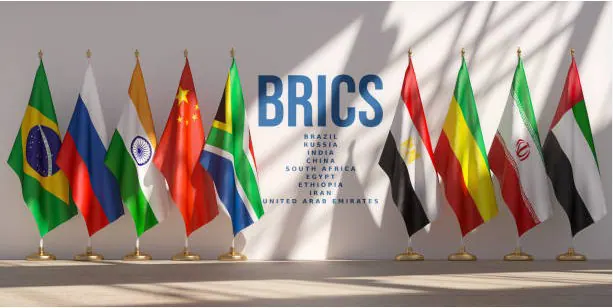
The 18th BRICS Summit held in New Delhi from September 12-13, 2023, brought together the expanded 11-member grouping, producing the New Delhi Declaration. The declaration includes commitments on cross-border payments, local-currency settlements, financial infrastructure, and digital connectivity. The summit's theme, 'Building for Resilience, Innovation, Cooperation and Sustainability,' reflects the growing debate about the future of international payments.
The New Delhi Declaration requires careful interpretation, as claims that BRICS has launched a fully operational replacement for SWIFT or created a common currency go beyond what the document establishes. Instead, BRICS is building foundations for greater diversification in international payments. The key provision is paragraph 90 of the declaration, where leaders acknowledged the work of the BRICS Payment Task Force on practical solutions for cross-border payments.
The task force is studying interoperability between payment and messaging channels and promoting the use of BRICS local currencies for trade and investment settlements. Leaders encouraged continued work towards payment mechanisms that are faster, cheaper, more accessible, efficient, transparent, and secure. International trade depends on much more than currencies, and a Tanzanian importer buying machinery from China or an Indian company paying a UAE supplier needs financial institutions capable of communicating and settling payments.
For decades, the global payment system has operated around the dollar, correspondent banking, and financial infrastructure concentrated in Western markets. BRICS is not currently replacing that system but creating additional channels that could reduce reliance on it where commercial and regulatory conditions allow. The term 'BRICS Pay' describes efforts to connect national payment systems and facilitate local-currency transactions.
Creating an ecosystem for cross-border payments is considerably more complicated than connecting mobile-payment platforms. It requires common technical standards, messaging protocols, settlement arrangements, foreign-exchange liquidity, cybersecurity, and compatible legal frameworks. The diversity of BRICS financial systems and regulations makes this a substantial challenge.
The dollar remains deeply entrenched, with IMF data showing it accounted for 57.13 per cent of global official foreign-exchange reserves in the first quarter of 2023. Replacing that system entirely would be difficult, but a more realistic possibility is gradual diversification. The emerging model could allow Chinese companies to pay Indian suppliers in renminbi or rupees, bypassing the dollar where practical.
SWIFT's role needs to be understood correctly, as it provides financial messaging services but is not a bank and does not settle transactions. Russia's experience following its exclusion from parts of the Western financial system reinforced concerns among governments about relying too heavily on external payment infrastructure.
Key points
- BRICS nations are exploring alternative payment systems to reduce reliance on the dollar-dominated global transactions.
- The New Delhi Declaration encourages work on payment mechanisms that are faster, cheaper, and more accessible.
- Gradual diversification of international payments could allow for multiple interconnected payment channels.