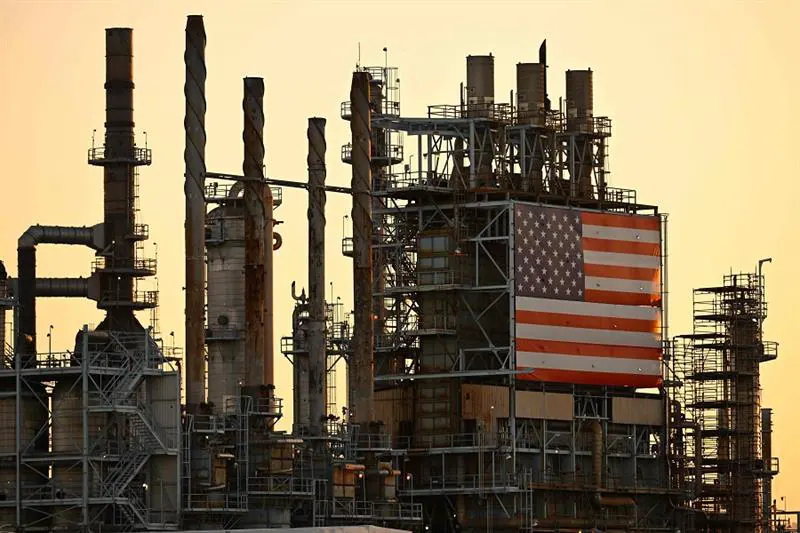
Brent crude prices surged more than 3% on Monday, climbing 3.1% to $107.51 in afternoon Asian trade, while West Texas Intermediate rose 2.1% to $94.32. This increase puts fresh upward pressure on inflation. The surge in oil prices was triggered by US President Donald Trump's rejection of an Iranian offer of a seven-day truce. The truce would have seen Iran reopen the Strait of Hormuz, a vital waterway that is key to the world's energy supply.
The Strait of Hormuz is central to the conflict between the US and Iran, particularly with Houthis seizing Yemen's entire Red Sea coast, including the Bab al-Mandab Strait, a vital shipping lane. Tehran had set out a plan at the UN General Assembly for a halt in hostilities that would see the Strait of Hormuz reopened, easing a crippling supply crisis that has jacked up costs around the world. However, Trump told reporters outside the White House that he rejects their proposal.
Despite rejecting the Iranian proposal, Trump told Axios that he expects negotiations to resume. He stated that Iran wants to make a deal, but it is not the deal that he wants to make. Trump added that Iran overplayed its hand. According to Axios, indirect talks between Washington and Tehran could take place as early as Monday, citing sources familiar with the matter.
Iran is still standing by its conditions for reopening the Strait, including the release of frozen assets, the lifting of sanctions on its oil, and an end to the US naval blockade. Oil prices had fallen more than 2% on Friday on news of the offer but bounced back at the start of the new week. The increase in oil prices stoked inflation concerns and weighed on stock markets, with Seoul shedding more than 2% as it reopened after a long break.
Other Asian markets, including Tokyo, Shanghai, Manila, Bangkok, and Jakarta, also dropped, while there were gains in Hong Kong, Sydney, Singapore, and Wellington. Bond yields climbed, with the average on a gauge of world bonds topping 4% last week for the first time since 2007, according to Bloomberg. The rise in prices puts the focus back on the Federal Reserve ahead of its next policy meeting at the end of October.
The Federal Reserve's preferred gauge of inflation and a key jobs report are set to be released before the policy meeting, which could play a vital role in policymakers' thinking. According to CME's FedWatch tool, the chances of a second successive interest rate hike are more than 65%. The increase in oil prices and inflation concerns have also impacted global fixed income, with the brief Friday reprieve looking more like an intermission than the end of the show.
Analyst Stephen Innes at Quintex Intel wrote that Middle East tensions have flared again after President Donald Trump rejected Iran's latest proposal to reopen the Strait of Hormuz. He added that oil has pushed higher, Asian equities are softer, and the market is still pricing some probability that everyone eventually finds their way back to the table. Key figures at around 0330 GMT show mixed results across Asian markets.
Key points
- US President Donald Trump rejected an Iranian offer of a seven-day truce.
- The surge in oil prices was triggered by Trump's rejection of the Iranian proposal.
- The Federal Reserve's next policy meeting is set to take place at the end of October.