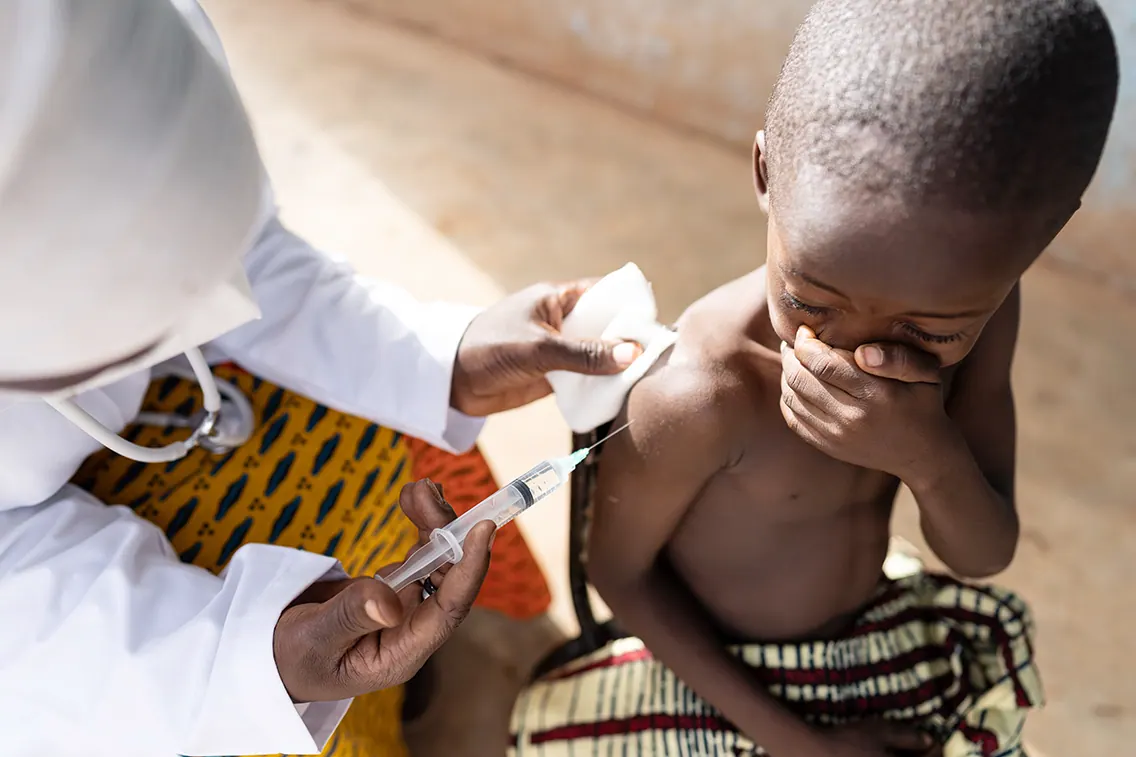
Low immunisation rates across Africa are exposing millions, especially children and vulnerable groups, to deadly diseases that can be prevented with vaccines. Experts point to a complex interplay of factors, including geography, poverty, conflict, and infrastructure, that contribute to this health deficit. In Sierra Leone, for instance, a mother may travel long distances to bring her sick child to a health centre, only to find that the vaccine is not available on that particular day.
The cold chain requirements for vaccines pose significant challenges, particularly in areas with unreliable electricity or distant health facilities. Dr. Chigozie Edson Utazi, Associate Professor in Spatial Data Science at Southampton University, notes that vaccines are only available on specific days, making it difficult for people to access them. This highlights the limitations of viewing low vaccine rates solely through the lens of 'vaccine hesitancy' or mistrust of vaccines.
According to Dr. Luisa Enria, a political anthropologist at LSHTM, there is rarely one reason why a child is unvaccinated. Her research in Sierra Leone and other countries has shown that misunderstandings and mistrust can play a role, but so can poverty, conflict, and infrastructure. Enria argues that labelling concerns as 'misinformation' without understanding their origins is not useful and can obscure the real issues.
Historical instances of mistrust around vaccination on the continent, such as the halted anti-tetanus vaccination campaign in Cameroon in 1990 and the boycott of the polio vaccine in northern Nigeria in 2003-2004, have contributed to current concerns. However, Enria's work suggests that these concerns are often based on rational experiences with healthcare. Her research has focused on understanding the social dynamics of affected communities.
Enria's work in Sierra Leone has identified simple yet significant issues, such as vaccination teams arriving on the same day residents travel to market across the border. Community health workers may also lack fuel or money to travel to remote areas, making it difficult to calculate population figures accurately. Mistrust of the health service can stem from bad experiences with healthcare, including underfunded and overworked health workers.
To address these challenges, Enria's team has implemented two-way meetings between health workers and communities, known as 'peace meetings'. These meetings allow community members to express their concerns and health workers to explain their circumstances. The team has also used 'mapping power' to identify influential community members and engage with them.
Experts agree that addressing low immunisation rates requires a comprehensive approach that goes beyond simply increasing vaccine availability. Dr. Thabani Maphosa, Gavi's Chief Country Delivery Officer, and Enria emphasise the need for a nuanced understanding of the complex factors at play. Enria notes that investing in social science and community engagement is essential and preventative, ultimately saving resources that would be spent on responding to outbreaks.
Key points
- Low immunisation rates in Africa are caused by a complex interplay of factors, including geography, poverty, conflict, and infrastructure.
- Historical instances of mistrust around vaccination have contributed to current concerns, but often have rational origins.
- Community engagement and social science are essential in addressing low immunisation rates and preventing outbreaks.