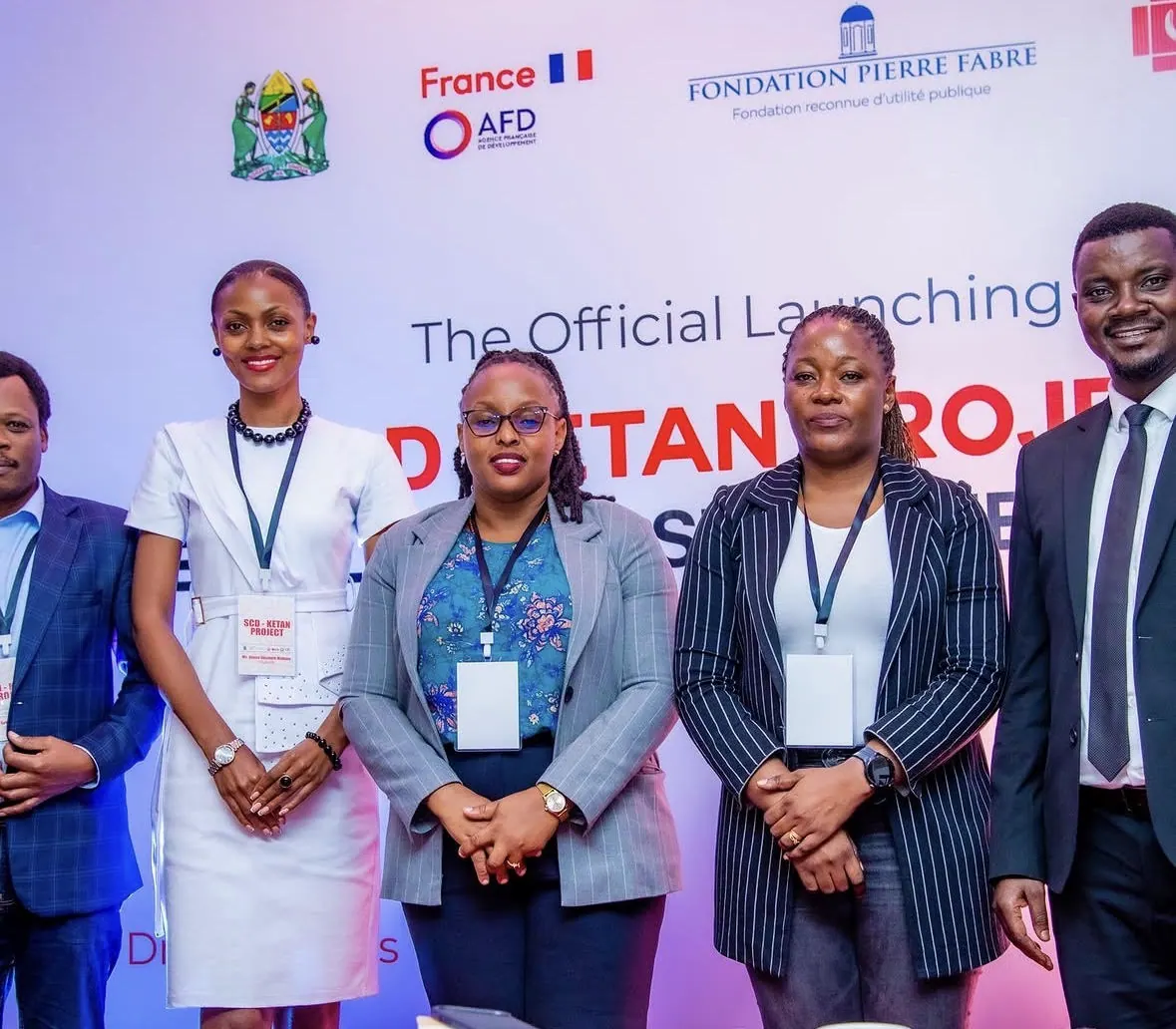
In Tanzania, a new campaign aims to educate young people about sickle cell disease and encourage them to undergo testing before marriage or parenthood. The Tanzania Sickle Cell Disease Alliance estimates that between 15 and 20 per cent of Tanzanians carry the sickle cell gene, which can be passed on to their children. With Tanzania's population estimated at about 70 million, this proportion could represent approximately 14 million people carrying the gene.
Sickle cell disease is a genetic disorder caused by mutations in the HBB gene, which affects the production of haemoglobin. People who inherit two copies of the haemoglobin S gene develop sickle cell disease, while those who inherit one copy generally have sickle cell trait and usually do not experience symptoms. However, they can still pass the gene to their children. According to the World Health Organisation, inexpensive and reliable blood tests can identify couples who may be at risk of having children affected by haemoglobin disorders.
The Tanzania Sickle Cell Disease Alliance's Vunja Mduara campaign combines prevention through education and testing with early identification of children already living with sickle cell disease. The campaign targets two million young people, particularly students in secondary schools and higher learning institutions, as well as young people outside formal education. At least 20 per cent of the target, or about 400,000 young people, are expected to undergo testing.
Dr Deogratias Soka, Executive Director of the Tanzania Sickle Cell Disease Alliance, said the campaign has two main objectives: identifying affected children early enough for appropriate treatment and preventing new cases through genetic education and testing. He noted that Tanzania ranks fourth globally in the number of children born with sickle cell disease, after Nigeria, India and the Democratic Republic of Congo.
The disease accounts for about seven per cent of deaths among children under five in Tanzania, making it a significant public health concern. WHO estimates that 7.74 million people were living with sickle cell disease worldwide in 2021, while approximately 515,000 babies were born with the condition that year. Nearly 80 per cent of people living with sickle cell disease are in sub-Saharan Africa.
For families, understanding the inheritance pattern is particularly important when both prospective parents carry the sickle cell gene. Dr Soka explained that when both partners are carriers, each pregnancy has a 25 per cent statistical probability of resulting in a child with sickle cell disease. There is also a 50 per cent probability of having a child who is a carrier and a 25 per cent probability of having a child who is neither affected nor a carrier.
Providing such information before people start families is central to the Vunja Mduara campaign. Dr Soka said affected children may experience severe pain, recurrent anaemia, infections, fever, yellowing of the eyes, an enlarged spleen and wounds that heal slowly. He also noted that children with sickle cell disease can suffer strokes, challenging the perception that stroke affects only older people.
Key points
- The Tanzania Sickle Cell Disease Alliance estimates that between 15 and 20 per cent of Tanzanians carry the sickle cell gene.
- The Vunja Mduara campaign targets two million young people and aims to have at least 20 per cent of them undergo testing.
- Sickle cell disease accounts for about seven per cent of deaths among children under five in Tanzania.