The Brazilian Revolution of 1930 was a pivotal event in the country's history, marked by the assassination of João Pessoa, a charismatic politician and governor of Paraíba, on July 26, 1930. Pessoa, a nephew of former President Epitácio Pessoa, was a key figure in the Liberal Alliance, a coalition opposed to the government of President Washington Luiz. His murder by a local rival, João Dantas, was seen as a political assassination, and it galvanized opposition forces across the country.
The events leading up to Pessoa's assassination were marked by growing tensions between the government and the opposition. The presidential election of March 1, 1930, had been won by Júlio Prestes, but the Liberal Alliance, led by Getúlio Vargas, alleged widespread fraud and irregularities. Pessoa's candidacy for vice president had been a significant factor in the opposition's campaign, and his assassination was seen as an attempt to eliminate a key opponent.
Pessoa's background and rise to prominence were marked by his commitment to honesty and integrity. Born into a prominent Brazilian family, he studied law and entered politics, becoming president of Paraíba. His popularity grew rapidly due to his efforts to transform the state, which had previously been plagued by corruption and banditry. Pessoa's achievements included opening new roads, implementing economies, and establishing order in a region previously known for its lawlessness.
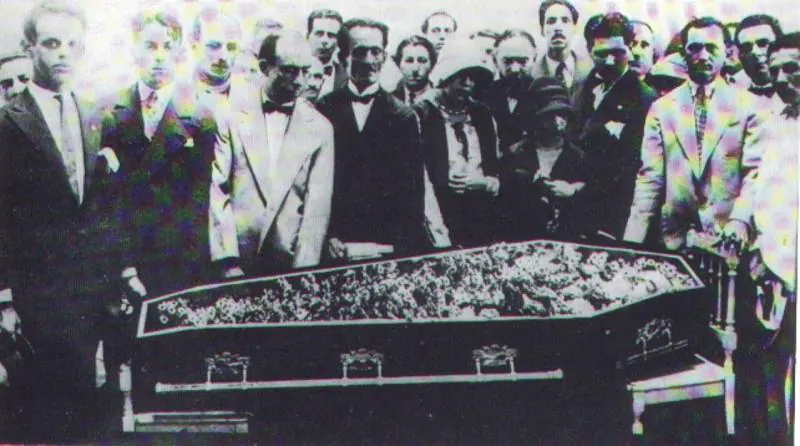
The reaction to Pessoa's assassination was swift and decisive. The Liberal Alliance, with Vargas at its helm, used the event as a rallying cry for revolution. The opposition transformed Pessoa's funeral into a massive anti-government rally, and the event marked a turning point in the country's politics. The government, seen as responsible for Pessoa's murder, faced growing opposition, and Vargas's forces eventually overthrew President Luiz in a coup on October 24, 1930.
The aftermath of Pessoa's assassination saw a significant shift in Brazilian politics. Vargas, who had been defeated in the presidential election, emerged as the leader of the revolution and was inaugurated as president on November 3, 1930. The event marked the beginning of a new era in Brazilian politics, characterized by authoritarianism and centralization. Pessoa's legacy as a martyr of the revolution was cemented, and his name became synonymous with the struggle for democracy and justice.
The impact of Pessoa's assassination was not limited to Brazil's politics; it also had significant social and cultural implications. The event marked a turning point in the country's history, highlighting the deep-seated tensions between the government and the opposition. Pessoa's commitment to honesty and integrity inspired a generation of Brazilians, and his legacy continues to be celebrated today.
In the years following Pessoa's assassination, Brazil experienced a period of significant change and upheaval. The revolution led by Vargas marked a significant shift in the country's politics, and its impact was felt for decades to come. Today, Pessoa is remembered as a hero of Brazilian democracy, and his assassination is seen as a pivotal event in the country's history.
Key points
- The assassination of João Pessoa sparked a revolution that led to the overthrow of the government and the rise of Getúlio Vargas.
- Pessoa's commitment to honesty and integrity inspired a generation of Brazilians and cemented his legacy as a martyr of the revolution.
- The event marked a significant shift in Brazilian politics, highlighting deep-seated tensions between the government and the opposition.