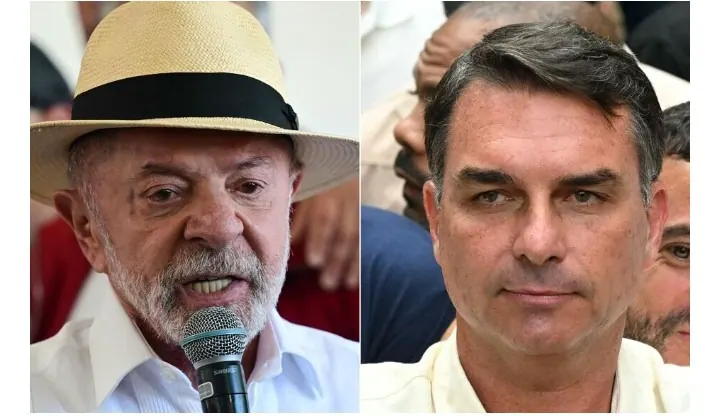
The Brazilian presidential election will proceed to a second round on October 25, as no candidate secured a majority in the first round. Flavio Bolsonaro, a conservative senator and son of former President Jair Bolsonaro, garnered 47.06% of the votes, while President Luiz Inacio Lula da Silva, a leftist leader, secured 45.12% of the votes. According to reports from Le Monde, these results are based on nearly all ballots cast.
Lula da Silva expressed his surprise at the outcome, stating that the "match is just beginning" and that his campaign will intensify in the run-up to the second round. He emphasized that this is a critical period for convincing the Brazilian people. Lula's campaign had been closely watched, with the president urging voters to choose between strengthening democratic institutions and what he termed "barbarie."
Flavio Bolsonaro, aged 45, has positioned himself as a more moderate alternative to his father, Jair Bolsonaro, who served as President from 2019 to 2022. Jair Bolsonaro had endorsed his son's candidacy after being disqualified from running himself due to a conviction for attempting a coup against Lula in 2022. Flavio Bolsonaro has promised to "liberate the Brazilian people" from what he described as suffering, high taxes, and political persecution.
The election campaign highlighted deep divisions within Brazil, with Lula and Flavio Bolsonaro presenting starkly different visions for the country's future. Lula, who voted in the state of São Paulo, stressed the importance of protecting democratic institutions. In contrast, Flavio Bolsonaro focused on the need for change, stating that Brazil can no longer continue on its current path.
The second round of the presidential election on October 25 will be closely watched, both domestically and internationally. The outcome will have significant implications for Brazil's economic and social policies, as well as its role on the global stage. Both Lula and Flavio Bolsonaro are expected to intensify their campaigns, appealing to undecided voters and those who did not support them in the first round.
Flavio Bolsonaro's campaign has been buoyed by his strong performance in the first round, which he described as a "vote of confidence for change." He has called for Brazilians to support his candidacy, arguing that the country needs a new direction. Lula, meanwhile, is seeking to mobilize his base and attract support from other parties to secure a victory in the second round.
The Brazilian electoral commission is expected to provide further updates on the election results and the second-round campaign in the coming days. As the country prepares for the next stage of the election, international observers are watching closely, aware of the potential implications for regional stability and global markets.
Key points
- Flavio Bolsonaro and Luiz Inacio Lula da Silva will face off in the second round of the Brazilian presidential election on October 25.
- The first round results showed Flavio Bolsonaro with 47.06% of the votes and Lula with 45.12%.
- The election outcome will significantly impact Brazil's future policies and global role.