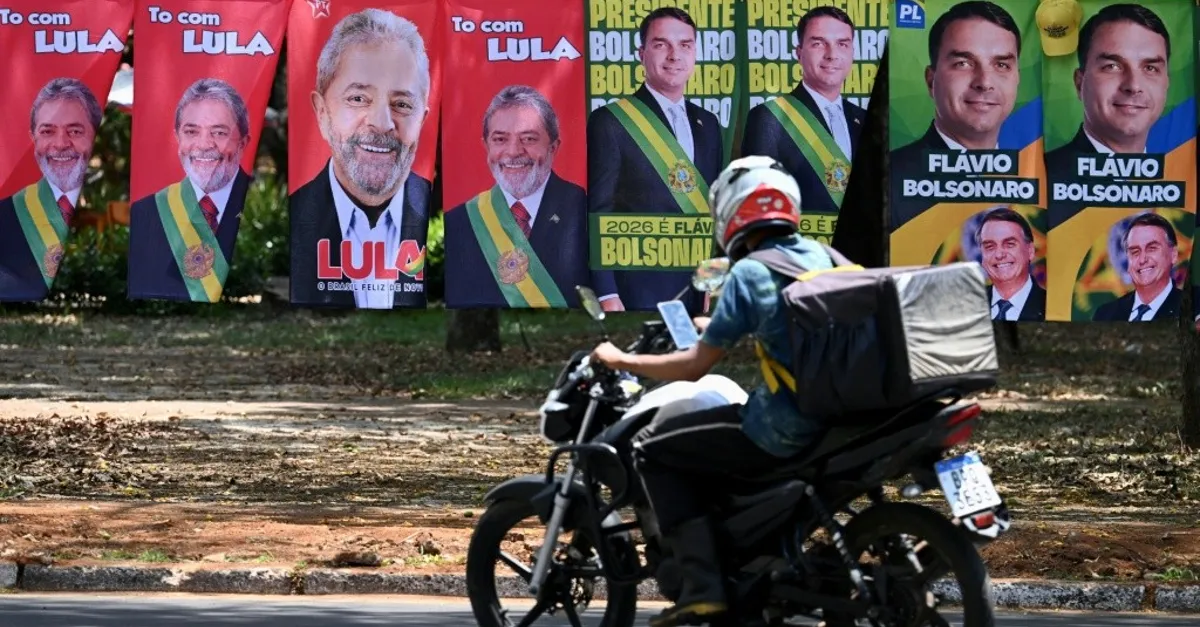
Brazil is heading into a highly polarized presidential election, with Luiz Inácio Lula da Silva seeking a fourth non-consecutive term and Flávio Bolsonaro, son of former President Jair Bolsonaro, emerging as his main challenger. According to a Financial Times poll, Lula is currently leading by a narrow margin in the first round, but a runoff is likely if neither candidate secures over 50% of the valid votes. This election is considered one of the most divisive in Brazil's modern history, with significant implications for the country's economy, democracy, and international relations.
The election is being closely watched by the United States, given the stark differences between Lula's leftist policies and the agenda of the Trump administration. The US has expressed reservations about Lula's approach to international relations, particularly his engagement with the BRICS grouping of emerging economies. Lula has warned of potential US intervention on behalf of his opponent, which Washington has denied. Analysts believe that a Bolsonaro victory would bring Brazil closer to US policy and enhance the Trump administration's influence in the Western Hemisphere.
Lula's campaign focuses on expanding social welfare programs, combating deforestation in the Amazon, and strengthening ties with international partners such as Canada and the European Union. During a recent rally in Rio de Janeiro, Lula emphasized that the election is not just about his personal victory but about the triumph of democratic ideals. With a long political career spanning from 2003 to 2011, Lula has a reputation for reducing poverty, but his Workers' Party still faces skepticism among some voters due to corruption scandals and economic challenges.
Flávio Bolsonaro, on the other hand, presents himself as a conservative alternative, promising to reduce public spending, combat crime, and enhance cooperation with the US on counter-narcotics efforts. He also advocates for a parliamentary amnesty for individuals convicted of involvement in the January 6 insurrection, including his father, who is currently serving a 27-year prison sentence. Bolsonaro has accused the judiciary of interfering in the electoral process to favor Lula and the Workers' Party.
The election reflects deeper divisions within Brazilian society regarding the economy, democracy, and the role of the state. Both candidates face high levels of rejection among voters, making the contest highly sensitive, particularly if a runoff is required. The outcome will have significant implications for Brazil's international relations, with Lula seeking to maintain an independent foreign policy and expand ties with global partners beyond US influence.
The US has significant interests in the election, given its desire to bolster its influence in Latin America under the Trump administration. A Bolsonaro victory is seen as more likely to align Brazil with US policy priorities, while Lula's win would likely lead to a more autonomous foreign policy. The election outcome will also impact Brazil's economic trajectory and its role in regional and global affairs.
As the campaign enters its final stages, both candidates are intensifying their efforts to sway voters. Lula's focus on social welfare and environmental protection resonates with many Brazilians, while Bolsonaro's conservative message and law-and-order approach appeal to others. Ultimately, the election will determine the course of Brazil's development and its position on the world stage for years to come.
Key points
- The Brazilian presidential election is a closely contested battle between leftist Luiz Inácio Lula da Silva and conservative Flávio Bolsonaro.
- The outcome will have significant implications for Brazil's economy, democracy, and international relations.
- The US is closely watching the election, given its interests in bolstering its influence in Latin America.