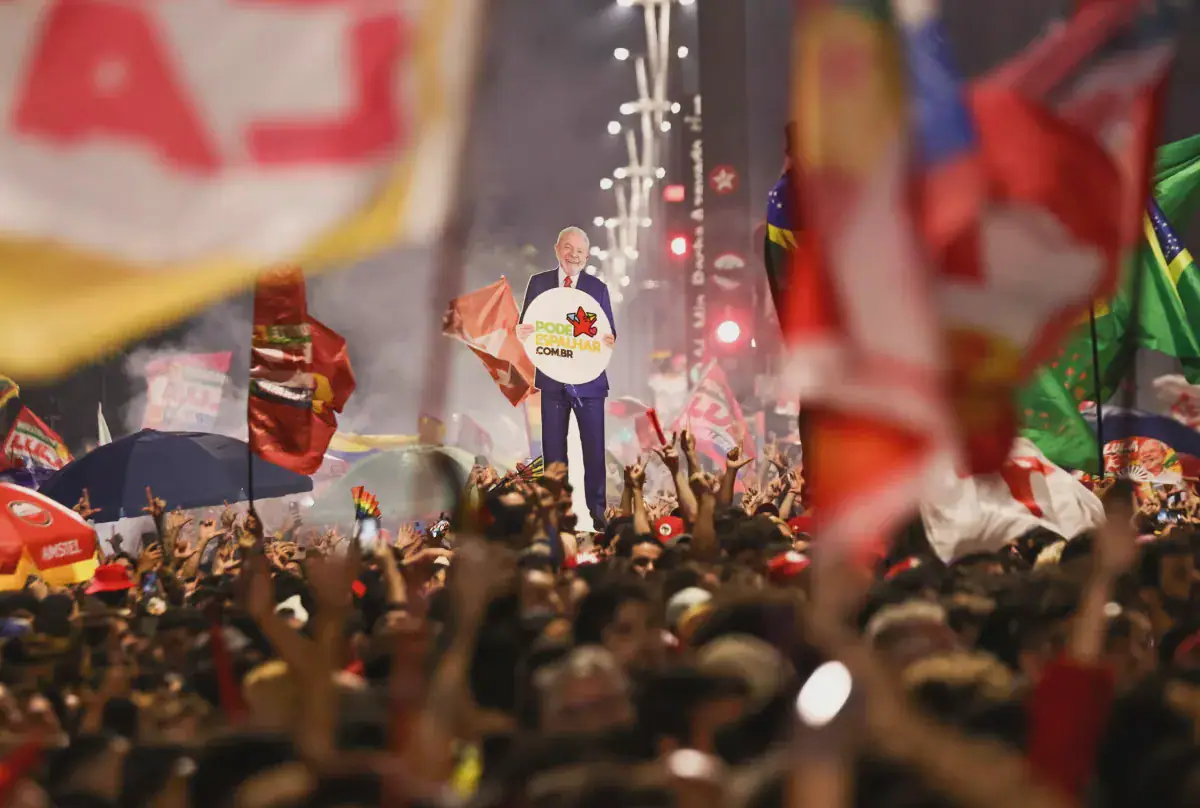
In a stunning turn of events, Brazil's leftist President Luiz Inácio Lula da Silva won the election on October 25, reversing his first-round defeat on October 4 to right-wing senator Flávio Bolsonaro. Analysts attribute Lula's victory partly to an eleventh-hour digital strategy that utilized WhatsApp to mobilize voters and amplify political messaging. This approach, often associated with Brazil's right, was effectively adopted by Lula's campaign, led by Congressman André Janones.
Janones, 42, emerged as a central figure in Lula's digital campaign, creating a WhatsApp channel in April that became a virtual command center after Lula's first-round loss. The channel, called "Lula's Army," swelled from 50,000 followers to nearly 11 million in three weeks as Janones rallied supporters to help Lula stage a historic comeback. Through videos, audio messages, and social media posts, Janones instructed followers to promote hashtags, comment on livestreams, share videos, and like posts.
Janones' tactics, described as a form of "gamification," fostered a sense of collective purpose among supporters. He told followers to create and disseminate their own content, as well as official lines, and even taught them how to use social media effectively. This approach gave progressive digital activism a level of coordination that had been absent even during Lula's successful campaign in 2022.
However, the rise in online activity also raised concerns about misinformation. A manipulated image of Brazilian soccer legend Ronaldo, wearing a national team jersey bearing Lula's ballot number and making the "L" gesture, was widely circulated. Ronaldo's representatives said the image had been used without his authorization. Fact-checking outlet Agência Lupa reported that the image was created by a Colombian artist using artificial intelligence.
Janones' strategy focused on emotionally charged messages, aggressive language, and, at times, content of dubious origin. This approach, dubbed "cultural Janonism," has been polarizing, with some viewing him as a politician who "fights the far right with the same resources it uses." However, others argue that such tactics could degrade public debate by reducing complex political discussions to constant confrontation.
Lula's campaign had initially struggled to compete with the right's digital operation, according to Lucas Fernandes, a political analyst at BMJ Consultores Associados. However, with Janones at the helm, the campaign was able to adapt and effectively utilize social media to mobilize voters. Fernandes noted that the right had long understood the importance of social media, while the left had failed to make that transition.
The outcome of the election highlights the significance of digital strategies in modern Brazilian politics. As experts continue to analyze the role of social media in Lula's victory, one thing is clear: the left has successfully adapted to the right's online playbook, and the implications of this shift will be closely watched in future elections. Key to this shift was Janones' ability to mobilize millions of supporters and create a sense of collective purpose through social media.
Key points
- The Brazilian left adopted a digital strategy often associated with the right to mobilize voters and amplify political messaging.
- Congressman André Janones played a central role in Lula's digital campaign, creating a WhatsApp channel that became a virtual command center.
- The rise in online activity raised concerns about misinformation, with a manipulated image of Brazilian soccer legend Ronaldo being widely circulated.