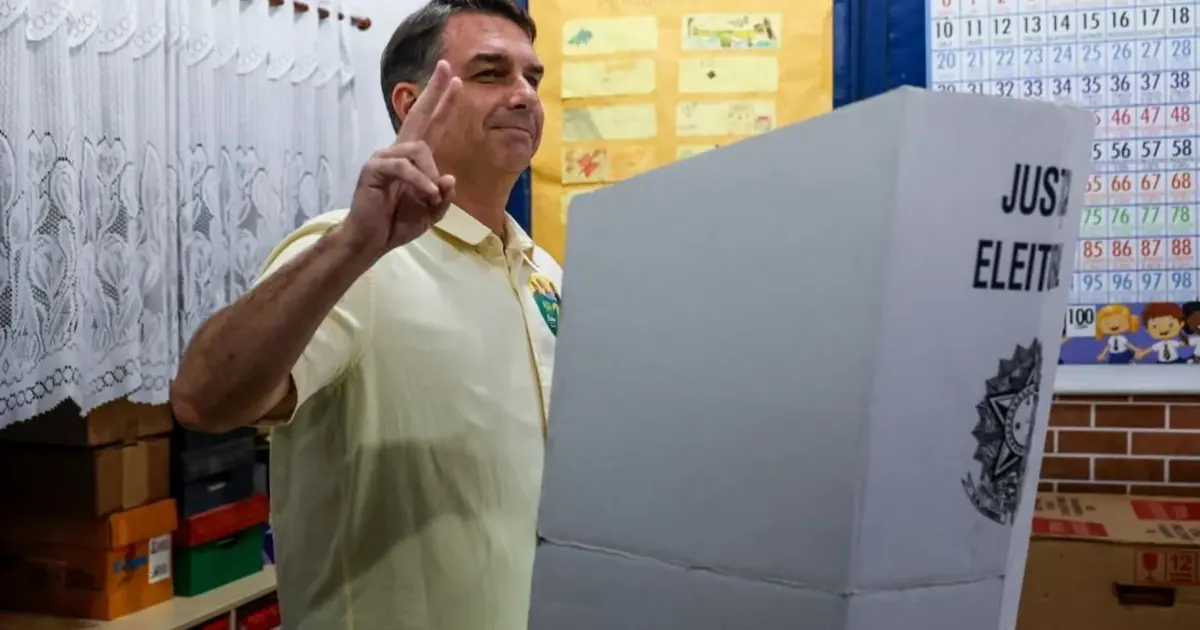
The right-wing Flávio Bolsonaro has emerged as the winner of the first round of Brazil's presidential election, but fell short of securing more than 50% of the votes needed to win outright. According to the latest count, with 99% of the votes counted, Bolsonaro secured 47.03% of the vote, while his closest rival, left-wing incumbent President Lula da Silva, garnered 45.16%. As a result, the two candidates will face off in a run-off election scheduled for 25 October.
Flávio Bolsonaro, the son of former right-wing President Jair Bolsonaro, has pledged to adopt a more assertive stance on issues such as crime and corruption. His campaign has focused on themes of sovereignty, crime, the economy, and corruption, resonating with voters in the south and among wealthier and evangelical Christian communities. Bolsonaro's Liberal Party also made significant gains in the congressional elections, winning the most governors, senators, and federal deputies.
The election outcome has significant implications for Brazil's relationships with the United States and other countries. Flávio Bolsonaro has expressed support for a stronger alliance with the US, while President Lula has emphasized the importance of maintaining Brazil's sovereignty. During the campaign, Lula accused the US of attempting to interfere in Brazil's elections, while Flávio Bolsonaro successfully lobbied the US to designate two major Brazilian gangs as terrorist organizations.
Corruption and crime were key issues in the campaign, with Flávio Bolsonaro embroiled in a scandal involving a jailed banker, Daniel Vorcaro, who allegedly funneled money to support a biopic about his father. Lula was also indirectly impacted by the scandal, which raised concerns about the influence of corrupt networks in Brazilian politics. Both candidates have pledged to tackle crime and corruption, with Flávio Bolsonaro vowing to designate Brazilian gangs as terrorists and build maximum-security prisons.
The economy was also a central theme in the campaign, with Brazil facing high levels of personal debt and slowing growth. President Lula has highlighted his legacy of implementing social welfare programs, such as Bolsa Família, which have lifted millions of Brazilians out of poverty. Flávio Bolsonaro has promised to maintain an "economically pragmatic" relationship with China, Brazil's largest trading partner.
The run-off election will be closely watched, with many analysts predicting that it will determine whether Brazil will align more closely with the US or maintain its current stance. Flávio Bolsonaro has expressed confidence that he will win the run-off, saying that he is "very happy" with the outcome of the first round. President Lula, meanwhile, has insisted that the race is far from over, saying that he will "win over the Brazilian people" in the extra time.
The US-Brazil relationship is likely to be significantly impacted by the outcome of the election. A win for Flávio Bolsonaro would likely see Brazil join the US's "Shield of Americas" coalition against narco-trafficking and align more closely with the US. Meanwhile, President Lula has pledged to increase defence spending and maintain a strong stance on sovereignty.
Key points
- Flávio Bolsonaro won the first round of Brazil's presidential election with 47.03% of the vote.
- The election will go into a run-off between Flávio Bolsonaro and incumbent President Lula da Silva on 25 October.
- The outcome of the election has significant implications for Brazil's relationships with the US and other countries.