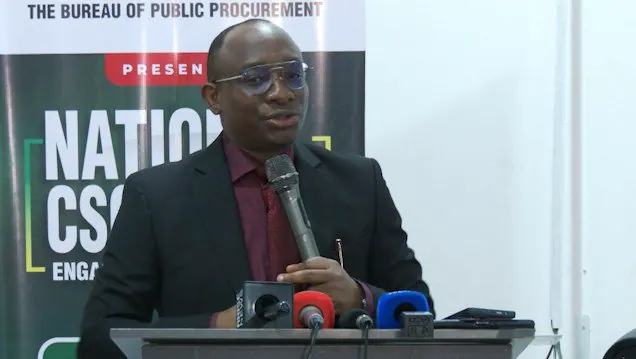
The Bureau of Public Procurement (BPP) in Nigeria has initiated measures to address the issue of abandoned and substandard public projects. According to the BPP Director-General, Dr. Adebowale Adedokun, the goal is to ensure that government procurement goes beyond contract awards to deliver lasting value to Nigerians. This move aims to reform the public procurement process, making it professional, transparent, competitive, technology-driven, ethical, and focused on value for money.
Dr. Adedokun disclosed this information at a strategic engagement with professional bodies on public procurement reforms in Abuja. The engagement aimed to strengthen collaboration between the BPP and professional bodies to improve the quality of public projects. Adedokun emphasized that procurement failures often begin before contracts are awarded, citing weak needs assessment, inadequate designs, poor specifications, unrealistic cost estimates, and inappropriate project planning as factors responsible for poor outcomes.
The BPP's reform agenda covers the entire procurement cycle, from planning and budgeting to tendering, evaluation, contract award, contract management, project delivery, and performance measurement. Professional bodies are expected to play a critical role in providing technical expertise, ethical standards, and accountability required to improve the quality of public projects. Adedokun stressed the need for multidisciplinary teams involving engineers, quantity surveyors, architects, accountants, lawyers, ICT specialists, and supply-chain practitioners to work together throughout the procurement process.
The BPP is strengthening Standard Bidding Documents and professional capacity development while advancing digitalization, open contracting, data analytics, price intelligence, procurement monitoring and audit, contract management, local content, and implementation of the Nigeria First Policy. Adedokun noted that the success of procurement should no longer be measured solely by whether due process was followed or a contract was awarded. Instead, the focus should be on the value created for Nigerians.
Adedokun cited examples of unsuccessful procurements, including a road that deteriorated shortly after completion and a hospital filled with unusable equipment. He emphasized that such projects cannot be considered successful simply because the tendering process was properly conducted. The BPP Director-General urged professional bodies to return to their respective associations with a renewed commitment to strengthening professional standards and accountability.
The Chief of Staff to the BPP Director-General, Nasiru Bello, described professional bodies as critical stakeholders whose expertise and ethical standards directly affect the quality and integrity of public procurement. Bello said the engagement was designed to provide stakeholders with updates on ongoing reforms, discuss practical challenges, and develop stronger cooperation among the Bureau and professional bodies.
The collaboration between the BPP and professional bodies aims to advance transparency, accountability, professionalism, efficiency, and value for money in public procurement. Bello urged the professional bodies to work together to strengthen public trust in the procurement process, stating that "public procurement is public trust. We cannot afford to fail this country."
Key points
- The BPP is strengthening collaboration with professional bodies to ensure public procurement is professional, transparent, and focused on value for money.
- The BPP's reform agenda covers the entire procurement cycle to improve the quality of public projects.
- The success of procurement will be measured by the value created for Nigerians, not just compliance with the procurement process.