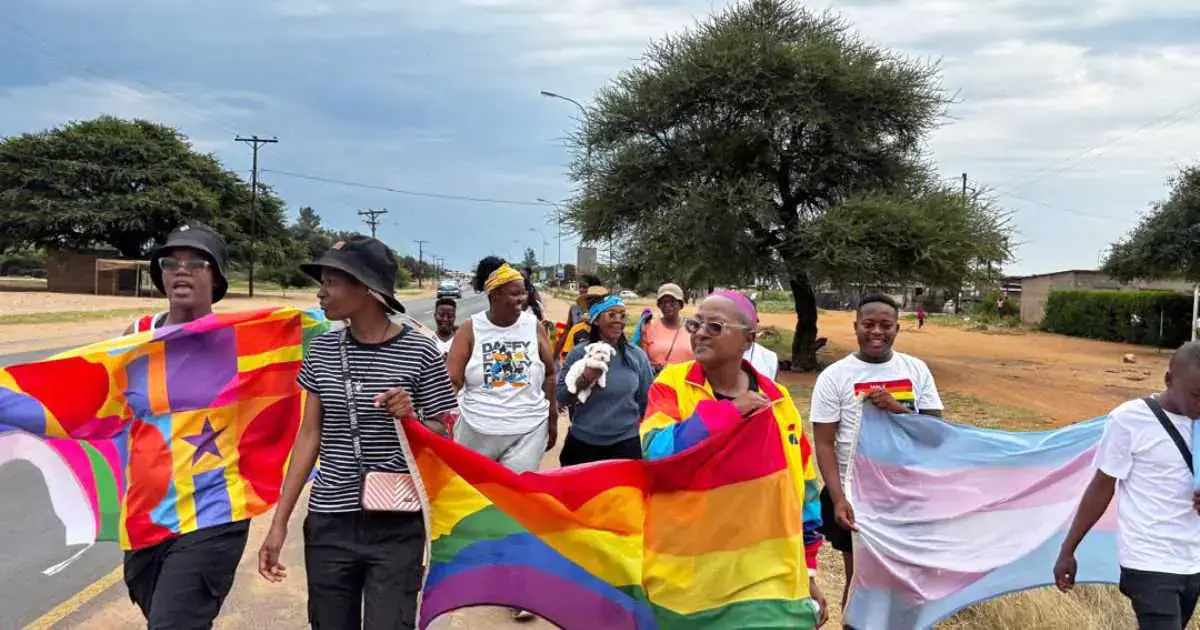
On November 7, 2026, the streets of Palapye in Botswana witnessed a declaration of queer existence, visibility, and belonging as the AGANG Community Network hosted its second Pride march. The event came a year after the town's first-ever Pride march and despite a last-minute change in police escort. The police had initially agreed to provide an escort but later asked participants to proceed with the march on their own, citing unclear reasons. This sudden change presented concerns about safety on the roads.
The second Pride march had a lower turnout compared to the inaugural event in 2025, with fewer people attending due to fear and uncertainty. However, those who came did not turn back and marched, showing determination in a community where queer visibility can still invite scrutiny, discomfort, and opposition. The event demonstrated that movements are sustained not only by numbers but also by the determination of individuals and organizations willing to create spaces for recognition, solidarity, and belonging.
The lower turnout raises questions about the sustainability of grassroots LGBTQI+ organizing in smaller communities. Participation in Pride is shaped by factors such as visibility, fear, social pressures, and the realities of living in close-knit communities. A smaller crowd does not necessarily mean the need for Pride has diminished, nor does it erase the significance of those who continue to show up.
Beyond the march, AGANG Community Network hosted an after-party at a local pub, offering another expression of Pride and community visibility. The pub remained open to its regular Saturday patrons, creating an intersection between a deliberately organized celebration of queer identity and everyday social life in Palapye. This allowed queer joy to exist within the wider community, rather than apart from it.
The after-party reflected an important aspect of inclusion: creating opportunities for people to encounter one another beyond assumptions, labels, and social divisions. AGANG Community Network's efforts to create spaces for recognition, solidarity, and belonging, even in difficult conditions, demonstrate the organization's commitment to promoting queer visibility and rights.
According to Seipone Boitshwarelo, founder of AGANG Community Network, the decision to continue with the march despite challenges was significant. The first Palapye Pride opened a door, and the second march refused to let that door close. The event showed that courage does not always arrive with a crowd; sometimes, it looks like a handful of people choosing to march, even when they are afraid.
The Palapye Pride events highlight the ongoing efforts of the queer community in Botswana to promote visibility, recognition, and rights. Despite challenges and uncertainties, the community continues to show up and demand recognition, demonstrating that courage and determination can sustain movements even in difficult conditions.
Key points
- The Palapye Pride 2026 march demonstrated that movements are sustained not only by numbers but also by the determination of individuals and organizations.
- The event highlighted the importance of creating spaces for recognition, solidarity, and belonging in smaller communities.
- The queer community in Palapye continues to promote visibility and rights despite challenges and uncertainties.