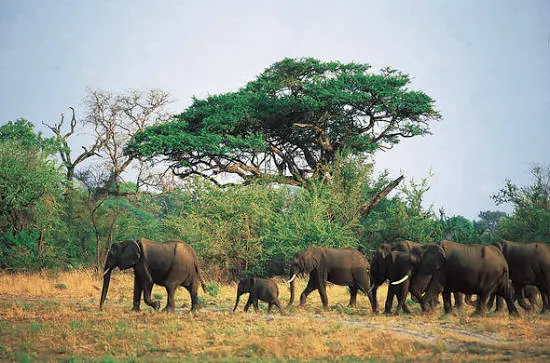
The government of Botswana has given permission to cull 23 elephants in eight regions of the country, with the meat to be served at celebrations marking 60 years of independence. The decision has been met with criticism from animal rights groups, who argue that it could undermine conservation efforts and lead to increased poaching. Botswana is home to the largest population of elephants in the world, with an estimated 130,000 animals.
The culling of the elephants was approved by the Ministry of Environment and Tourism, with the aim of providing food for communities during the celebrations. However, the exact number of elephants culled has not been confirmed, and concerns have been raised about the potential impact on the country's elephant population. The Elephant Protection Society has expressed concerns that the culling could lead to increased aggression among the remaining elephants.
Animal rights groups have also raised concerns about the spread of disease, including the highly contagious disease, rabies, which is prevalent in Botswana. The groups argue that the consumption of elephant meat could increase the risk of transmission to humans. The decision to cull the elephants has sparked a heated debate about the conservation of elephants in Botswana.
Botswana has long been a proponent of sustainable elephant management, with the government arguing that controlled culling is necessary to manage the population. However, animal rights groups argue that there are alternative and more humane ways to manage the population, such as relocation and birth control measures.
The celebrations marking 60 years of independence were held on September 30, 2026, with festivities taking place across the country. The event was marked with traditional music, dance, and food, including the elephant meat. The government has defended the decision to serve elephant meat, arguing that it is a traditional and cultural practice.
The Elephant Protection Society has called for the government to reconsider its decision, arguing that it could have long-term consequences for the country's conservation efforts. The group has also expressed concerns about the welfare of the elephants, arguing that culling is a inhumane and unsustainable solution to managing the population.
An adult elephant can weigh up to 7,500 kg and provide food for 350 people for a week. While elephant meat is not commonly consumed in Rwanda, it is eaten in other countries. The debate over the culling of elephants in Botswana highlights the complex and often conflicting interests of conservation, culture, and human needs.
Key points
- The Botswana government has allowed the culling of 23 elephants for national celebrations, sparking concerns from animal rights groups about the impact on conservation efforts.
- The elephant population in Botswana is estimated to be around 130,000, the largest in the world.
- Animal rights groups have raised concerns about the potential spread of disease, including rabies, through the consumption of elephant meat.