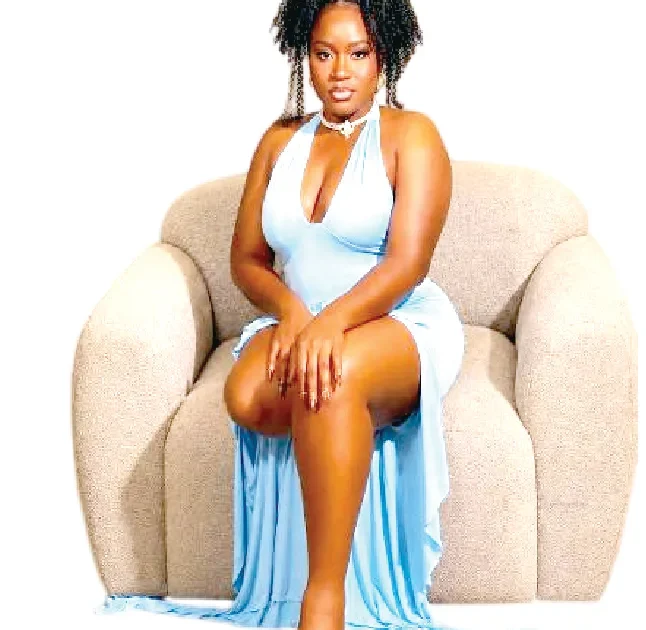
Oluwatosin Jegede, a Nigerian woman, was born with Type 3 Tibial Hemimelia, a rare condition where the tibia bone is missing in one leg. This condition, accompanied by polydactyly in her right lower limb, made her leg heavy and painful, especially as she grew older. At six years old, her condition worsened, making it difficult for her to walk even short distances. Her parents were advised to consider an amputation, but the high cost of the surgery was a significant barrier.
The family turned to prayer for a solution and were unexpectedly contacted about a government-sponsored free healthcare initiative, the Tinubu Free Healthcare Programme. Although registration for that year had closed, this information gave them hope. In 2006, they were enrolled in the initiative and began medical evaluations. X-rays revealed that delaying the amputation could cause severe and permanent damage to her spinal cord due to physical imbalance. This made the amputation necessary for her long-term health.
However, just as preparations for the surgery were underway at Lagos State University Teaching Hospital (LASUTH), the doctor informed her father that the hospital lacked the specialized equipment required for the procedure. This news was devastating, and seeing her father break down in tears was heartbreaking for Oluwatosin. Despite this setback, she refused to give up and began fasting and praying for a solution.
In 2007, Oluwatosin's father received a call that the necessary equipment had arrived, and she was transferred to Lagos University Teaching Hospital (LUTH), Idi-Araba, for the surgery. The doctors explained that the procedure had a 50/50 survival and success rate, and her parents had to sign high-risk consent forms. The amputation was successfully performed in February 2007, and remarkably, the surgical site healed completely within three weeks. She also received her first prosthetic limb, which represented freedom, independence, and answered prayers.
Adjusting to life with one leg was a new experience for Oluwatosin. She had to learn to use crutches and adapt to daily routines. Initially, she struggled to recognize herself and experienced sadness, fear, and disbelief. However, she was also grateful that the painful, heavy limb was gone, and the threat of spinal complications had been prevented. Eventually, she realized that although her body had changed, her identity had not, and learning to live with her new body became a journey of emotional resilience and self-acceptance.
The emotional and psychological adjustment was difficult, especially socially. Oluwatosin's mother transferred her to a new primary school where nobody knew her, instructing her not to tell anyone about the amputation. However, as a child, carrying this secret was overwhelming. She wore long skirts to hide her prosthesis, and some students bullied her or prayed for her to stand and walk "normally". This period taught her resilience and forced her to become comfortable with who she was, even when people around her did not understand her reality.
Despite the challenges, Oluwatosin's family has always been her anchor. Her parents reassured her before the surgery, and her best friend, Atinuke Sonaike, has been a tremendous support system for 10 years. Her father also gave her assurance that he would always be there for her, no matter what. With the support of her loved ones and her own resilience, Oluwatosin continues to navigate everyday challenges, such as mobility issues and painful boils, and advocates for greater understanding and support for amputees.
Key points
- Oluwatosin Jegede was born with a rare condition that led to the amputation of her leg at a young age.
- She faced significant emotional and psychological challenges in adjusting to life with one leg.
- Oluwatosin's family and close friends have been a crucial support system throughout her journey.