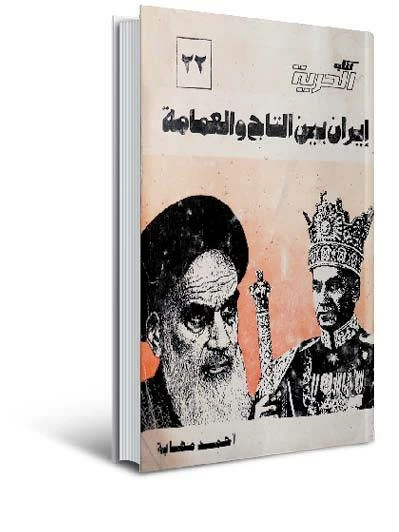
The Iranian Revolution of 1979 was a pivotal moment in Middle Eastern history, marking a significant shift in the region's politics and international relations. A new book, "Iran Between the Crown and the Turban," by Ahmed Mahaba, provides an insider's perspective on the events leading up to the revolution and its aftermath. The author, a diplomat and writer, was a media advisor at the Egyptian Embassy in Tehran during the Shah's rule, allowing him to closely observe the transformations taking place in Iran.
The book's importance lies in its author's unique position, which enabled him to document the events as a witness. Mahaba's daughter, Motazah, notes that her father aimed to create a record of the events as he saw them, providing readers with a valuable resource for understanding the Iranian experience. The book's title, "Iran Between the Crown and the Turban," encapsulates the historical struggle between the monarchy and the religious establishment, highlighting the transition from a monarchical system to one dominated by the clergy.
Mahaba's narrative begins with the early 20th century, tracing the rise of Reza Shah and his son, Mohammad Reza Pahlavi, within the complex international context of the time. Iran became a focal point for the intersecting interests of major powers, including the United States, Britain, and the Soviet Union, due to its strategic location, oil wealth, and proximity to the Soviet Union. The book dedicates significant attention to Iran's relationships with these powers, demonstrating how the country's political and economic developments were inextricably linked to international events.
A key figure in Mahaba's narrative is Mohammad Mosaddegh, the prime minister who nationalized Iran's oil industry, leading to a confrontation with Britain and the United States. Mosaddegh emerges as a central figure in understanding the long process that ultimately led to the crisis of the monarchical system. The author also explores the rise of the national movement in Iran, the Tudeh Party, and the struggle for influence within the state and society, highlighting the complex interplay between domestic and international factors.
The book examines the Shah's modernization project, including the "White Revolution," a series of reforms aimed at modernizing Iran's economy, society, and institutions. However, this project faced opposition from various social and political forces, particularly the religious establishment, led by Ayatollah Ruhollah Khomeini. Khomeini's emergence as a major opposition figure to the Shah's policies marks a turning point in the narrative, as the author outlines Khomeini's intellectual and political evolution, including his vision for an Islamic government based on the concept of "wilayat-e faqih."
The book attributes the Shah's downfall to a combination of economic, political, social, and religious factors, as well as the changing international climate, particularly the human rights policies of the Carter administration in the United States. As protests escalated, Iran entered a phase where the continuation of the monarchical system became increasingly uncertain. The narrative follows the events that led to the Shah's departure, Khomeini's return, and the eventual collapse of the monarchical system, culminating in the establishment of the Islamic Republic.
The significance of "Iran Between the Crown and the Turban" extends beyond the moment of the revolution's triumph. The book also explores the subsequent phase, characterized by complex struggles over the shape of the new state. The various forces that participated in the overthrow of the Shah did not share a uniform vision for Iran's future, including Islamists, nationalists, leftists, and different social groups. Ultimately, the religious establishment, led by Khomeini, succeeded in consolidating its position at the center of the new system, marking a fundamental shift in the source of political legitimacy.
Key points
- The Iranian Revolution of 1979 marked a significant turning point in Middle Eastern history, leading to the establishment of an Islamic Republic.
- The book "Iran Between the Crown and the Turban" provides an insider's perspective on the events leading up to the revolution and its aftermath.
- The author, Ahmed Mahaba, was a media advisor at the Egyptian Embassy in Tehran during the Shah's rule, allowing him to closely observe the transformations taking place in Iran.