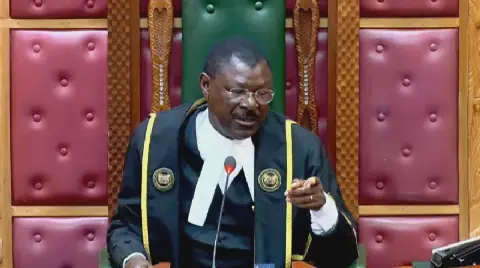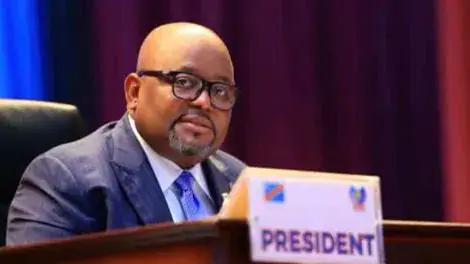
In a recent plenary session, Aimé Boji Sangara, the Speaker of the National Assembly of the Democratic Republic of Congo, publicly criticized comments made by Vital Kamerhe, the leader of the Union for National Congolese (UNC) party, regarding the ongoing conflict in eastern Congo. Boji did not mention Kamerhe by name but emphasized the need for patriotism and unity in addressing the country's challenges. He urged the population to stand behind President Félix Tshisekedi, the military, and the Wazalendos, a local militia group.
Boji's remarks were a response to Kamerhe's recent statements questioning the effectiveness of the government's strategy in dealing with the conflict in eastern Congo. Kamerhe had expressed concerns over the billions of dollars spent on the war without achieving significant results, suggesting that alternative approaches should be explored. He also called for accountability from military generals, defense ministers, and FARDC chiefs of staff. Boji countered that such comments could undermine national cohesion and the morale of soldiers.
The National Assembly has reaffirmed its support for the national dialogue and the Washington agreement. However, Boji emphasized that this dialogue should not be used to legitimize Rwandan aggression. Tensions have risen within the Union sacrée, with many close to President Tshisekedi criticizing Kamerhe's comments. Kamerhe's statements have been seen as a challenge to the government's handling of the conflict and the president's leadership.
Kamerhe's speech at an UNC event last Friday sparked controversy, with some interpreting it as a critique of President Tshisekedi's policies. In response, Boji called on lawmakers to exercise restraint and responsibility when speaking publicly about sensitive issues. The Speaker emphasized the importance of unity and patriotism in addressing the country's challenges, warning against divisive rhetoric.
The conflict in eastern Congo has been a longstanding issue, with various armed groups vying for control. The government has faced criticism for its handling of the situation, with some accusing it of corruption and inefficiency. Kamerhe's comments reflect growing frustration among some Congolese who feel that the government's approach has not yielded desired results.
Boji's criticism of Kamerhe reflects a deeper divide within the Congolese political landscape. The UNC party has historically been a significant player in Congolese politics, and Kamerhe's comments have been seen as a challenge to the ruling party's dominance. The situation highlights the complexities of Congolese politics, where alliances and rivalries often shift rapidly.
The developments have sparked concerns about the potential impact on national unity and stability. As the country navigates its complex politics and ongoing conflict, leaders face challenges in balancing competing interests and finding effective solutions. The situation remains fluid, with many watching to see how the government and various political actors respond to the growing tensions.
Key points
- The National Assembly has reaffirmed its support for the national dialogue and the Washington agreement.
Reporting sources
- Boji tacle Kamerhe sans prononcer son nom · Ouragan.cd