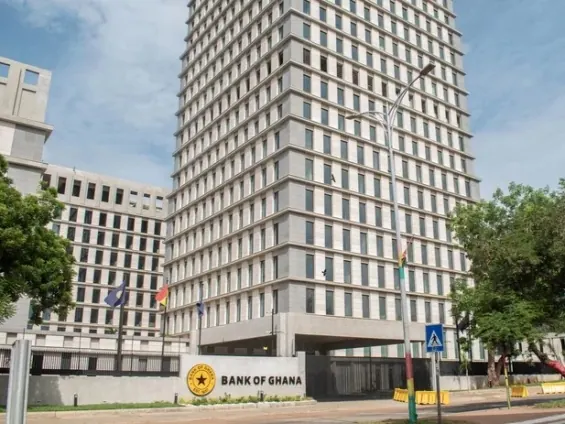
The Bank of Ghana (BoG) has announced plans to introduce a Credit Risk Management Directive to address the rising non-performing loans (NPLs) in the financial sector. The directive aims to strengthen lending practices, improve loan recovery, and ensure that Regulated Financial Institutions (RFIs) develop and implement robust credit risk management frameworks. This move is expected to reduce the accumulation of bad debts and improve the overall stability of the financial sector.
The announcement was made by Second Deputy Governor, Mrs. Matilda Asante-Asiedu, at the commissioning of Advans Ghana Savings and Loans' new head office in Dzorwulu, Accra. She emphasized that the directive will require RFIs to establish robust credit risk management frameworks covering credit underwriting, loan administration, risk measurement, monitoring, and recovery. This will enable financial institutions to assess borrowers, manage credit risk, and monitor loans effectively.
The savings and loan sub-sector is facing growing pressure to improve its loan portfolios, with the NPL ratio deteriorating from 15.35% in June 2025 to 19.44% in June 2026. In contrast, the industry-wide ratio improved from over 23% a year earlier to 16.1% at the end of June 2026. The BoG expects RFIs to bring their NPL ratios down to no more than 10% by the end of December 2026.
The BoG's 2025 Notice on Non-Performing Loans had already set supervisory expectations for credit risk governance, prudential limits for NPL ratios, and remedial measures for willful defaulters. The new directive reinforces these measures by requiring stronger credit risk management systems and more effective oversight of lending across the loan cycle. This complements existing regulatory measures to improve asset quality and strengthen the financial system.
The directive is part of broader reforms to the savings and loans and microfinance sub-sectors, which have extended financial services to young people, women, and micro, small, and medium-sized enterprises (MSMEs). The reforms aim to improve regulatory consistency, reduce opportunities for regulatory arbitrage, and strengthen governance. Existing savings and loans companies may transition into Microfinance Banks, which will be deposit-taking institutions serving MSMEs, groups, and individuals.
The reforms also involve replacing the former Tier 1 to Tier 4 classification with four categories, each with a defined mandate: Microfinance Banks, Community Banks, Credit Unions, and Last Mile Providers. Institutions in the same category will be held to the same standards, and boards and management teams will be required to demonstrate the necessary skills, expertise, and ethical standards. The Second Deputy Governor reminded existing institutions seeking to become Microfinance Banks that they have until December 31, 2026, to meet the minimum capital requirement of GH¢50 million.
The BoG's reforms aim to rebuild public confidence, deepen financial inclusion, attract investment, and strengthen local participation and ownership. The success of the reforms depends on collective commitment to compliance, transparency, innovation, and professionalism. The BoG encourages other foreign shareholders to show a similar level of commitment to support their Ghanaian subsidiaries as all institutions work towards the end-of-year deadlines for capital and non-performing loans alike.
Key points
- The Bank of Ghana to introduce a Credit Risk Management Directive to address rising non-performing loans in the financial sector.
- The directive aims to strengthen lending practices and improve loan recovery.
- The reforms also involve broader changes to the savings and loans and microfinance sub-sectors to improve regulatory consistency and strengthen governance.