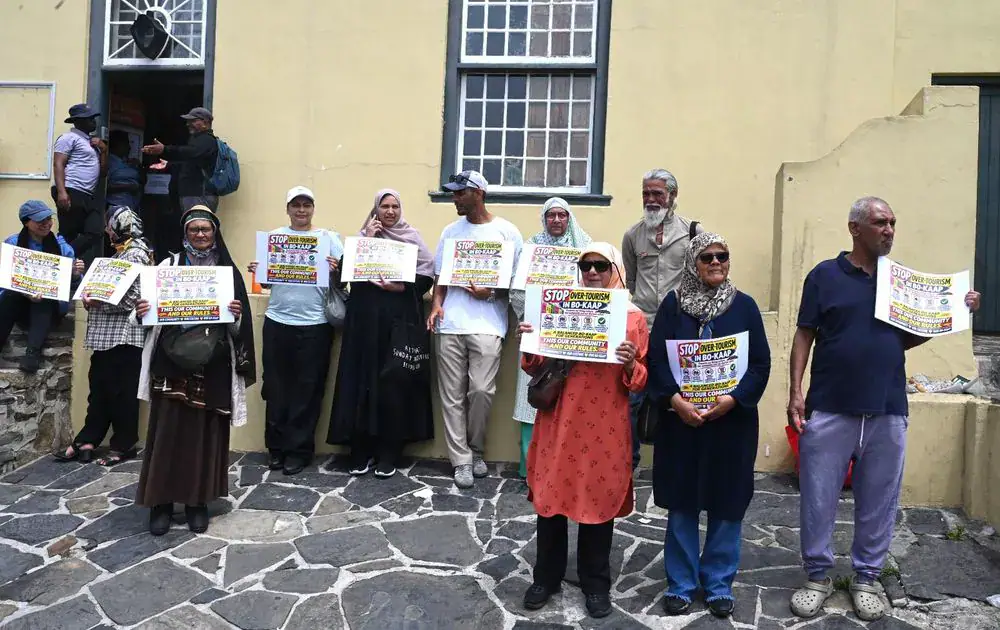
Residents of Bo-Kaap in Cape Town, South Africa, have taken to the streets to protest against what they describe as irresponsible and unmanaged tourism in their historic neighborhood. The community, led by the Bo-Kaap Civic and Ratepayers Association, is demanding that the City of Cape Town introduce stricter regulations for tourism operators. They argue that the growing number of visitors is disrupting daily life, causing traffic congestion, and making it difficult for residents to access their own streets and find parking.
According to Ebrahim Christian, vice-chairperson of the Bo-Kaap Civic and Ratepayers Association, the neighborhood's narrow streets and limited parking were never designed to accommodate the daily volume of tourist traffic. Residents are experiencing daily traffic congestion, difficulty accessing their own streets, and struggling to find parking in front of their own homes. Christian emphasized that the community is not opposed to tourism but wants visitors and commercial operators to respect the neighborhood and its residents.
The association has questioned how much the wider community benefits financially from tourism, with some local businesses selling traditional cuisine benefiting from visitors, while other commercial operators appear to profit at the expense of residents. Christian raised concerns about art galleries operating from residential-zoned properties, contributing to pedestrian congestion. The association is demanding properly regulated tourism activities, effective traffic management, and greater protection of residents' safety and convenience.
Among the association's demands are regulations to ensure that tour operators employ knowledgeable local guides who can provide visitors with an authentic understanding of Bo-Kaap's history, culture, and heritage. The association also wants tourism to create meaningful economic opportunities for the local community, while ensuring that homes, streets, places of worship, and public spaces are respected. Christian stated that tourism cannot be allowed to become an industry that generates income for outside operators while the local community carries the burden of congestion, disruption, and loss of residential convenience.
The protest, which took place on Wednesday, 11 November 2026, saw residents take to the streets to express their concerns about the impact of unmanaged tourism on their community. The association's demands are aimed at finding a balance between promoting tourism and preserving the quality of life for residents. Christian emphasized that the community wants to ensure that their heritage is not exploited as a commodity and that their homes are not treated as tourist attractions.
The Bo-Kaap neighborhood is a historic and culturally significant area in Cape Town, known for its colorful houses and rich cultural heritage. The community is seeking to protect its unique character and way of life from the negative impacts of unmanaged tourism. By introducing stricter regulations, the association hopes to promote sustainable tourism practices that benefit both the local community and visitors.
The City of Cape Town has yet to respond to the association's demands, but residents are hopeful that their concerns will be heard and addressed. Christian concluded that the community's primary concern is that their residents must come first, and that their heritage and homes should be respected. The association's efforts to regulate tourism in Bo-Kaap may have implications for the broader tourism industry in Cape Town and South Africa.
Key points
- The Bo-Kaap community is demanding stricter regulations on tourism operators to address congestion, disruption, and loss of residential convenience.