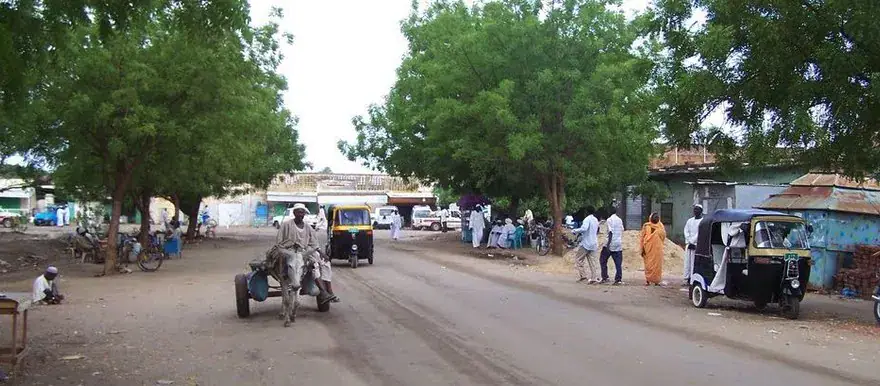
The governor of Sudan's Blue Nile region, Ahmed al-Omda Badi, has extended a state of emergency in the region for three months. This decision was made through a gubernatorial decree signed on September 23. The decree cites the current security and crime situation, as well as recommendations from the Blue Nile Security Committee. This extension takes immediate effect and grants the commander of the army's 4th Infantry Division, police, and intelligence authorities the power to implement necessary security measures.
The decree references directives from Sudan's Security and Defence Council and an October 2022 directive by the head of the Sovereign Council and army chief. This move comes amid renewed fighting between the army and an alliance of the paramilitary Rapid Support Forces (RSF) and the Sudan People's Liberation Movement-North (SPLM-N). The conflict, particularly in Kurmuk and Geissan localities, has resulted in the displacement of thousands of people. The situation highlights ongoing security challenges in the region.
In addition to the state of emergency, Governor Badi issued an emergency order restricting motorcycle movement in Damazin and Roseires. The order prohibits motorcycles from being driven or moved within the administrative boundaries of the two cities between 5 p.m. and 6 a.m. the following day. This restriction applies to all motorcycles, with exemptions for the armed and security forces on official duties, authorised official and humanitarian missions, and other cases approved by the governor or his representative.
The police and other security agencies have been tasked with enforcing the motorcycle restriction measure and taking legal action against violators. The penalties for violating this order are as follows: a first offence carries up to three months in prison or a fine of up to 500,000 Sudanese pounds. A second offence carries up to six months in prison or a fine of up to 1 million pounds. For a third offence, the maximum penalty can be doubled, and the motorcycle can be confiscated by the government.
The extension of the state of emergency and the motorcycle restriction order are part of efforts to address security concerns in Blue Nile. These measures aim to maintain order and reduce crime in the region. The situation in Blue Nile has been volatile, with ongoing clashes between rival groups. The state of emergency provides security forces with additional powers to respond to these challenges.
The conflict in Blue Nile has had a significant impact on local communities, with thousands displaced due to the fighting. The state of emergency and security measures are intended to help stabilise the situation and facilitate humanitarian efforts. However, the effectiveness of these measures remains to be seen. The region continues to face significant security and humanitarian challenges.
The governor's decree and emergency order reflect the ongoing efforts to address security concerns in Blue Nile. The situation in the region remains complex, with multiple factors contributing to the instability. The extension of the state of emergency and the motorcycle restriction order are part of a broader strategy to improve security and protect civilians.
Key points
- Blue Nile governor Ahmed al-Omda Badi extends state of emergency for three months.
- The decree grants security forces additional powers to maintain order.
- Motorcycle restrictions are implemented in Damazin and Roseires to enhance security.