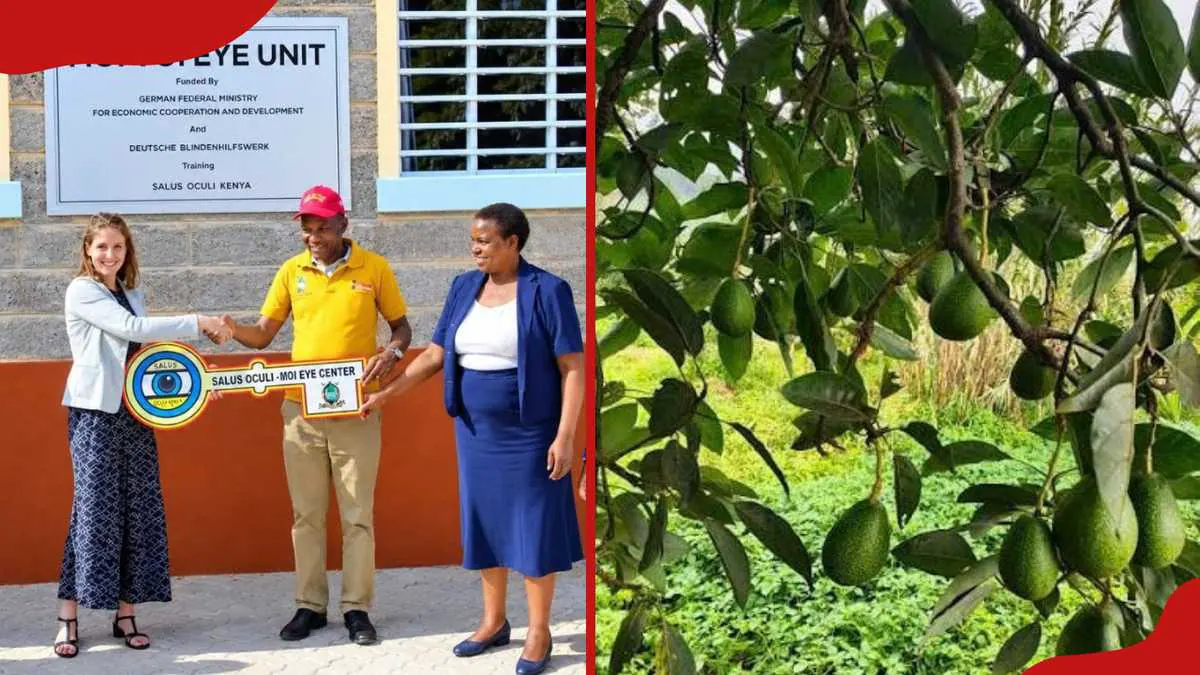
Abel Ndiga Kararel, a 71-year-old farmer from Kiamurunga village in Kirinyaga Central, Kenya, has defied the odds of his blindness to establish a successful avocado farm. His 464 Hass avocado trees on a 2.8-hectare plot yield roughly 14 tonnes of fruit per year, generating a gross annual revenue of over KSh 1.12 million. Kararel's farm-gate price of KSh 80 per kilogram has enabled him to earn a substantial income despite his visual impairment.
Kararel's journey into avocado farming began in 2016 when he planted his first 30 Hass avocado trees after sourcing seedlings from Nyeri. Initially, he kept dairy cattle but found the demands of dairy farming increasingly difficult to manage after losing his sight. The need for regular attention, labor, and time prompted him to consider an agricultural enterprise that would require less manpower while still providing an income. He eventually settled on Hass avocado farming, gradually expanding his orchard to 464 trees.
Kararel's inability to see did not prevent him from learning how to manage his orchard. He sought training from agrochemical companies and worked with agricultural extension officers to understand avocado production. Over time, he learned how to care for the trees and improve production despite his blindness. His experience has allowed him to mentor other farmers in Kirinyaga, sharing his knowledge and skills to help them improve their own farming practices.
Kararel's enterprise has created opportunities for other people in his community. He employs workers to assist with activities on the farm and shares his experience with other farmers in the area. His journey extends beyond his own income, serving as a practical example of how persistence and determination can change a person's circumstances. Despite his success, Kararel notes that avocado growers still face challenges, including counterfeit farm chemicals and inadequate knowledge of avocado production.
Kararel has called for stronger agricultural extension services to help farmers improve their practices and produce fruit that meets the requirements of export markets. He believes that training has been an essential part of his own journey, enabling him to adapt to the challenges of farming without sight. Kenyan avocado farmers have increasingly looked towards both domestic and international markets, with exporters targeting destinations in Asia, Europe, and the Middle East.
For small-scale farmers, access to reliable markets, quality seedlings, proper agronomic practices, and post-harvest handling can determine whether an orchard becomes a viable business. Kararel's success story highlights the potential for Kenyan farmers to tap into the growing demand for avocados globally. His farm offers a shining example of how farmers can overcome challenges and achieve success with the right training, support, and mindset.
Kararel's achievement has not gone unnoticed, as he continues to inspire other farmers in Kirinyaga and beyond. His story demonstrates that with persistence and determination, anyone can build a successful farming business, regardless of their physical abilities. As the demand for avocados continues to grow, Kararel's experience serves as a valuable lesson for farmers looking to tap into this lucrative market.
Key points
- A 71-year-old blind farmer in Kenya earns over $1 million annually from his 2.8-hectare avocado farm.
- The farmer, Abel Ndiga Kararel, has developed a successful avocado business despite his visual impairment.
- Kararel's success story highlights the potential for Kenyan farmers to tap into the growing demand for avocados globally.