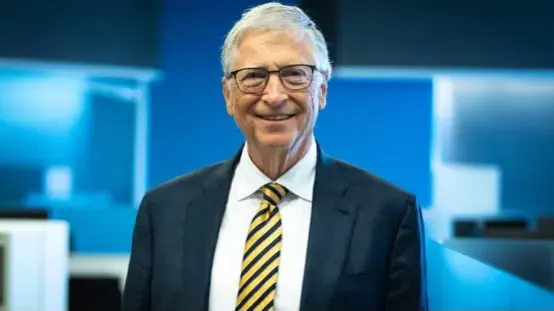
Bill Gates, co-founder of Microsoft, has expressed concerns about the rapid development of artificial intelligence (AI) and its potential impact on society. In an article on his personal website, GatesNotes, he highlighted the need for governments and regulatory bodies to take immediate action to mitigate the risks associated with AI. According to Gates, the technology has the potential to bring about significant benefits, but it also poses challenges to the job market, security, and social structures.
Gates identified three main challenges associated with AI. The first challenge is the impact on the job market, particularly in sectors such as office work, technology, and services. He noted that AI could lead to job displacement, especially for entry-level and mid-level positions. The second challenge is related to security, as AI could enable more targeted cyberattacks on critical infrastructure, such as hospitals and energy grids. Additionally, AI could reduce the technical and skill-based barriers to designing biological and viral threats.
The third challenge highlighted by Gates is the potential psychological and social impacts of relying on AI applications. He expressed concerns that excessive reliance on AI could hinder social development in children and affect human relationships. Gates attributed his decision to speak out on these issues to the rapid acceleration of AI development, which has surpassed previous expectations. He also noted that the technology industry's cautionary approach has waned, leading to a sense of urgency.
Gates emphasized that the coming period will be marked by significant uncertainty and upheaval. He warned that AI could either become a powerful tool for achieving equality or a source of injustice and social inequality. The article noted that governments and companies lack comprehensive plans to manage this transformation, highlighting the need for new institutions and regulatory bodies to oversee AI development and deployment.
To address these challenges, Gates called for the establishment of new institutions and regulatory frameworks at the local and international levels. He drew parallels with existing regulatory frameworks for nuclear weapons, aviation safety, and environmental protection. Gates stressed that a proactive approach is necessary to prevent harm and ensure that AI benefits society as a whole.
The article highlighted the need for a coordinated response to the challenges posed by AI. Gates emphasized that governments, companies, and regulatory bodies must work together to develop and implement effective regulations. He also noted that the development of AI must be guided by a commitment to transparency, accountability, and public engagement.
In conclusion, Gates' warning about the risks associated with AI serves as a call to action for governments, regulatory bodies, and the technology industry. His emphasis on the need for international regulations and cooperation underscores the complexity and scope of the challenges posed by AI. As the development of AI continues to accelerate, it is essential to address these challenges proactively and ensure that the benefits of AI are shared by all.
Key points
- Bill Gates calls for international regulations to mitigate AI risks
- AI poses challenges to job market, security, and social structures
- Gates emphasizes need for proactive approach to prevent harm