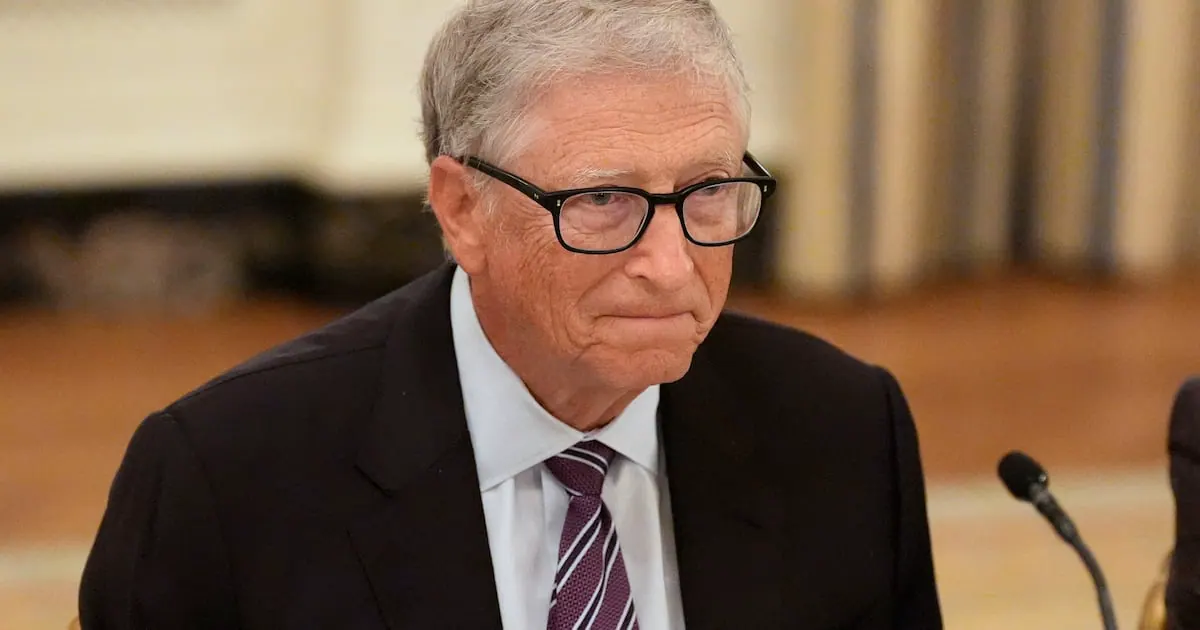
Bill Gates, chair of the Gates Foundation, has emphasized the need for a smarter use of artificial intelligence (AI) to combat global inequality. Speaking at the foundation's Goalkeepers gathering, Gates urged the world's richest countries to expand international aid and apply AI to lifesaving innovations. He noted that increased generosity and the smart use of AI together could accelerate the fight against inequality. The call comes as 26 of the world's 34 wealthiest nations decreased development aid to poorer countries last year.
The Gates Foundation's annual event, usually hosted during the week of the UN's high-level meetings, highlighted the slow and uneven progress on the UN's sustainable development goals. The goals aim to reduce poverty, improve health, and protect the environment by 2030. Despite the challenges, Gates suggested that there are some of the best innovations ever to improve people's lives. The foundation spent much of its two-hour event elevating educators, farmers, and health workers who are using AI to identify students' learning gaps, combat pest infestations, and better recall patients' medical records.
The Gates Foundation also announced a new coalition with 60 organizations, including Anthropic, Google, and OpenAI Foundation, to make AI more accessible in underrepresented languages. The coalition aims to reach more than 3 billion people over five years by better coordinating existing efforts. The partners include frontier AI labs, corporations, philanthropies, and others already working to expand the number of languages available in AI tools. This initiative is crucial in combating global inequality, as unrepresentative language data can lead to mistranslation and miscommunication.
The coalition's work is built on the recognition that many AI tools were trained on language data scraped from the internet, which is not a representative space. Mozilla Data Collective CEO EM Lewis-Jong noted that this approach can lead to culturally insensitive and inaccurate translations. Her company is working to help communities upload cultural and linguistic data sets on their own terms, rather than having that data taken from the web without their explicit consent.
Google, a member of the coalition, is funding an effort to collect over 150,000 hours of audio across every district in India. Known as Project Vaani, the push underscores the need to gather speech data on dialects within languages. Google senior vice-president James Manyika emphasized the importance of working with local partners to record speech in the field. This initiative and others like it are critical in making AI more accessible and effective in underrepresented communities.
The Gates Foundation has committed $1 billion to AI-focused efforts to improve health outcomes, upgrade educational tools, and inform small farmers' practices around the world. The foundation's CEO, Mark Suzman, emphasized that this work must continue "full speed ahead," even as some of the largest AI companies urge their industry to slow down development of advanced models. Suzman noted that governments must regulate the impacts on cybersecurity or children's development while extending AI's humanitarian applications to poor communities.
The collaboration between the Gates Foundation and its partners aims to address the challenges and limitations of AI in underrepresented communities. Anthropic's head of beneficial deployments, Elizabeth Kelly, acknowledged that the company's products "lag in many African languages in particular." She emphasized the need to get the language piece right to achieve benefits in improving patient outcomes or literacy and numeracy for students across the globe. The coalition's governance and details are still being hammered out, but the partners are committed to making AI more accessible and effective in combating global inequality.
Key points
- The Gates Foundation has committed $1 billion to AI-focused efforts to improve health outcomes, upgrade educational tools, and inform small farmers' practices around the world.
- The coalition aims to reach more than 3 billion people over five years by better coordinating existing efforts to make AI more accessible in underrepresented languages.
- The initiative addresses the challenges and limitations of AI in underrepresented communities, including the need for more representative language data and culturally sensitive translations.