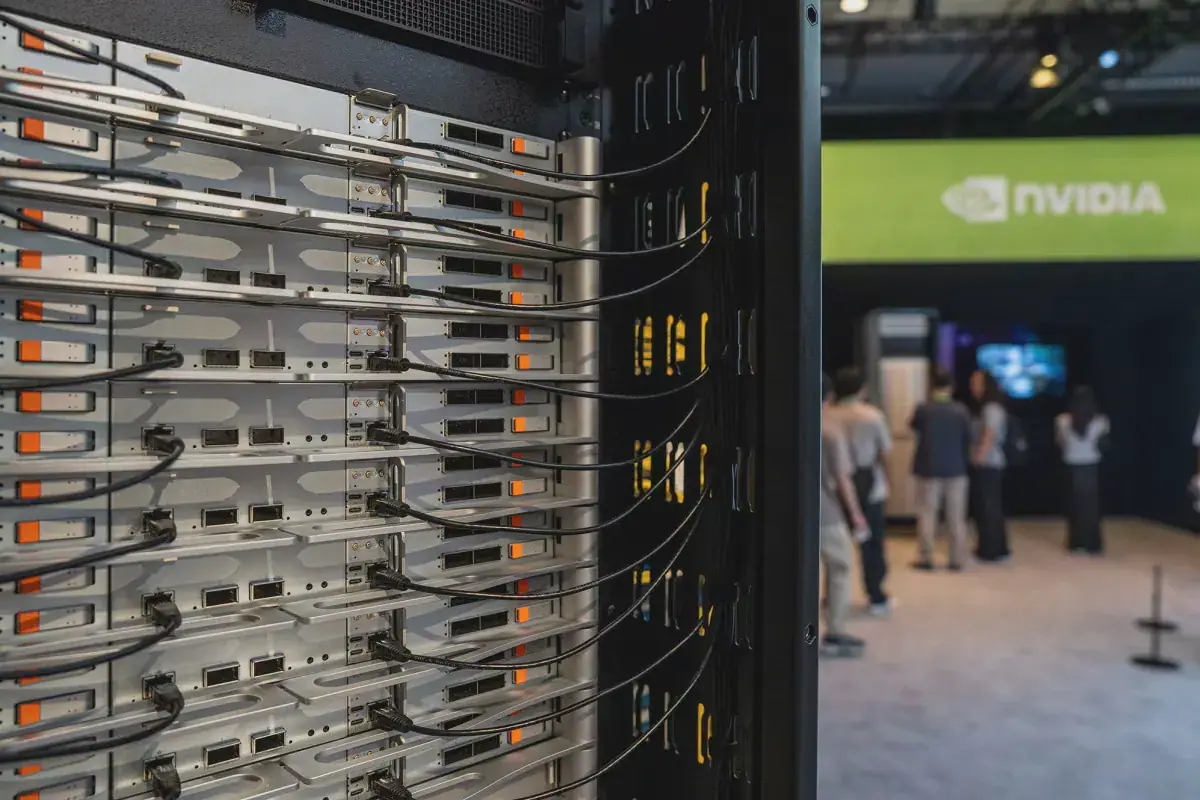
The global Big Tech corporate espionage problem has grown significantly over the past several decades, with stakes higher than ever. US-based Nvidia, the world's largest AI chipmaker, is investigating reports of a foreign surveillance effort. This comes as Silicon Valley is particularly vulnerable to corporate espionage, with cutting-edge technologies developed in the region growing vital to the global economy. Many high-profile tech companies, including OpenAI, Google, and Apple, have recently reported foreign and domestic spying attempts.
Corporate espionage has always been a challenge, but it is especially significant in areas where US firms are building foundational technologies for economic, military, and other forms of power. According to Matthew Waxman, a cybersecurity law professor at Columbia University, the stakes are high. Information has become one of the world's most valuable commodities, turning Big Tech's secrets into a highly valuable target for theft. The battle for trade secrets has been significantly intensified by AI.
The higher stakes of acquiring trade secrets have placed a renewed emphasis on human espionage inside corporations. Greg Pollock, director of research and insights at risk management company UpGuard, notes that while cyberattacks can help countries and companies steal information, a human source can advise on what secrets matter and what decisions will be made about them. Rebecca Krauthamer, CEO and cofounder of QuSecure, a cryptography provider for the US government, adds that adversaries use both cyberattacks and old-fashioned in-person espionage to gain access to trade secrets.
In-person espionage can be accomplished by hiring away employees who are willing to spill the beans or planting moles who befriend people. Having a human on the inside gives companies a potentially much longer timeframe to obtain information than via cyberattack alone. Madhu Shashanka, cofounder of security firm Concentric AI, notes that humans can gain the trust of employees, many of whom hold keys to crucial information, making anyone a target.
The risk of corporate espionage long predates the computer era, dating back to at least 1700 when French Jesuit priest François Xavier d'Entrecolles was sent on a mission to Jingdezhen, China, to determine the manufacturing process of imported Chinese porcelain. Security experts agree that the corporate espionage problem has grown significantly over the past several hundred years, particularly in the past decade. However, the full extent of the problem cannot be known.
US federal courts saw a record 1,500 trade secret cases filed last year, and high-profile cases have been a constant in the news lately. OpenAI recently discovered a "sophisticated recording device" in one of its US offices planted by a Saudi employee, while the US Justice Department indicted three former Google employees who were spying for foreign countries, including Iran.
Despite the growing problem, Elizabeth Rowe, a University of Virginia law professor specializing in trade secrets and intellectual property, notes that the cases we know about are just scratching the surface of a potentially much more prevalent concern. The ways these cases come to attention tend to undercount how pervasive corporate espionage is.
Key points
- Companies have many incentives not to talk about the problem of corporate espionage.
Reporting sources
- Big Tech has a spy problem · Egypt Independent