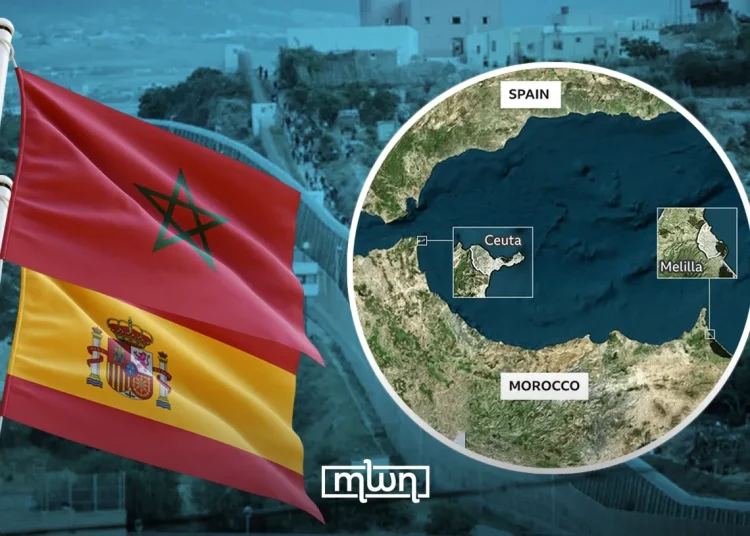
Spanish Minister for Territorial Policy Angel Victor Torres has estimated that between 150 and 200 migrants who entered the Spanish-occupied enclave of Ceuta in July return to Morocco daily on a voluntary basis. This development comes after a mass migration crisis occurred on July 30-31, when tens of thousands of migrants entered Ceuta. According to reports, the returns are part of an emergency agreement between Rabat and Madrid on the return of all migrants who had entered the enclave.
The mass migration crisis was prompted by a social media campaign alleging open borders and swift regularization and social integration once on Spanish territory. The campaign also alleged that those who entered would not be subject to deportation, misusing a Spanish Supreme Court verdict of July 8. The verdict ruled against the "immediate" or "hot" return of those who entered Spanish occupied enclaves by sea. As a result, Spanish reports estimated that between 70,000 and 80,000 people entered the enclave.
Minister Torres stated that 160 people returned to Morocco over the past 24 hours. He also estimated that the number of those remaining in Ceuta streets, including minors, is around 3,000. According to Torres, only those entitled to international protection will remain in the enclave. This category does not constitute the majority of those who entered from Morocco in late July.
Minors who cannot be reunited with their families will be sent to mainland Spain to prevent overcrowding in the city of Ceuta. Meanwhile, reports have emerged of over 1,000 minors still living on the streets in Ceuta, with several subject to mistreatment and abuse even in shelter centers. Many escape the centers, citing harsh conditions.
According to a report by El Pais, girls in the shelter centers have reported being called "whores" by staff members. Some have also reported being beaten and punished for asking to use a mobile phone or for a pillow. One girl, who managed to escape, showed a bruise on her thigh and stated that many others have similar injuries.
The situation in Ceuta has prompted a renewed commitment between Spain and Morocco on the return of migrants. Minister Torres emphasized that only those entitled to international protection will remain in the enclave. The two countries have agreed to work together to address the migration crisis.
The crisis has also highlighted the need for better management of migration flows and protection of minors. With many minors still living on the streets or in harsh conditions, there is a growing concern about their safety and well-being.
Key points
- 150-200 migrants return to Morocco daily from Ceuta on a voluntary basis.
- Only those entitled to international protection will remain in Ceuta.
- Over 1,000 minors are still living on the streets in Ceuta, subject to mistreatment and abuse.