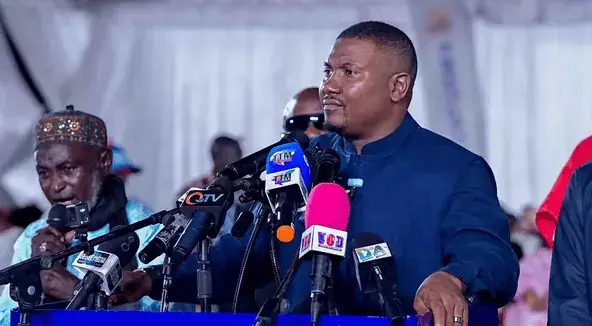
The recent release of the Government White Paper on the Local Government Commission of Inquiry's findings has sparked debate about the eligibility of Coalition 2026 candidate Talib Ahmed Bensouda to contest the presidency in The Gambia. Bensouda, the Mayor of Kanifing Municipal Council, is among public officials against whom the Commission made adverse findings. The Commission investigated the administration, governance, financial management, and use of public resources by the country's eight local government councils from May 2018 to January 2023.
The Commission's findings against Bensouda centered on procurement practices, financial management, project implementation, and the relationship between the mayor's political leadership and the council's administrative and accounting responsibilities. One major issue concerned the Mbalit waste-management project, under which the council acquired waste-collection trucks. The inquiry examined questions surrounding the project's financing, contractual arrangements, procurement processes, and the council's assumption of financial responsibilities.
According to reports, the Commission identified handwritten notes attributed to Bensouda on payment vouchers and procurement documents, including expressions such as "CEO, pay", "approved", "OK", and "support with X amount". Bensouda's position is that he was not the council's statutory accounting officer and had no legal authority to authorise payments. He has argued that the Chief Executive Officer and other relevant accounting officers held responsibility for financial authorisation.
Lawyer Ousman Jassey explained that the Commission found Bensouda's handwritten endorsements on vouchers and procurement documents facilitated payments, despite his claim that these were approvals of 'activities' rather than financial amounts. The Commission concluded that they amounted to irregular authorisations of expenditure. Jassey noted that improper behaviour may arise where a mayor exercises powers beyond those conferred by law, including exerting undue influence over recruitment, payments, procurement, and other administrative decisions.
Counsel Omar Dibba argued that the constitutional implications of the Commission's findings could affect Bensouda's eligibility to contest the presidential election. Section 62(3)(c) of the 1997 Constitution provides that a person who has been found liable for misconduct, negligence, corruption, or improper behaviour by a Commission or Committee of Inquiry established by law is not qualified for election as President. Dibba stated that the disqualification takes effect once the adverse finding is published in the Government White Paper.
The Independent Electoral Commission published its presidential nomination schedule on October 30, 2026, setting November 3-14 as the period for submitting presidential nominations. Coalition 2026 issued a statement rejecting concerns that the White Paper could prevent Bensouda from contesting the presidential election, maintaining that neither the Commission nor the Government had disqualified him from the presidential race.
Bensouda has reportedly appealed the Commission's findings against him to the Court of Appeal. The IEC and the courts may have to address the legal questions surrounding Bensouda's eligibility, including whether the Commission's adverse findings automatically disqualify him from contesting the election and what happens to his candidacy while his appeal is pending.
Key points
- Section 62(3)(c) of the 1997 Constitution may automatically disqualify Bensouda from contesting the presidency due to the Commission's adverse findings.