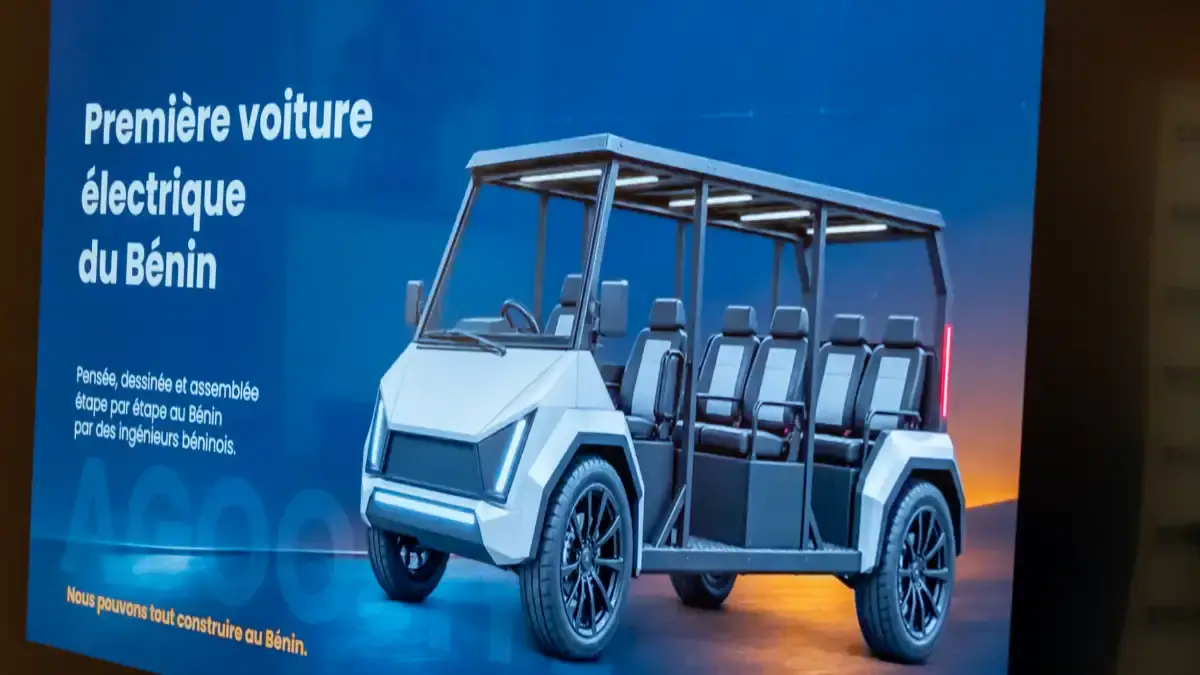
In the Glo-Djigbé Industrial Zone (GDIZ) of Benin, a prototype of an electric bus named AGOOJIYÉ is nearing completion. The project, initiated by Exportunity Machinery and supported by the Société d'investissement et de promotion de l'industrie du Bénin (SIPI-Bénin), brings together local students, engineers, technicians, and companies. The bus is designed to meet the mobility needs of the zone's 25,000 employees.
The AGOOJIYÉ project began with a challenge involving 85 students from various technical schools and institutions, who worked on the vehicle's design, technical, and electrical schematics. Partners such as Africa Design School, Epitech, and Future Studio contributed to the initial phase. The École polytechnique d'Abomey-Calavi (EPAC) also played a significant role in the project's development, with students and teachers participating in the assembly and verification of the vehicle's schematics.
As of November 9, 2026, the bus's bodywork was 98% complete, while the mechanical components were 96% finished. The remaining work includes integrating the electric motor, batteries, and electrical circuit, as well as interior fittings. The vehicle will have a capacity for eight people, including the driver, with a designated space for a passenger with reduced mobility.
According to Vital Sounouvou, the project leader from Exportunity Machinery, the goal is to demonstrate the capabilities of Benin's teams to design and assemble an electric vehicle. The project's partners believe that this collaboration will pave the way for innovative solutions in the local industry. Létondji Béhéton, director-general of SIPI-Bénin, emphasized the importance of finding environmentally friendly and adapted transportation solutions for the zone.
The first test drive of AGOOJIYÉ is scheduled for November 23, 2026, within the GDIZ. The project's promoters intend for the bus to be used for more than just demonstration purposes. Exportunity Machinery plans to produce around 680 vehicles to meet the transportation needs of the industrial zone. Potential uses also include tourist circuits, such as during the Vodun Days or along the Route des Pêches.
The development of AGOOJIYÉ represents a significant milestone for Benin's industrial sector, showcasing the country's ability to innovate and produce sustainable solutions. The collaboration between Exportunity Machinery, SIPI-Bénin, and local institutions has made this project possible, highlighting the potential for growth and development in the region.
The successful completion of AGOOJIYÉ could have a positive impact on the local economy and the environment. With its focus on sustainability and innovation, the project aligns with the goals of promoting eco-friendly transportation solutions and supporting local industries. As the project moves forward, it will be closely watched by stakeholders and industry experts.
Key points
- The AGOOJIYÉ electric bus project demonstrates Benin's capabilities in designing and assembling innovative, sustainable solutions.
- The project brings together local students, engineers, technicians, and companies, promoting collaboration and growth in the country's industrial sector.
- The planned production of 680 vehicles aims to meet the transportation needs of the Glo-Djigbé Industrial Zone, with potential applications in tourist circuits.