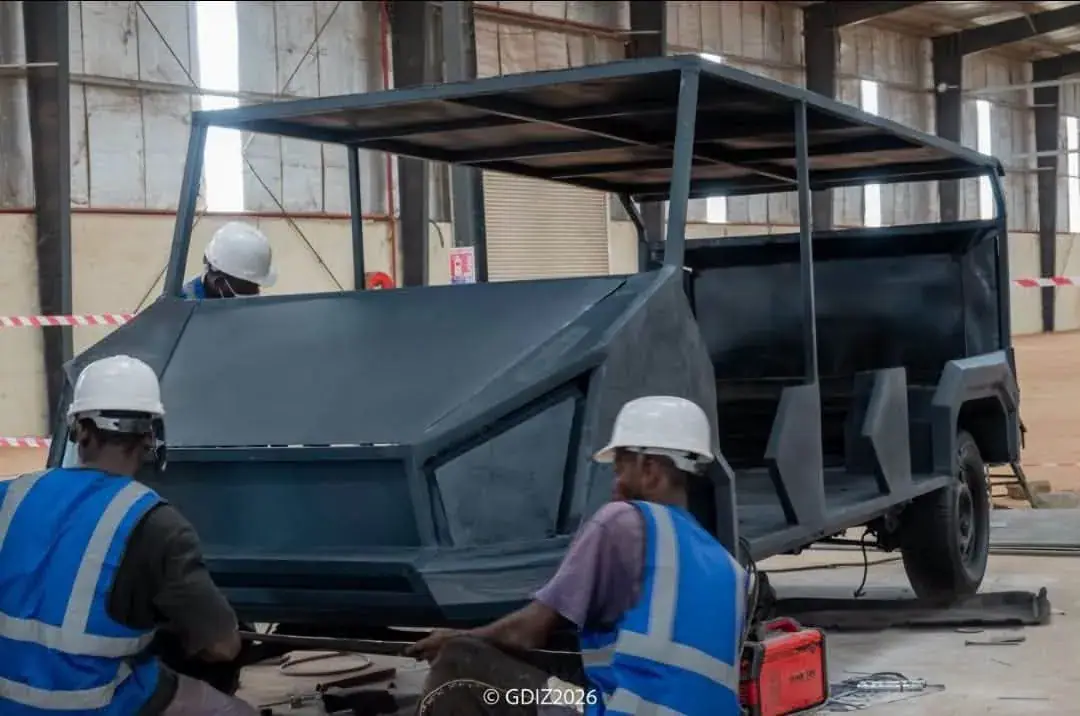
The Beninese industrial landscape is witnessing a significant transformation with the emergence of the AGOOJIYÉ electric bus project. Spearheaded by Exportunity Machinery Sas, this initiative aims to provide a local solution for collective transportation by designing and assembling an electric bus. According to Vital Sounouvou, the project's initiator, AGOOJIYÉ is a response to a practical need within the Glo-Djigbé Industrial Zone (GDIZ), where approximately 15,000 people work daily and travel an average of three kilometers between the entrance gate and their production units.
The AGOOJIYÉ project stands out for its involvement of young Beninese talents, with around 85 students from the Africa Design School and the Polytechnic School of Abomey-Calavi contributing to the vehicle's design. These students were supported by engineers and technicians from the Benin Industrial Assembly Company (SIAB), as well as local artisans and welders. Sounouvou emphasizes that the project not only addresses a transportation need but also demonstrates that national skills can be applied to complex technological domains, encouraging young people to believe in their innovative and industrial capabilities.
The project's ambition extends beyond the prototype, with Sounouvou aiming to contribute to the emergence of a national capacity for vehicle design and manufacturing. AGOOJIYÉ is seen as an experiment in collaboration between training institutions, industry professionals, and artisans. This initiative is not isolated, as various Beninese citizens are engaged in designing goods, equipment, and machines to meet concrete needs, reflecting a creative and technical potential that deserves encouragement and support.
The AGOOJIYÉ project has sparked enthusiasm, with the first driving tests scheduled for November 23rd within the GDIZ. This milestone marks a transition from design to on-field experimentation. Sounouvou's vision is that Benin will soon impress the world with its technical know-how, creating machines locally for local and global use. The project's success could pave the way for a new era in Beninese industry, showcasing the country's ability to innovate and produce.
AGOOJIYÉ's impact is also expected to be felt in the area of employment, with the potential to create jobs in the manufacturing and maintenance of electric vehicles. The project's focus on local talent and resources aligns with the government's efforts to promote economic development and reduce reliance on imported goods. As the Beninese economy continues to grow, initiatives like AGOOJIYÉ are crucial in driving progress and innovation.
The electric bus project also highlights the importance of collaboration between the public and private sectors in driving innovation and economic growth. The involvement of institutions like the Africa Design School and the SIAB demonstrates the potential for partnerships to yield tangible results. As Benin continues to develop its industrial capacity, such collaborations will be essential in shaping the country's economic future.
As the AGOOJIYÉ project moves forward, it will be closely watched by industry stakeholders and government officials. With its focus on innovation, local talent, and sustainable transportation, AGOOJIYÉ has the potential to make a lasting impact on Benin's economic and environmental landscape. The project's success could also inspire similar initiatives in other sectors, contributing to a broader culture of innovation and entrepreneurship in the country.
Key points
- The AGOOJIYÉ electric bus project is a significant step towards establishing Benin as a hub for electric mobility in West Africa.