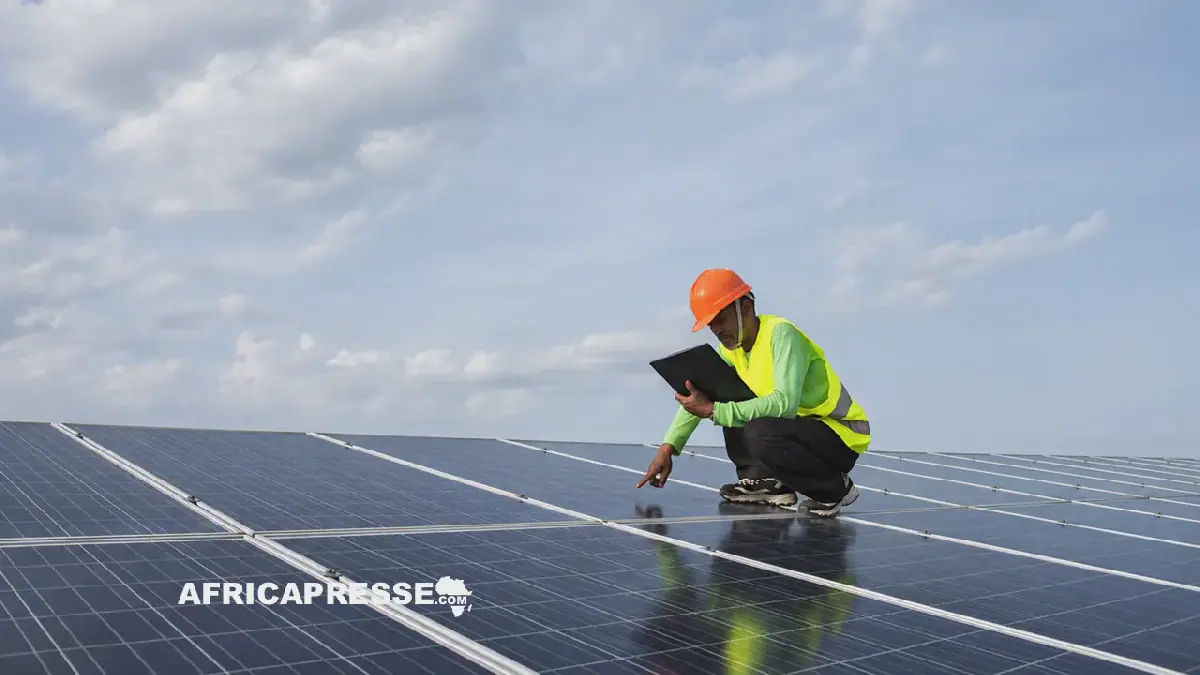
The government of Benin has stepped up efforts to boost its domestic electricity production, aiming to reduce dependence on imported power, which accounted for around 60% of the country's energy supply in 2024. To achieve this goal, Benin is adopting a multi-faceted approach, combining solar, gas, and hydroelectric power. This strategy is crucial for the country's economic stability, as the current reliance on foreign electricity imports has been a significant challenge.
In recent years, Benin has made notable progress in developing its national electricity production. As of 2025, the country's power generation capacity has reached 215 MW, thanks to the Maria-Gléta 2 thermal power plant (127 MW) and the Pobè solar power plant (75 MWc). The administration of President Romuald Wadagni has set an ambitious target of adding at least 100 MW of new capacity every two years. A new project in the Glo-Djigbé industrial zone is part of this plan.
Several significant projects have been announced to further enhance Benin's energy production. In late October, Emirati company AMEA Power signed a memorandum of understanding to develop a 100 MW solar power plant with battery storage. The cost and timeline for this project have not been disclosed. Additionally, AXIAN Energy has secured €30 million in funding for four solar power plants with a combined capacity of 62 MWc, located in Bohicon, Parakou, Djougou, and Natitingou. These plants are expected to be operational by early 2028.
Hydroelectric power is another key component of Benin's energy strategy. The Dogo-Bis complex on the Ouémé River is expected to generate 342 GWh of electricity per year. Other hydroelectric projects, including Vossa and Bétérou, are also underway, representing a combined capacity of over 200 MW. Furthermore, Benin is investing in natural gas infrastructure, including a dedicated pipeline with Nigeria, liquefied gas reserves, and a floating terminal at the port of Cotonou, slated for completion by the end of 2027.
Despite these efforts, Benin still faces significant challenges in its quest for energy self-sufficiency. The country experienced severe power outages in October 2026, highlighting the ongoing vulnerability of its energy system. Public electricity producers and distributors cite supply constraints from Ghana and Nigeria as major issues. According to a 2024 World Bank survey, 86.1% of Beninese businesses experience frequent power outages.
The impact of these outages is substantial, with businesses often relying on expensive generators and other alternative energy sources. A 2025 study by Clean Air Task Force found that these alternatives account for 44% of the electricity expenses of connected businesses. Moreover, Benin's dependence on imported electricity is compounded by declining gas supplies from Nigeria, forcing the country to rely more heavily on heavy fuel oil.
To overcome these challenges, Benin must address several critical issues, including modernizing its distribution network, which loses around 24.6% of electricity during transmission. The country also needs to develop energy storage capabilities to ensure a stable solar power supply. With the support of international organizations, including the World Bank and the African Development Bank, Benin aims to connect an additional 928,000 households to the electricity grid by 2030.
Key points
- Benin aims to reduce its dependence on imported electricity by developing a mix of solar, gas, and hydroelectric power.
- The country faces significant challenges, including power outages, declining gas supplies, and the need for modernizing its distribution network.
- Benin's success in achieving energy self-sufficiency will depend on the effective implementation of its energy projects and the mobilization of necessary funding.