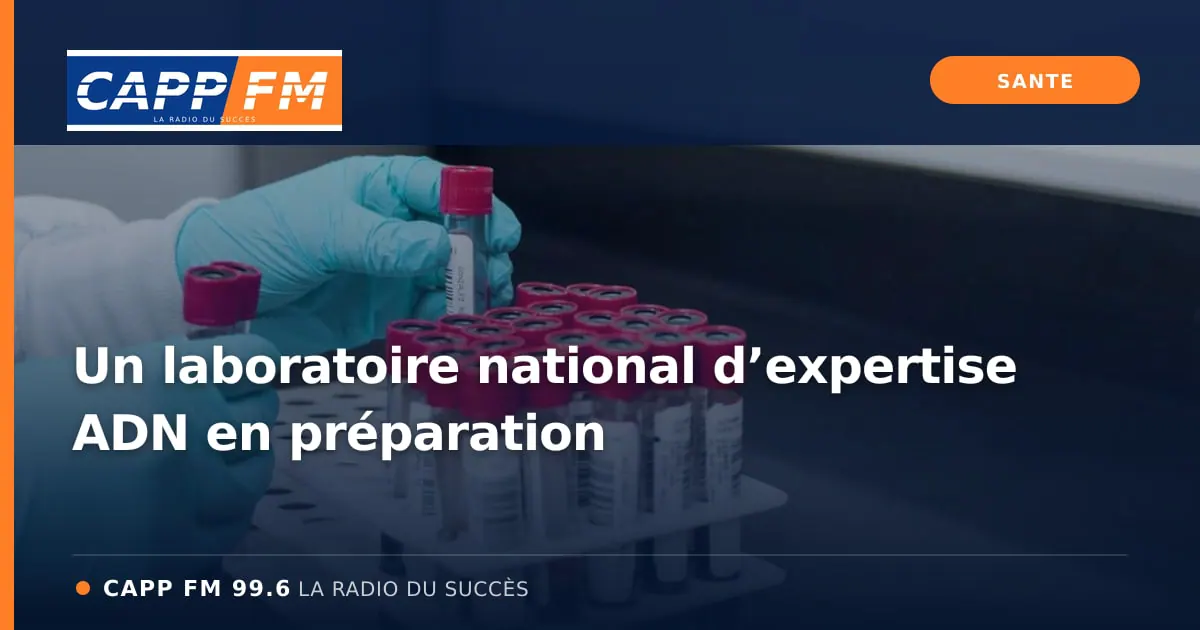
The Republic of Benin is preparing to establish a national DNA expertise laboratory as part of the Plateforme de recherche, d'investigation et d'analyse médico-légale (PRIAM) project. This initiative aims to enable the country to conduct genetic analyses with probative value locally, which were previously performed abroad. According to a communiqué published after Romuald Wadagni's visit to Paris, the new laboratory will significantly improve the country's forensic capabilities.
The laboratory will be capable of handling up to 30,000 DNA analyses per year. This development is expected to reduce the time and costs associated with sending samples abroad for testing. The ability to conduct genetic analyses locally will enhance the efficiency of judicial procedures and other applications such as identifying victims, establishing filiation, or locating missing persons through biological sample matching.
The DNA expertise laboratory will play a crucial role in various fields beyond criminal investigations. It will help identify victims of disasters, establish paternity, and exonerate suspects when DNA evidence does not match the collected elements. The laboratory's work will rely on high-quality standards to ensure the reliability of its analyses.
To ensure the sustainability of the project, over 500 professionals will receive training, and a dedicated university program will be created. This approach aims to equip Benin with skilled personnel capable of effectively utilizing the laboratory's infrastructure. Furthermore, the laboratory plans to achieve ISO/IEC 17025 accreditation, an international standard for testing and calibration laboratories.
The PRIAM project is a collaborative effort with the Laboratoire d'hématologie médico-légale de Bordeaux. Negotiations for financing are set to begin following the signing of a letter of intent with Bpifrance. Securing adequate funding will be essential for the successful implementation and operation of the laboratory.
The establishment of the national DNA expertise laboratory marks a significant milestone in Benin's efforts to enhance its forensic and investigative capabilities. By reducing reliance on foreign facilities for genetic analyses, Benin aims to improve response times and efficiency in handling various cases.
The project is expected to have a lasting impact on the country's judicial and health sectors. With its advanced capabilities and commitment to quality, the laboratory will contribute to the development of a robust forensic framework in Benin, supporting law enforcement, judicial processes, and humanitarian efforts.
Key points
- The laboratory will have the capacity to process up to 30,000 DNA analyses annually.
- Over 500 professionals will be trained, and a university program will be established to ensure the laboratory's sustainability.
- The laboratory aims to achieve ISO/IEC 17025 accreditation to ensure the quality and reliability of its analyses.