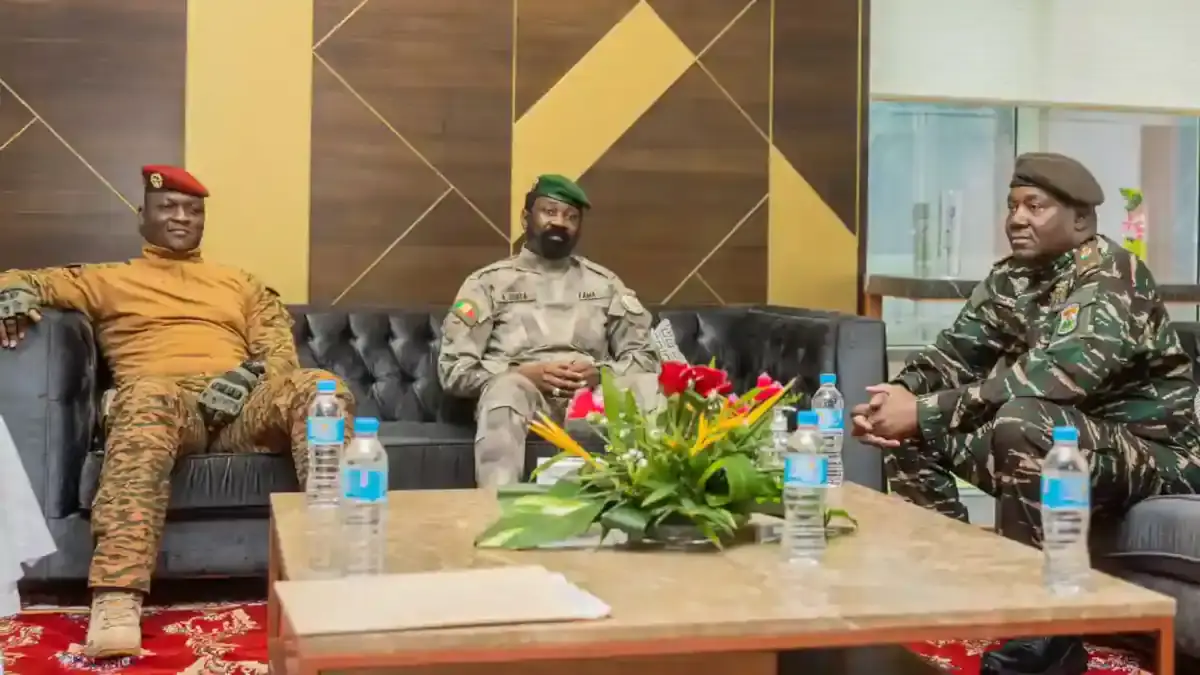
The countries of the Alliance of Sahel States (AES), comprising Mali, Burkina Faso, and Niger, are taking steps to enhance the security of their sensitive exchanges. To achieve this, they are developing a joint device for managing the radio frequencies of their defense and security forces. This initiative is at the center of the second coordination meeting for military frequencies, which began on November 2, 2026, in Bamako. The meeting, organized by the Malian Authority for the Regulation of Telecommunications, Information Technology, and Posts (AMRTP), will run until November 4.
The opening ceremony was presided over by General Oumarou Diarra, Minister Delegate to the Minister of Defense, in the presence of Saïdou Pona Sankaré, President of AMRTP, and Alhamdou Ag Ilyène, Minister of Communication. This move is part of a broader effort by AES to strengthen its collective security. In July 2026, the Ministers of Defense met in Ouagadougou to review the progress of the Unified Force established to pool the resources of the three armies against armed groups.
The Unified Force is a key component of AES's strategy to enhance its military capabilities. During the July meeting, General Célestin Simporé noted a shift towards a high-intensity war. Earlier, in April 2025, the Chiefs of Staff of the Air Forces of the three countries met in Bamako for the first time, emphasizing the crucial role of air power in modern warfare.
The joint device for managing military frequencies is based on three priorities: establishing a common database of military frequencies, preventing interference between networks, and securing communications in border areas. In September 2026, AMRTP and its counterparts in Burkina Faso and Niger signed a cooperation agreement in Ouagadougou. The agreement provides for the creation of a Council of Sahel Regulators, a permanent body tasked with sharing information and coordinating initiatives, including frequency management.
The AES countries are taking a comprehensive approach to securing their military communications. The device will provide a shared framework for coordinating military frequencies and securing communications in the Sahel region. According to a regional press analysis, AES is based on a treaty that forms a collective security alliance. The new device is expected to enhance the security and effectiveness of military operations in the region.
The second coordination meeting for military frequencies aims to finalize the details of the joint device. The meeting brings together experts from the three countries to discuss the technical and operational aspects of the device. The outcome of the meeting is expected to be a significant step towards enhancing the security of military communications in the Sahel region.
The development of the joint device is a critical component of AES's efforts to strengthen its collective security. The device will enable the three countries to share information and coordinate their military operations more effectively. This, in turn, is expected to enhance the security and stability of the Sahel region.
Key points
- AES countries develop a joint device to secure military communications.
- The device aims to establish a common database of military frequencies and prevent interference between networks.
- The initiative is part of a broader effort by AES to strengthen its collective security.