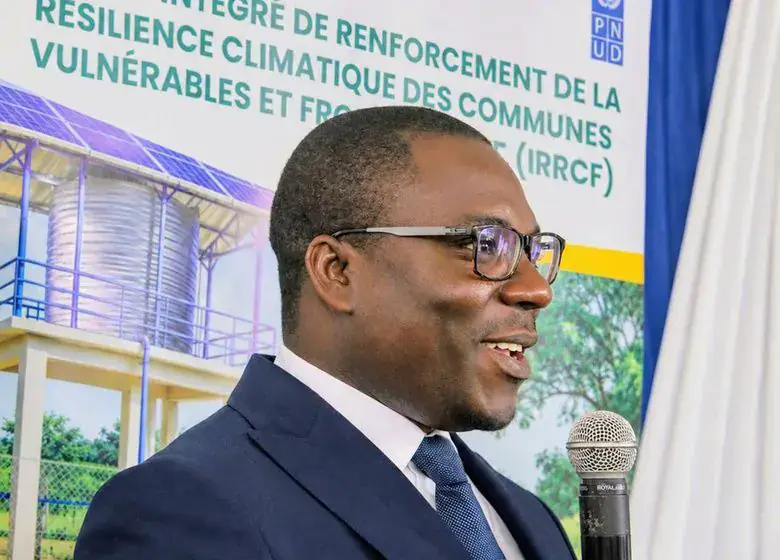
The Benin government, in partnership with the Swiss Cooperation, the Kingdom of Belgium, and the United Nations Development Programme (UNDP), has launched the Integrated Project for Strengthening Climate Resilience in Vulnerable and Border Communes (PIRRCF). The project aims to support the resilience of nine communes vulnerable to climate change, including Sèmè-Kpodji, Sakété, Kétou, Savalou, Dassa-Zoumè, Djougou, Copargo, Ouaké, and Malanville. The project was launched on November 11, 2026, by the Ministry of Agriculture, Livestock, and Fisheries.
According to the Beninese Agency for Civil Protection (ABPC), the country suffered over 72.6 billion FCFA in damages and 349,580 people were affected by floods, strong winds, and other extreme weather events in 2026. The ABPC rapid assessment also estimated that 291.5 billion FCFA is needed for recovery and reconstruction efforts. The PIRRCF project aims to address these challenges by investing in several sectors to strengthen the resilience of the targeted territories. The project has a budget of $15.5 million, which will be used to support agriculture, develop water management infrastructure, and promote local construction materials.
The PIRRCF project will run from 2026 to 2031 and is expected to directly benefit 31,687 people, including over 12,300 women. The project will also have positive impacts on over 1.5 million people in the intervention communes. The project's components include the development of agribusiness platforms, digital solutions, and agricultural value chains. Additionally, the project will support artisans and enterprises in the local construction materials sector, particularly in the production of compressed earth bricks (BTC) and typha.
The financing of the PIRRCF project is based on contributions from the Benin government and its partners. The Swiss government is providing $6 million, while the Belgian government is contributing $4.7 million. The Benin government is also contributing $3 million, and the nine beneficiary communes are participating in the financing to the tune of $1.5 million. The UNDP is providing $300,000 to support the project.
The PIRRCF project aligns with the priorities of the Benin government in terms of agricultural transformation, climate resilience, and territorial development. According to Adin Yeton Bloukounon Goubalan, Minister of Agriculture, Livestock, and Fisheries, the project will contribute to several Sustainable Development Goals (SDGs), including poverty eradication, food security, gender equality, access to clean energy, decent employment, and climate action.
To secure agricultural activities against irregular rainfall and drought episodes, the project will develop water management infrastructure and establish irrigation systems powered by solar energy. The project will also support the development of local construction materials, particularly in the production of compressed earth bricks (BTC) and typha. This component aims to strengthen the technical and material capacities of artisans and enterprises in these sectors.
The launch of the PIRRCF project marks a significant step towards strengthening the resilience of vulnerable communes in Benin. With its focus on agriculture, infrastructure, and local construction materials, the project is expected to have a positive impact on the lives of thousands of people in the intervention areas. The project's success will depend on effective implementation and coordination among the various stakeholders involved.
Key points
- The Benin government and its partners have mobilized $15.5 million to support climate resilience in nine vulnerable communes.
- The project aims to directly benefit 31,687 people and have positive impacts on over 1.5 million people in the intervention communes.
- The project's components include support for agriculture, water management infrastructure, and local construction materials.