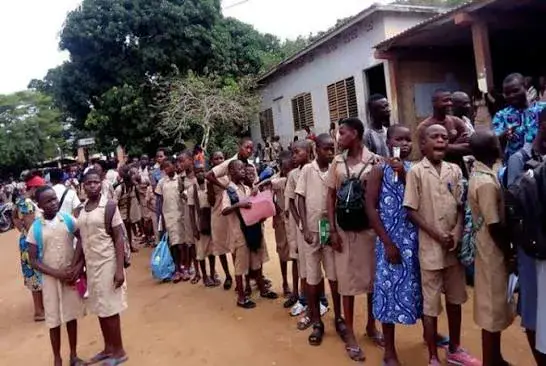
The Ministry of Secondary Education in Benin has issued a circular letter dated October 30, 2026, prohibiting the collection of unauthorized fees in public colleges and high schools. This move aims to alleviate the financial burden on families and prevent students from being denied access to education due to unpaid fees. The decision was made after several reports of irregular money collections in public schools.
According to the Ministry, some schools have been demanding additional payments from students beyond the officially approved fees. In some cases, students were reportedly sent out of classrooms for failing to pay these unauthorized fees. The Ministry views these practices as illegal and a threat to the right to education, which is a fundamental right that should be accessible to all. This move is part of the government's efforts to promote social equity and encourage girls' education.
The Ministry has warned school administrators that they will face consequences if they continue to collect unauthorized fees. School heads are prohibited from demanding or collecting money from students beyond the officially approved fees. Additionally, students are not required to purchase or wear specific uniforms or materials. The Ministry has instructed departmental directors to monitor schools and take action against those that fail to comply.
To ensure compliance, departmental directors are tasked with conducting surprise inspections and regular monitoring of schools under their jurisdiction. Any school administrator found guilty of violating these regulations will be reprimanded and reported to their superiors. The Ministry aims to protect access to public education and prevent financial barriers from hindering students' academic progress.
This move is not the first effort to address this issue. In April 2025, a circular letter reminded schools that students should not be denied access to evaluations or have their exam records withheld due to unpaid fees. Furthermore, the government extended free tuition to girls in public colleges and high schools for the 2026-2027 academic year.
The Ministry's decision has been welcomed by stakeholders, who view it as a step towards promoting equitable access to education. By prohibiting unauthorized fees, the government hopes to reduce the financial burden on families and encourage more students to enroll in public schools. The Ministry will continue to monitor the situation and take action against schools that fail to comply with the new regulations.
The ban on unauthorized fees is part of the government's efforts to improve the education sector. Recently, the government introduced an online casier judiciaire system, which allows for the instant delivery of certificates. Other initiatives, such as the development of the petroleum sector and public procurement reforms, are also underway. The government is committed to implementing policies that promote social equity and economic growth.
Key points
- The Ministry of Secondary Education in Benin has banned unauthorized fees in public colleges and high schools to promote equitable access to education.
- School administrators who collect unauthorized fees will face consequences, including reprimands and reporting to their superiors.
- The Ministry will conduct surprise inspections and regular monitoring to ensure compliance with the new regulations.