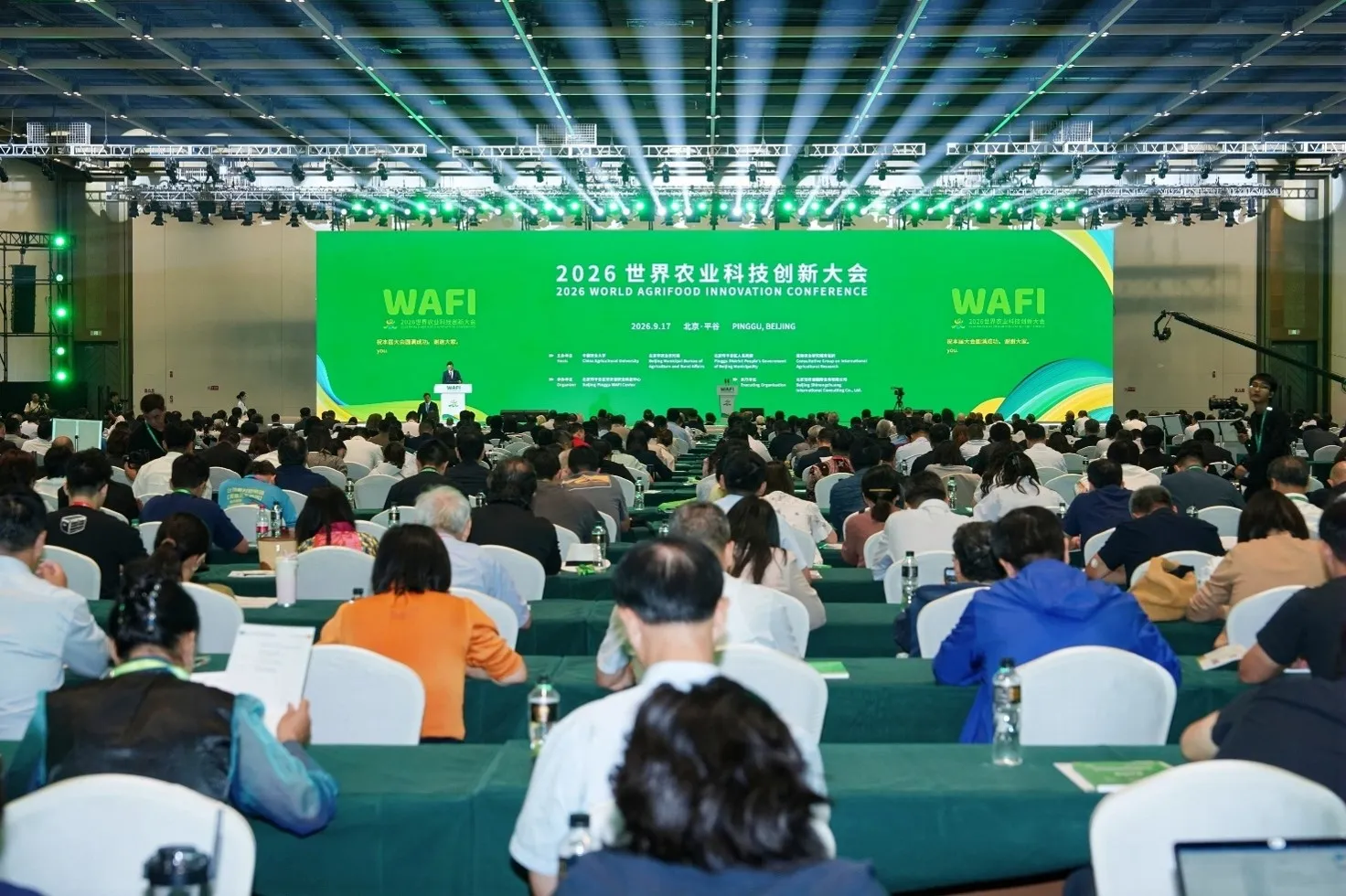
The World AgriFood Innovation Conference (Wafi) 2026 was held in Pinggu, Beijing, from September 17 to 19, 2026, with the theme "Green and Healthy Transformation of Agri-Food Systems." The conference brought together policymakers, researchers, businesses, farmers, investors, and innovators from around the world to explore solutions for making food systems more sustainable, resilient, and inclusive. The event featured exhibitions, discussions, and demonstrations of innovative technologies, including robots capable of harvesting fruits and vegetables, and digital platforms for managing agricultural production.
The conference highlighted the importance of adapting innovations to the realities of farmers, particularly in terms of access to data, financing, agricultural advice, and large-scale use. The use of artificial intelligence, digital agriculture, and biotechnology were among the main areas explored during the conference. Sessions focused on the use of artificial intelligence in agriculture and the conditions necessary for these technologies to benefit farms of different sizes. Exhibitions showcased agricultural robots, digital platforms, and solutions to improve production or manage farms, demonstrating a more connected agriculture.
One of the key challenges discussed at the conference was the need to move beyond fascination with technology and focus on practical applications. The Wafi 2026 aimed to create a dialogue between innovation and field needs, particularly for small-scale farmers who make up a significant part of the agricultural sector in many countries. Access to financing, equipment, infrastructure, knowledge, and markets is crucial for farmers to take advantage of new technologies.
The conference also emphasized the importance of reducing food waste and promoting sustainable agriculture practices. A session was dedicated to the circular economy and reducing food losses and waste. The goal is to consider food losses not only as a loss of food but also as a waste of land, water, energy, labor, and investments mobilized throughout the value chain.
The Wafi 2026 was organized by a committee that includes experts from various fields, including research, food systems, and security. Kenneth Quinn, co-chair of the advisory committee and president emeritus of the World Food Prize Foundation, was among the personalities who spoke at the opening ceremony. The conference was designed to bring together governments, the scientific community, businesses, investors, research institutions, and field actors around agricultural innovation.
The Wafi 2026 featured various events, including parallel sessions, thematic forums, meetings, and demonstrations of innovations. The conference aimed to promote cooperation between different actors to build more resilient and sustainable food systems. The vision of the Wafi is summarized by the formula "Innovating AgriFood, Sharing Future," which emphasizes the importance of collaboration to address global challenges.
The Wafi 2026 demonstrated that agriculture is no longer just about land, seeds, and harvests, but also about artificial intelligence, robotics, data, and new forms of cooperation. These are some of the avenues explored to answer the question of how to produce enough food to feed the population while preserving resources and the environment. The conference provided a platform for stakeholders to share knowledge, innovations, and best practices in sustainable agriculture.
Key points
- The Wafi 2026 conference highlighted the importance of adapting innovations to the realities of farmers and promoting sustainable agriculture practices to address global challenges.
- The use of artificial intelligence, digital agriculture, and biotechnology were among the main areas explored during the conference to make food systems more sustainable.
- The conference emphasized the need to reduce food waste and promote sustainable agriculture practices to build more resilient and sustainable food systems.