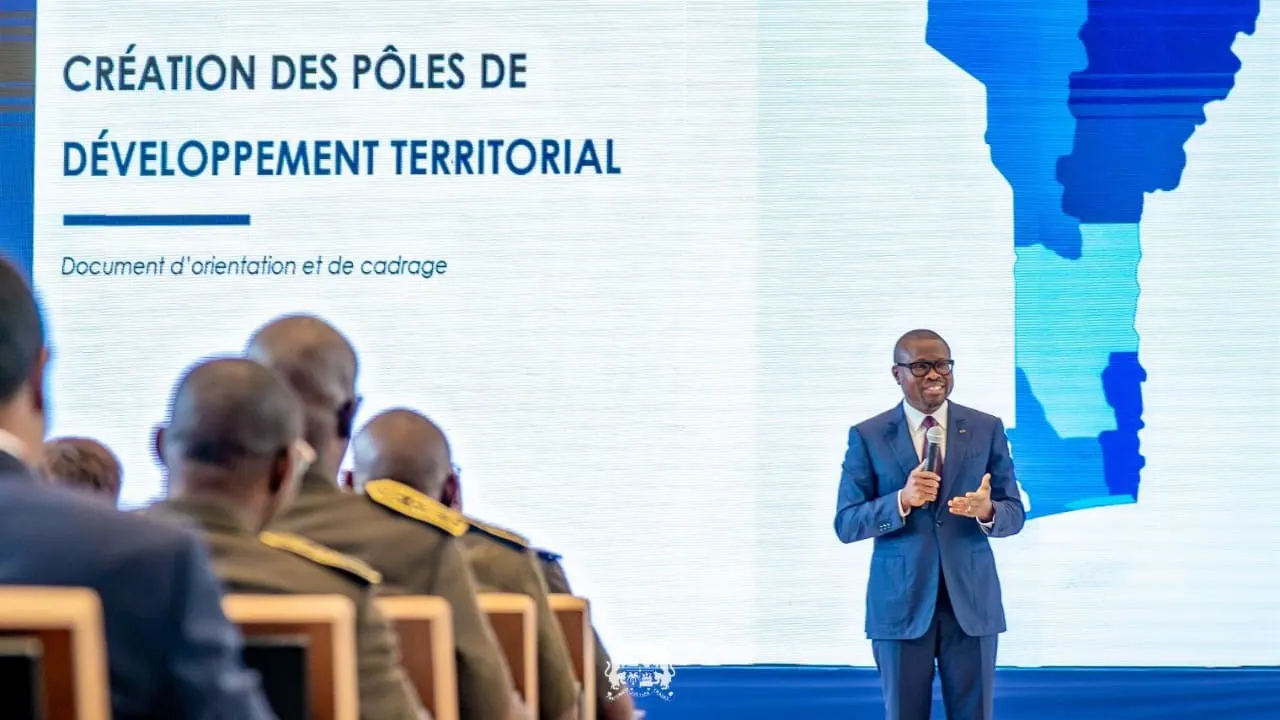
The government of Benin has unveiled a new initiative aimed at accelerating development at the grassroots level through the creation of territorial development poles. This reform, presented on September 23 at the Palais de la Marina, seeks to better coordinate public action, leverage local potential, and bring development results closer to the people. The move raises fundamental questions about transitioning from decentralization centered on communes to a dynamic of territorial development.
Benin has made significant strides in decentralization over the past two decades, with the establishment of 77 communes following local elections in 2002-2003. These local authorities have become key players in grassroots democracy and local development, acquiring competencies, developing plans, mobilizing resources, and forging partnerships to meet the needs of their populations. The National Association of Benin's Communes (Ancb), created in November 2003, serves as the umbrella organization for the 77 communes.
However, as time has passed, the limitations of the commune-based system have become apparent. Individual communes often struggle to drive economic, social, and infrastructural dynamics that transcend their administrative boundaries. Factors such as production basins, commercial corridors, markets, natural resources, and environmental and security issues frequently disregard communal limits. In response, the government has introduced the territorial development pole reform.
The reform, presented by the Secretary General of the Presidency of the Republic, Aristide Djidjoho, and the Minister of Decentralization and Local Governance, Janvier Yahouédéhou, aims to create a more cohesive approach to territorial development. Six poles are envisioned: Nord-Ouest, Nord-Est, Centre, Sud-Ouest, Sud-Est, and Grand Nokoué. Each pole will be tailored to its unique economic realities and potential, fostering a customized development dynamic.
The initiative was unveiled in the presence of President Romuald Wadagni, prefects, mayors of the 77 communes, government members, the President of the National Assembly, and members of the Economic and Social Council. The ambition is to redefine the territory as a coherent entity comprising potentialities, needs, and projects. This move is seen as an evolution of the decentralization process rather than a radical departure from it.
The creation of territorial development poles represents a new stage in Benin's decentralization journey, which began over two decades ago. While significant progress has been made, challenges persist. The government hopes that these poles will help overcome the limitations of the current commune-based system and create a more effective and sustainable development model.
The success of this initiative will depend on its implementation and the ability of the government to coordinate efforts across different levels of administration. The involvement of various stakeholders, including local authorities, government officials, and civil society, will be crucial in ensuring that the territorial development poles achieve their intended objectives and improve the lives of Benin's citizens.
Key points
- The government of Benin has introduced territorial development poles to enhance coordination and valorize local potential.
- The initiative aims to create a more cohesive approach to territorial development, with six envisioned poles tailored to their unique economic realities and potential.
- The reform represents a new stage in Benin's decentralization journey, which began over two decades ago.