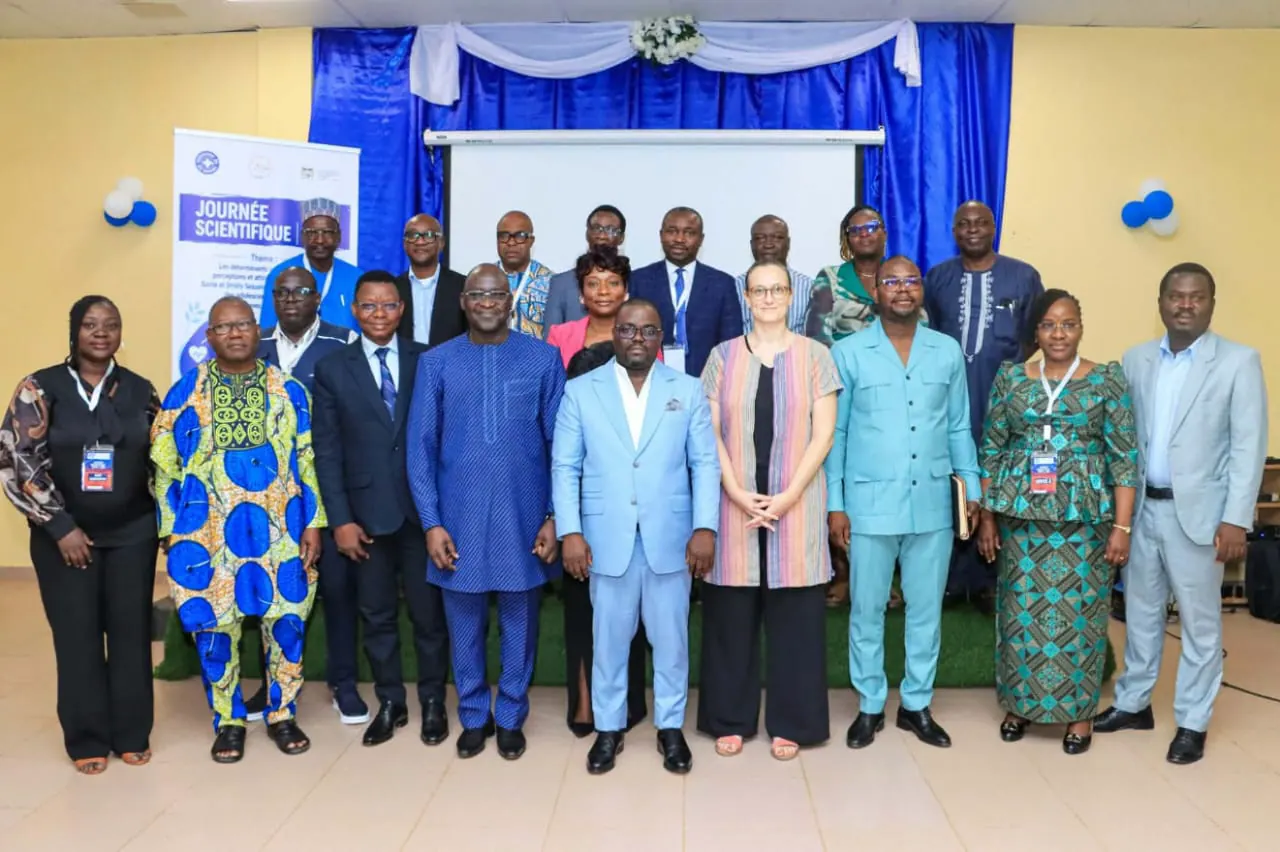
On September 30, 2026, Médecins du Monde Suisse in Benin, in collaboration with the Institut de Formation en Soins Infirmiers et Obstétricaux (IFSIO), organized a scientific day at the University of Parakou. The event brought together academics, researchers, healthcare professionals, community actors, students, and partners to discuss social and cultural determinants, perceptions, and attitudes related to sexual and reproductive health and rights (SDSR) and gender-based violence (VBG).
The scientific day, part of the RESPECT project, presented over thirty research studies on the sexual and reproductive health of adolescents, youth, and young people. The studies focused on sociocultural norms and beliefs, family and community dynamics, and perceptions and attitudes that influence young people's behaviors. According to Isabelle Floréani, General Coordinator of Médecins du Monde Suisse in Benin, the initiative aims to bring research closer to ground realities.
The RESPECT project, implemented since 2021 with financial support from Global Affairs Canada, aims to strengthen the enjoyment of health-related rights for vulnerable and marginalized individuals, particularly adolescents and young people aged 10-24. Floréani emphasized that research findings should go beyond academic circles to improve professional practices, programs, and policies. The collaboration between Médecins du Monde and IFSIO has strengthened the consideration of VBG in the training of future healthcare professionals.
Thierry Adoukonou, First Vice-Rector of the University of Parakou, representing the Rector, praised the initiative for bringing research closer to concrete population concerns. He noted that three scholarships have been established through the collaboration between the University of Parakou, IFSIO, and Médecins du Monde Suisse to support the production and valorization of knowledge on adolescent and youth health and well-being.
Adoukonou stressed that sexual and reproductive health issues cannot be analyzed solely from the perspective of healthcare provision or access to information. He emphasized the importance of social and cultural norms, beliefs, perceptions, family and community relationships, and living conditions. He called for an interdisciplinary and multidisciplinary approach, considering young people as key actors in research and reflection.
Representing the Minister of Higher Education and Scientific Research, Michael Agounkpé, emphasized the need to base public policies on data from scientific research. He noted that young people's sexual and reproductive health is influenced by social norms, cultural values, beliefs, family relationships, gender relations, information level, and living conditions. The scientific day aimed to create a dialogue between researchers, professionals, field actors, and decision-makers to identify means of translating produced knowledge into concrete actions.
The event concluded with a call to action to improve healthcare professional training, adapt information and education strategies, consider sociocultural realities, and strengthen VBG prevention. The Director of IFSIO, Professor Adrien Montcho Hodonou, welcomed the mobilization around the meeting, seeing it as a positive signal for opening the debate on subjects often surrounded by taboos.
Key points
- The scientific day presented over thirty research studies on the sexual and reproductive health of adolescents, youth, and young people.
- The RESPECT project aims to strengthen the enjoyment of health-related rights for vulnerable and marginalized individuals, particularly adolescents and young people aged 10-24.
- The collaboration between Médecins du Monde and IFSIO has strengthened the consideration of VBG in the training of future healthcare professionals.