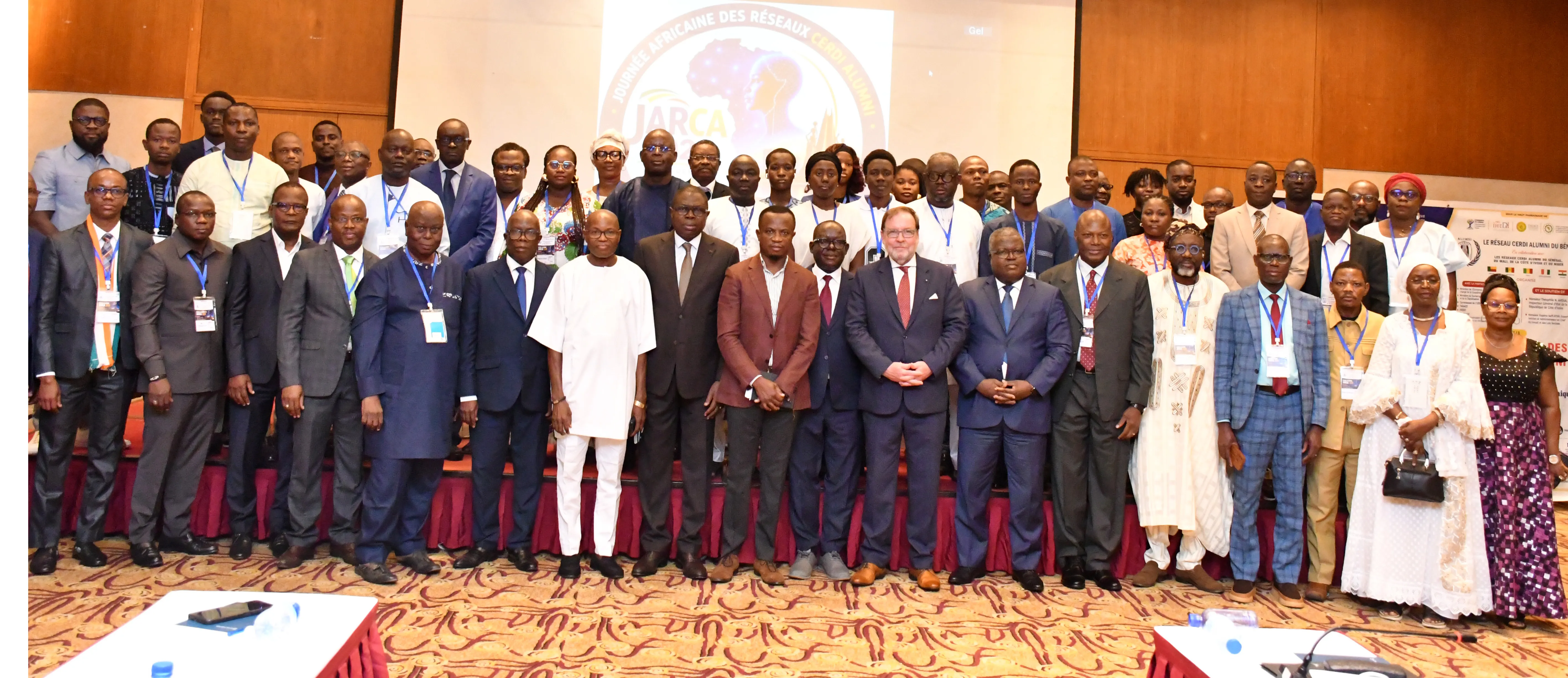
The first edition of the Journées annuelles des Réseaux CERDI Alumni (JARCA 2026) took place in Cotonou, Benin, with the theme "Quel modèle de développement économique pour les économies africaines à l'ère de l'intelligence artificielle ?" The conference brought together public decision-makers, economists, researchers, financiers, and experts to discuss the impact of artificial intelligence on African economies. The event was sponsored by the Fonds africain de Garantie et de Coopération économique (Fagace).
The conference highlighted the need for Africa to develop its own model of development in the era of artificial intelligence. Yves Assoussia Kokou, coordinator of the Réseau CERDI Alumni du Bénin, emphasized that Africa has the intelligence, expertise, and talent, but needs to better connect these competencies to transform them into collective action. The Fagace, as the sponsor of the event, aims to position itself at the interface between expertise, innovation, and financing.
The Fagace president, Ngueto Tiraina Yambaye, presented a vision for an adapted guarantee organism in the digital economy. He believes that combining artificial intelligence, Big Data, and modern guarantee mechanisms can reduce information asymmetries, improve risk evaluation, and facilitate access to credit for SMEs, start-ups, and innovative enterprises. The Fagace is transforming into a "connected, agile, and proactive" guarantee organism.
The conference also emphasized the importance of financing in Africa's structural transformation. The challenge is no longer just about acquiring technologies, but also about creating financial instruments to accompany their diffusion in the real economy. The digitalization of the guarantee chain, new products for technological sectors and ecological transition, and rapprochement between academic research and financial innovation are among the orientations announced.
The event also highlighted the conditions necessary for artificial intelligence to produce durable effects. Codjovi Djossou, representative of the Beninese Minister of Finance and Microfinance, recalled that technological innovation must be accompanied by solid institutions, adapted competencies, and regulation capable of preserving trust and financial stability. The quality of data, digital infrastructures, training, and the capacity of institutions to master new risks are crucial.
The Commission de l'Uemoa is also working on a regional strategy for artificial intelligence, aiming to strengthen cooperation, digital sovereignty, innovation, and competitiveness in the community space. The organization wants to elaborate a strategy that will enable the region to benefit from artificial intelligence while minimizing its risks.
The JARCA 2026 aims to create a link between research and public decision-making, transforming the competencies accumulated within the CERDI Alumni network into concrete proposals for African states and institutions. The event seeks to form the competencies of tomorrow, finance innovation, modernize administrations, and improve public resource mobilization.
Key points
- The JARCA 2026 conference in Cotonou, Benin, brought together experts to discuss Africa's development model in the era of artificial intelligence.
- The event highlighted the need for Africa to develop its own model of development in the era of artificial intelligence.
- The Fagace aims to position itself at the interface between expertise, innovation, and financing to support Africa's development in the digital economy.