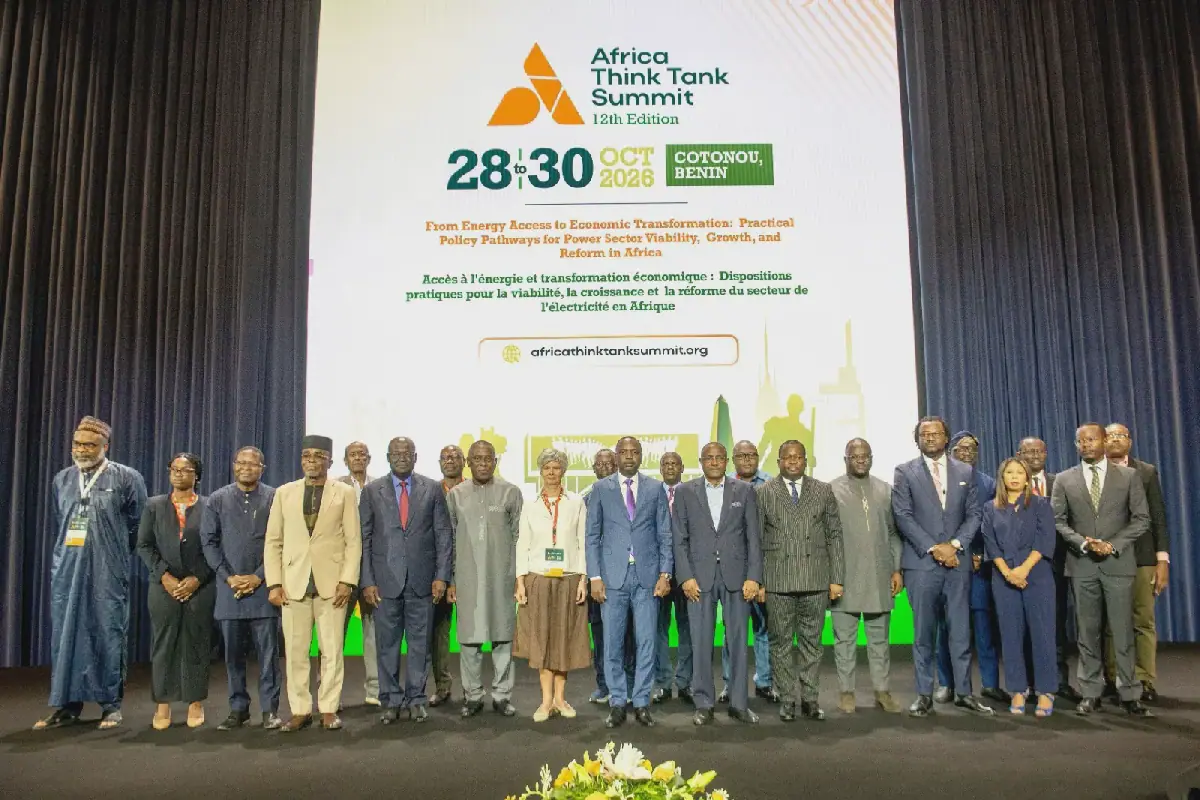
The 12th edition of the African Think Tank Summit has commenced in Cotonou, Benin, with a focus on the challenges of energy access and economic transformation across the continent. The event, which brings together public officials, researchers, think tank leaders, and private sector actors from over 50 countries, aims to formulate concrete recommendations for a performant, sustainable, and financially viable electricity sector. The summit seeks to position energy as a genuine lever for growth, job creation, and industrial development.
The summit, themed "From Energy Access to Economic Transformation: Concrete Strategic Orientations for Viability, Growth, and Electricity Sector Reform," aims to move beyond the issue of connecting populations to the electrical grid. Instead, it seeks to explore ways to guarantee reliable, accessible, and affordable energy that can sustainably support African economies. Mamadou Biteye, Executive Secretary of the African Capacity Building Foundation (ACBF), emphasized that the continent's challenge is no longer just about the number of people connected to electricity but about what people can actually accomplish with this energy.
According to Mamadou Biteye, approximately 600 million Africans remain without electricity, and there are difficulties related to the quality of supply and the cost of energy for enterprises. He called for structural reforms, institutional capacity building, and sustained political will. Biteye invited think tanks to go beyond their traditional advisory role and contribute more to the design, implementation, and evaluation of public policies. He emphasized the need for solutions adapted to African realities.
In his welcome address, Cotonou Mayor Luc Gnacadja stressed the concrete repercussions of energy access on economic activities. He noted that from artisanal workshops to agro-food processing enterprises, electrical disruptions affect production, employment, and value creation. Gnacadja emphasized that local authorities must take their rightful place in the reflection on energy policies to better articulate infrastructure with the needs of populations and economic actors.
Benin's Minister of Economy and Finance, Aristide Médenou, highlighted the progress made over the past decade, with a significant increase in electricity coverage. However, he stressed the need to accelerate efforts to make energy available at a lower cost without compromising public finances or increasing debt risks. The summit features a high-level roundtable on political leadership and electricity sector reforms in Africa, as well as discussions on concrete solutions.
The two-day summit will bring together experts and stakeholders to discuss the challenges and opportunities in Africa's energy sector. Participants will explore ways to address the energy gap and promote sustainable economic growth. The event is expected to yield concrete recommendations for policymakers, think tanks, and private sector actors. The outcomes of the summit are expected to contribute to the development of effective energy policies and strategies.
The African Think Tank Summit is an annual event that brings together experts and stakeholders to discuss key issues affecting the continent. This year's summit is particularly significant, given the critical role that energy plays in driving economic growth and development. The event is expected to have a lasting impact on the development of Africa's energy sector and the continent's economic transformation.
Key points
- The summit aims to position energy as a genuine lever for growth, job creation, and industrial development in Africa.
- Approximately 600 million Africans remain without electricity, and there are difficulties related to the quality of supply and the cost of energy for enterprises.
- The summit seeks to formulate concrete recommendations for a performant, sustainable, and financially viable electricity sector.