The Benin government recently celebrated Biodigester Month, an initiative organized by the Alliance for Biodigester in West and Central Africa (Ab-Aoc), to promote the use of biodigesters in transforming animal waste and agricultural residues into cooking gas. The month-long celebration, which took place in October 2026, aimed to raise awareness about this technology and its benefits, particularly for households involved in agriculture and livestock. The initiative was launched to showcase the potential of biodigesters in improving living conditions and reducing environmental pollution.
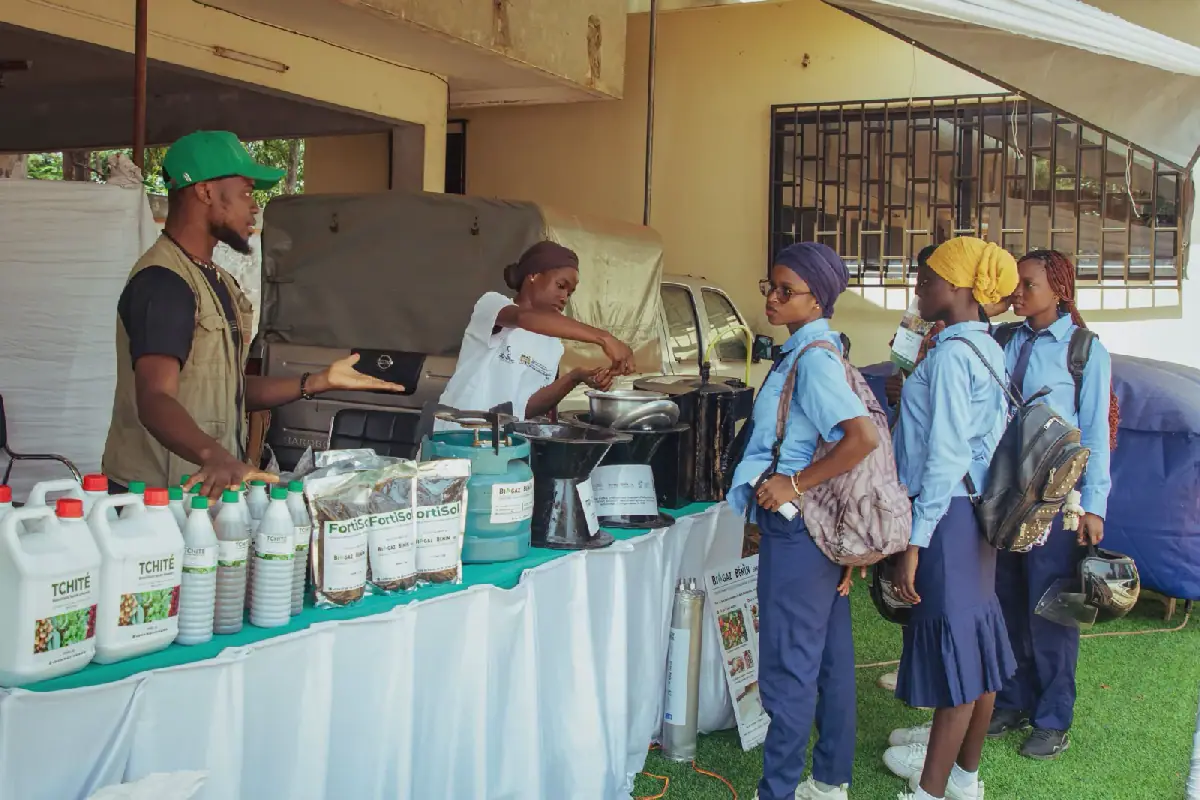
During the celebration, two information stands were set up in strategic locations, including the Departmental Directorate of Energy, Water, and Mines of the Atlantic in Calavi Kpota, and the University of Parakou. These stands provided a platform for people to learn about the innovations in the sector, interact with users, and get answers to their questions. The event also featured documentary screenings and national language capsules to facilitate awareness and understanding of the technology.
A biodigester is an installation that converts organic matter, such as cow dung, poultry droppings, and slurry, into biogas through a fermentation process in the absence of air. The biogas is then transported through a pipe to the kitchen, where it is used as a cooking fuel. The residual product, known as digestate, is an organic fertilizer that can be used in agricultural farms. This technology offers a dual advantage of reducing dependence on wood and coal while providing a natural fertilizer to producers.
The use of biodigesters has several benefits, including reducing pollution related to livestock waste, deforestation, and household exposure to cooking fumes. However, despite its advantages, the development of biodigesters faces several challenges, including high installation costs, lack of qualified technicians for maintenance, and inadequate follow-up after installation. To overcome these challenges, the sector requires the training and certification of constructors, improvement of equipment quality, and adapted financing mechanisms for agricultural incomes.
To address these challenges, a workshop was organized in Cotonou on October 14-15 by Ab-Aoc and the Ministry of Energy. The workshop focused on the Strategic Biodigester Framework 2027-2030, which aims to further structure the sector. The goal is to transform the interest generated among the population into a dynamic of acceptance, so that organic waste becomes a sustainable resource for households and agriculture.
The celebration of Biodigester Month in Benin is part of a broader effort to promote renewable energy and sustainable agriculture practices in the country. The government and stakeholders are working together to create awareness and promote the adoption of biodigesters, which can contribute to reducing greenhouse gas emissions and improving the livelihoods of rural communities.
The adoption of biodigester technology has the potential to revolutionize the way households and farmers manage waste and energy. With the right support and incentives, biodigesters can become a vital component of Benin's energy mix, providing a reliable and sustainable source of energy for households and agricultural enterprises.
Key points
- The Benin government celebrated Biodigester Month to promote the use of biodigesters in transforming animal waste and agricultural residues into cooking gas.
- The technology offers a dual advantage of reducing dependence on wood and coal while providing a natural fertilizer to producers.
- Despite its advantages, the development of biodigesters faces several challenges, including high installation costs and lack of qualified technicians for maintenance.