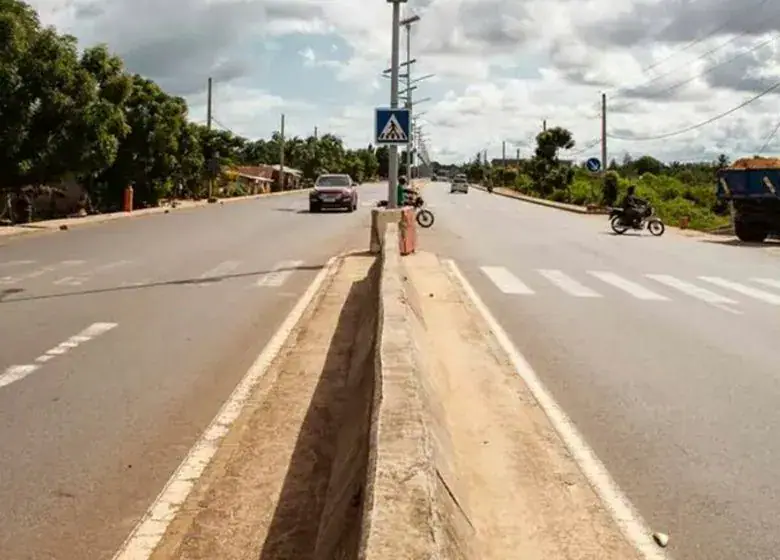
The National Assembly of Benin has adopted a new road code, marking a significant overhaul of the country's traffic regulations. The new law, comprising 21 articles divided into six titles, aims to improve road safety and organization. It sets out rules for public roads, covering vehicles, drivers, passengers, and all users, regardless of nationality. The code also applies to foreign-registered vehicles, in accordance with reciprocal agreements.
The new road code prioritizes the protection of vulnerable road users, including pedestrians and motorcyclists. Drivers are required to yield to pedestrians already on the road or clearly intending to cross. The code also mandates the design of national and inter-state roads to include separate lanes for cars and two-wheel vehicles, where possible. Additionally, the occupation of sidewalks reserved for pedestrians is prohibited.
The code introduces stricter regulations for motorcyclists and their passengers, requiring them to wear protective helmets. The same applies to passengers on certain tricycles and quadricycles without safety devices. In cars, drivers and passengers must wear seatbelts before starting the vehicle and keep them fastened until it stops. The transport of children requires the use of adapted restraint systems.
The new code cracks down on driving under the influence of alcohol, narcotics, or psychotropic substances. Police can subject drivers involved in accidents or stopped during specific operations to screening tests. The code also provides for the immediate withdrawal of driving licenses in certain circumstances, such as driving under the influence or refusing to undergo testing.
The code sets general speed limits, with a maximum speed of 50 km/h in urban areas and 30 km/h in school zones. Outside these areas, speeds can be increased to 70 km/h on roads with sufficient safety features. Municipalities can impose lower speed limits within their jurisdictions. The code also regulates vehicle maintenance, requiring regular technical inspections and prohibiting vehicles that emit hazardous fumes or excessive noise.
The code introduces stricter rules for vehicle registration, license plates, and transformations that may alter vehicle characteristics. Vehicles must be equipped with approved braking, lighting, and signaling systems. The code also addresses parking, prohibiting vehicles from being parked on sidewalks, pedestrian crossings, bike lanes, or emergency access points.
The new road code provides for penalties for various infractions, including driving without a valid license, excessive speeding, and driving under the influence. Fines range from 250,000 to 350,000 FCFA for certain offenses. The code emphasizes prevention, requiring road safety education in schools and promoting awareness campaigns to reduce accidents and improve road safety.
Key points
- The new road code aims to reduce road accidents and improve safety for all users.
- Stricter regulations are introduced for driving under the influence and speeding.
- The code prioritizes the protection of vulnerable road users, including pedestrians and motorcyclists.