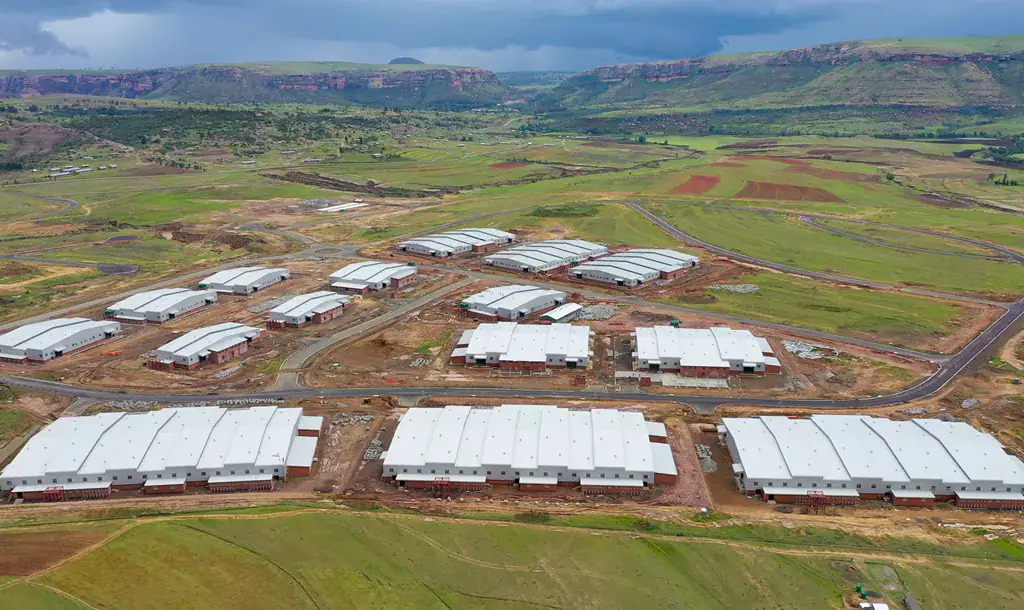
The Ha Belo Industrial Estate in Botha-Bothe, Lesotho, is finally nearing completion after years of delays. The 16 factory shells were completed in April last year, but their operationalisation was held back by delays in constructing the Ha Belo 33kV substation and associated power lines. The Lesotho National Development Corporation (LNDC) started construction of the M800 million industrial estate in 2016. The project has been marred in controversy, with allegations of corruption and financial mismanagement.
The electrification project, part of the World Bank-funded Lesotho Renewable Energy and Energy Access Project (LREEAP), was initially expected to be completed by April 2023 at a cost of M86.6 million. However, the project cost later escalated to M121,577,004.21. The government refunded M22 million to the World Bank in June 2025 after failing to account for funds intended for the Ha Belo substation. The Ministry of Energy's Principal Secretary, Tankiso Phapano, has distanced himself from the scandal.
The project's delays have had a significant impact on the local community, with many residents struggling financially. Some had taken out loans to build rental accommodation, anticipating an influx of factory workers, only to struggle with repayments as their properties remained largely unoccupied. Others had hoped to secure jobs at the factories but were left uncertain about their prospects as the project stalled for about four years.
In June 2025, Prime Minister Sam Matekane announced that a further M50 million would be needed to complete the project. The government subsequently engaged Actom (Pty) Ltd to take over the outstanding work. According to a copy of Actom's contract, the Ministry of Energy entered into an agreement worth M49,720,215.42 with the company on 20 September 2025.
The project is now reportedly complete, with Mr Matekane expected to lead its official handover and commissioning. The renewed progress has rekindled hopes that the long-delayed industrial investment could finally deliver on its promise of creating jobs, stimulating business activity and reviving the district's economy. Botha-Bothe District Administrator, Tšepa Chaba, said the opening of the factories would provide much-needed relief to residents who had invested in rental accommodation.
The anticipated employment opportunities are expected to help address unemployment, particularly among young people in Botha-Bothe and other parts of the country. Community member Alice Sehlabi said the factories represented an opportunity to revive an economy that had remained stagnant while residents waited for the promised investment to materialise. Energy and Mining Minister, Lejone Mpotjoane, said the reconstructed substation was now ready to supply electricity to the factories.
The government has put pressure on the responsible authorities to ensure the infrastructure was completed and remove a major obstacle to the industrial estate becoming operational. Mr Mpotjoane expressed satisfaction with the current contractor's performance, contrasting it with that of the previous contractor, whom he accused of failing to deliver as expected. The government intends to establish the financial losses arising from the project's initial setbacks and ensure that those responsible are held accountable.
Key points
- The Ha Belo Industrial Estate is expected to create at least 15,000 jobs once fully operational.
- The project's delays were caused by allegations of corruption and financial mismanagement.
- The government has engaged Actom (Pty) Ltd to complete the outstanding work at a cost of M49,720,215.42.
Reporting sources
- Belo factories rekindle hopes of jobs and economic recovery · Lesotho Times website