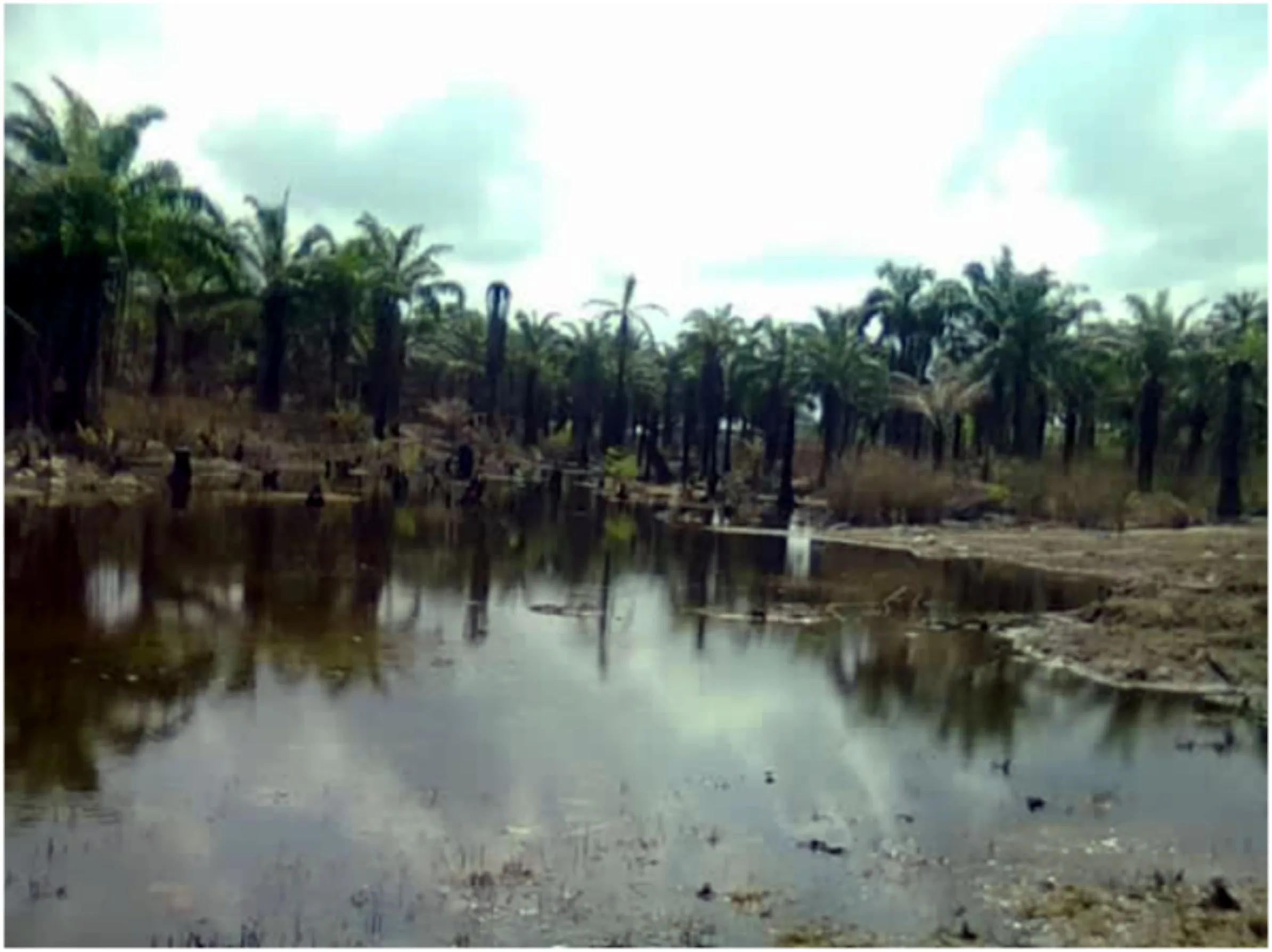
The Bayelsa State Oil and Environmental Commission has requested at least $12 billion to be invested over 12 years to clean up decades of oil pollution, restore damaged ecosystems, and address health and economic consequences suffered by communities across the state. This call was made in the Commission's report, "An Environmental Genocide: Counting the Human and Environmental Cost of Oil in Bayelsa, Nigeria". The report highlights the severe environmental and health impacts of oil extraction in Bayelsa.
The Commission, established by the Bayelsa State Government in March 2019 and chaired by Lord Sentamu, the former Archbishop of York, conducted an investigation that revealed a pollution crisis of extraordinary scale in Bayelsa. The state's oil production accounts for about 18 to 20 per cent of Nigeria's total oil production. Despite the enormous revenues generated from petroleum resources, the Commission noted that Bayelsa has paid a disproportionately heavy environmental and social price.
According to the report, Bayelsa, home to Oloibiri where Nigeria's first commercial oil well was drilled, has suffered some of the most severe consequences of oil extraction in the Niger Delta. The level of contamination is such that as much as 1.5 barrels of oil have been spilled for every man, woman, and child living in the state. This has resulted in widespread contamination of land and waterways, destruction of livelihoods, and serious health concerns.
The Commission estimated that since 2006, oil produced in Bayelsa has generated more than $150 billion for the Federal Government, while the state's oil production contributes approximately $10 billion annually in government revenue. However, the benefits of oil production have been accompanied by severe environmental degradation, including the destruction of mangrove forests, which has contributed to biodiversity loss and weakened natural protection against flooding, storms, and erosion.
The Commission's scientific work included a review of hydrocarbon contamination in soil, water, and air, as well as a health impact study involving blood samples from more than 1,600 people. The report found that oil-related toxins had entered the food chain and were detected in the bloodstreams of people tested in affected communities. In some locations, chromium concentrations in groundwater were reported at more than 1,000 times the World Health Organisation limit.
The environmental consequences of oil pollution in Bayelsa are equally severe, with the state and neighbouring states losing about 40 per cent of their mangrove forests since oil production began. This destruction has contributed to biodiversity loss and weakened natural protection against flooding, storms, and erosion. The Commission also linked pollution to declining fisheries and agricultural productivity in communities whose economies depend heavily on farming and fishing.
The Commission noted that 70 per cent of Bayelsa's population relies on agriculture and fisheries, making environmental degradation particularly damaging to household incomes and food security. The Commission's report calls for urgent action to address the environmental and health impacts of oil pollution in Bayelsa and to ensure that the state's oil resources are extracted in a sustainable and responsible manner.
Key points
- The Bayelsa State Oil and Environmental Commission has requested $12 billion to clean up decades of oil pollution.
- Oil production in Bayelsa has generated over $150 billion for the Federal Government since 2006.
- The state's oil pollution crisis has resulted in severe environmental degradation, including the destruction of 40 per cent of its mangrove forests.