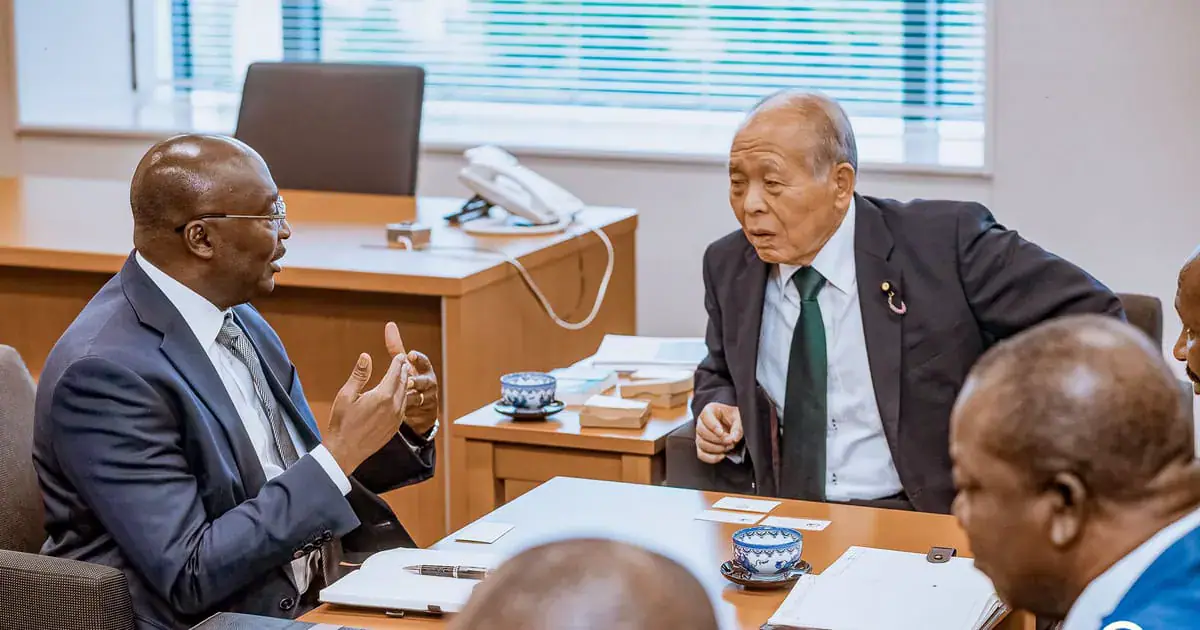
Dr. Mahamudu Bawumia, the New Patriotic Party (NPP) flagbearer, has proposed that Ghana's political parties adopt binding, long-term national masterplans for major infrastructure projects. This initiative aims to prevent projects from being abandoned when governments change. Bawumia made this call after his engagements in Japan, where he discussed urban masterplanning, transport systems, and flood mitigation with officials from the Japan International Cooperation Agency (JICA) and engineering consultancies.
Bawumia's proposal is based on Japan's experience with multi-decade agreements that outlast individual administrations. He noted that Japan's infrastructure delivery relies on long-term plans, with a 30-year commitment to executing them. In contrast, Ghana's infrastructure projects are often vulnerable to disruption at the end of every four-year electoral cycle. Bawumia emphasized that the absence of cross-party blueprints leaves critical public works susceptible to abandonment.
The NPP flagbearer identified coastal erosion, flood control, and public transport as three priority sectors where political parties should formally endorse shared national plans. He urged all political parties to sign up to these plans, ensuring that no matter who forms the government, the plan will be executed until it is completed. This, he believes, will prevent incoming governments from shelving unfinished works started by their predecessors.
Bawumia's call for binding national masterplans has been echoed by economists, including Professor Godfred Bokpin, who appealed for at least 15 years of consistent policy execution across successive administrations. The current administration is advancing coastal protection works at Blekusu, and Bawumia has recently made policy interventions on gold reserves and artificial intelligence rules for workers.
The proposed cross-party commitment would give engineering and financing partners long-term certainty. Bawumia's meetings in Japan examined urban masterplanning, transport systems, flood mitigation, disaster risk reduction, and coastal erosion. He also discussed monetary policy and payment systems with Bank of Japan officials.
Bawumia's initiative is seen as a move to ensure continuity and stability in Ghana's infrastructure development. By adopting binding national masterplans, Ghana's political parties can work together to achieve long-term goals, rather than treating infrastructure as a partisan agenda. This approach could help to prevent the abandonment of critical public works and ensure that projects are completed.
The NPP flagbearer's proposal has sparked discussions on the need for a more collaborative approach to infrastructure development in Ghana. As the country continues to face challenges related to coastal erosion, flood control, and public transport, a binding national masterplan could provide a framework for addressing these issues. The success of this initiative will depend on the willingness of Ghana's political parties to work together and adopt a long-term perspective.
Key points
- Dr. Mahamudu Bawumia calls for Ghana's political parties to adopt binding, long-term national masterplans for major infrastructure projects.
- The proposed plans would cover priority sectors such as coastal erosion, flood control, and public transport.
- Bawumia's initiative aims to prevent projects from being abandoned when governments change.