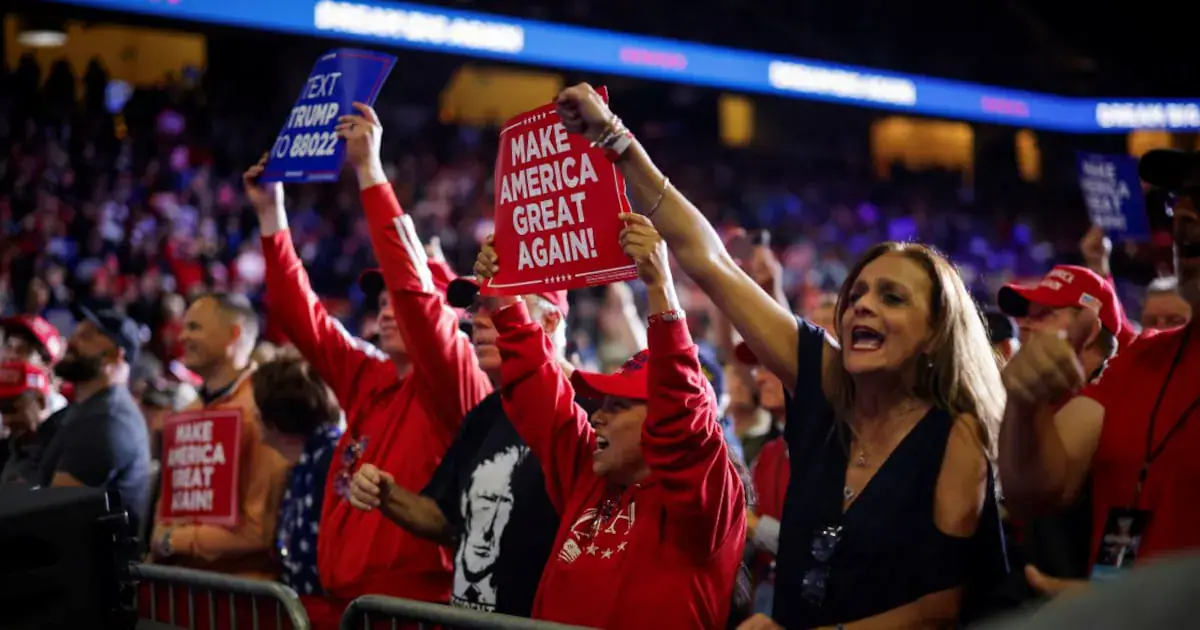
The Republican Party's worst electoral defeat in decades has left the Make America Great Again movement facing an existential reckoning. Supporters are questioning whether President Donald Trump has become the movement's biggest liability. Michael Little, a 59-year-old businessman and three-time Trump voter, expressed frustration, saying "People are pissed off at Trump. Trump has cost us." This sentiment is rippling through the movement after voters delivered Democrats decisive congressional majorities.
Trump's response to the midterms was to double down on the movement's core, promoting Stephen Miller, the architect of the administration's hardline immigration crackdown, to chief of staff. This move was celebrated by some MAGA influencers, who see it as a return to the anti-immigration agenda at the movement's roots. However, others are calling for a change in leadership and direction. The movement's factions disagree about what comes next, with some wanting a return to populist and nationalist basics, while others want a movement less tied to one man.
The midterm losses amounted to more than a repudiation of Trump; they were a referendum on the political and cultural movement he built. The movement has reshaped the Republican Party and transformed national debates on issues such as trade, immigration, race, and gender. However, the Democrats' sweeping victory has forced the movement to grapple with an unexpected question: is MAGA over? Some prominent Republicans, long wary of a MAGA base that punished dissent, have begun openly criticising Trump.
Republican US Senator Ron Johnson of Wisconsin said corruption was present in "all branches of government", including "I'm sad to say, within the Trump administration." He cited Calley Means, a former White House adviser who accused Trump's top aides of catering to special interests and blocking policies popular with Trump's Make America Healthy Again movement. Voters "were expecting us to drain the swamp, but it seems like the swamp won", Johnson told Fox News.
The White House did not directly answer questions about why Republicans lost or where MAGA goes from here. Instead, it pointed to Trump's remarks, where he said, "If I were on the ballot, we would have won." He also said it was "largely true" that the Iran war had cost Republicans because "it drove the gasoline up", but that he'd do it again. Trump's promotion of Miller has also been criticised by some Republicans, including Representative Marlin Stutzman of Indiana.
An analysis of social media traffic found that a notable slice of self-described MAGA loyalists – more than 20% – raised doubts about the movement's leadership and direction. About half of that cohort remained supportive of the MAGA movement but no longer backed Trump as its leader. The other half remained loyal to, though critical of, the president himself. Steve Bannon, a prominent MAGA proponent, urged the party to double down on an aggressive populist and nationalist agenda and praised Trump for elevating Miller.
The results left Trump facing large Democratic majorities in both chambers of Congress. Democrats could hold as many as 56 of the Senate's 100 seats, more than enough to block his judicial nominees. They will also hold governorships in all seven battleground states Trump won in 2024, and they swept every statewide race in Texas, which last backed a Democrat for president in 1976. The movement's future is uncertain, with some supporters calling for a change in leadership and direction.
Key points
- Trump's promotion of Stephen Miller as chief of staff has been seen as a return to the anti-immigration agenda at the movement's roots.
- Some prominent Republicans, including Senator Ron Johnson, have begun openly criticising Trump and the MAGA movement.
- The midterm losses have forced the MAGA movement to grapple with an unexpected question: is MAGA over?
Reporting sources
- The Sunday Times · The Sunday Times