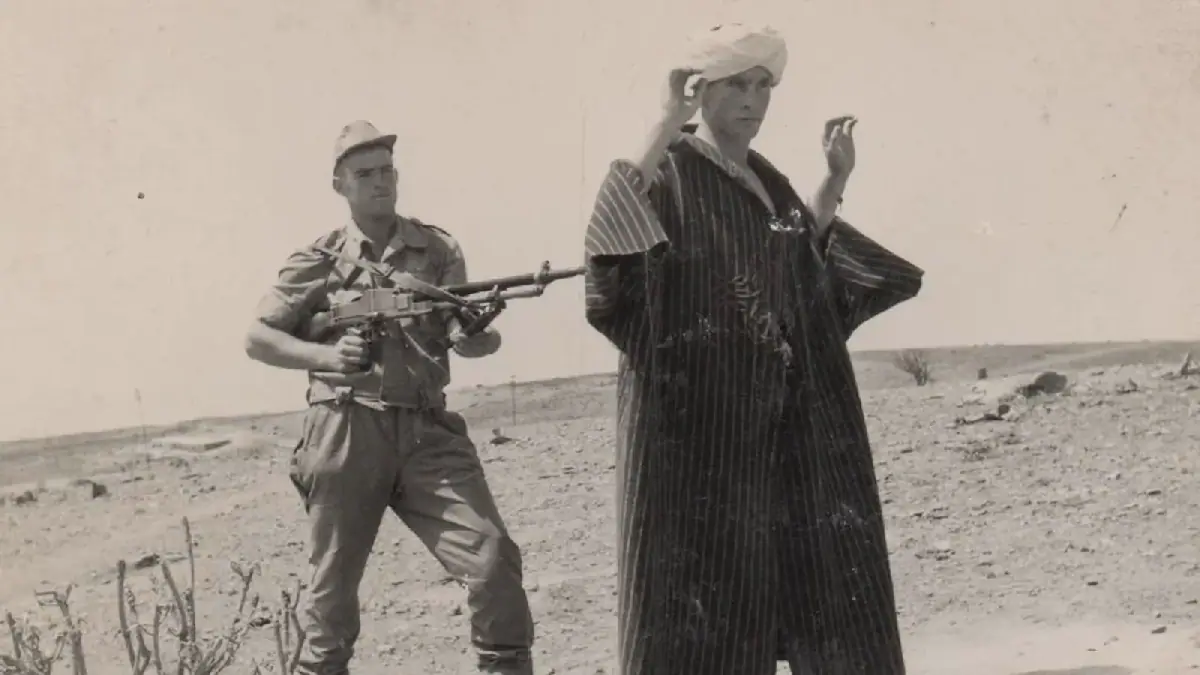
The battle of Sidi Ifni, which took place on November 23, 1957, was a pivotal event in the Moroccan struggle for independence. According to veteran resistance fighters, the Moroccan Liberation Army, also known as the Army of Liberation, launched a surprise attack on a Spanish garrison in the city of Sidi Ifni, located in the southern part of Morocco. The attack was planned and executed by a revolutionary wing within the army's leadership in southern Morocco.
The attack on Sidi Ifni was not an isolated incident, but rather a strategic move to expel Spanish colonial forces from the region. The Moroccan Liberation Army had been fighting against French colonial rule, and after Morocco gained independence in 1956, the army turned its attention to Spanish-controlled territories. The army's leadership saw the Spanish presence as an obstacle to Morocco's complete independence.
The Spanish garrison in Sidi Ifni was a key target for the Moroccan Liberation Army, as it was a major military outpost in the region. The army's fighters, led by new and more radical leaders, aimed to capture Spanish soldiers and officers, rather than killing them. The surprise attack caught the Spanish forces off guard, and several soldiers were taken prisoner.
The Spanish government reacted swiftly to the attack, mobilizing troops and deploying them to Sidi Ifni. The Moroccan government, led by King Mohammed V, who was on a visit to the United States at the time, also took action, ordering the royal army to move into the southern region and prepare for battle. The tension between Morocco and Spain escalated, with both countries engaging in a show of force.
The battle of Sidi Ifni had significant consequences for the Moroccan Liberation Army and the country as a whole. While the army's fighters achieved their objective of capturing Spanish soldiers, the operation was seen as reckless and poorly planned by some. The Spanish government denounced the attack as brutal and demanded international condemnation of Morocco.
According to Ibrahim al-Nawhi, a veteran of the Moroccan Liberation Army, the attack on Sidi Ifni was a turning point in the struggle for independence. Al-Nawhi, who was part of the army's leadership in southern Morocco, revealed that the operation was planned and executed by a group of radical leaders who were determined to expel Spanish colonial forces from the region.
The aftermath of the battle saw a significant escalation of tensions between Morocco and Spain, with both countries engaging in a series of diplomatic and military maneuvers. The Moroccan government faced international pressure to address the issue of Spanish prisoners of war, and the country's relations with Spain and France were severely strained. The battle of Sidi Ifni marked a significant milestone in Morocco's struggle for independence and self-determination.
Key points
- The battle of Sidi Ifni was a surprise attack by the Moroccan Liberation Army on a Spanish garrison on November 23, 1957.
- The attack was planned and executed by a revolutionary wing within the army's leadership in southern Morocco.
- The battle had significant consequences for the Moroccan Liberation Army and the country as a whole, leading to a major escalation of tensions between Morocco and Spain.
Reporting sources
- معركة سيدي إفني الأخيرة · Alakhbar