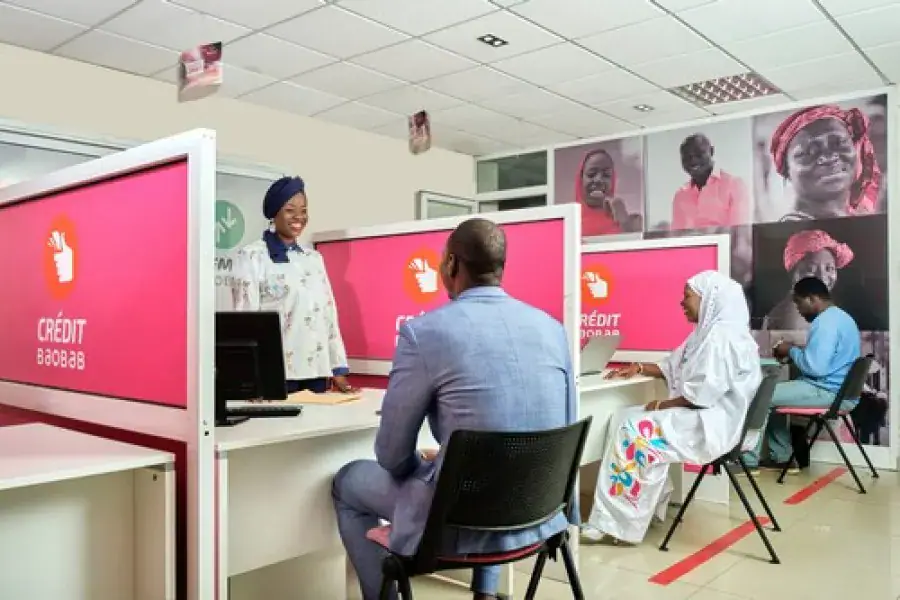
Baobab Mali, a microfinance institution, has reported providing over 5 billion FCFA in monthly credits to numerous Malian entrepreneurs. The institution, present in the country since 2013, has seen significant growth, with its net credit portfolio increasing from 33.3 to 36.2 billion FCFA in a year, and client deposits rising from 17.6 to 20.4 billion FCFA. These figures demonstrate the vitality of its clients, including traders, artisans, producers, and small enterprises that borrow, repay, and save more.
Baobab Mali is now wholly owned by the Egyptian group Beltone, which acquired the pan-African network in January 2026. This new ownership brings significant financial backing, enabling Baobab to support larger projects. The institution's clients can now access more substantial financing for projects that require greater investment, such as purchasing new equipment or opening multiple sites. This development is expected to have a positive impact on the Malian economy.
Baobab Mali has a strong local presence, with 18 agencies across the country, including 9 outside of Bamako. This network allows the institution to understand its clients' needs and provide personalized services. The agency's teams assess credit applications based on the reality of each business, considering factors such as sales rhythms, supplier payment deadlines, and harvest calendars. This approach enables Baobab to provide tailored financing solutions to its clients.
Baobab Mali has also introduced specific financial products to support women entrepreneurs. The Crédit Muso program offers loans ranging from 100,000 FCFA to 1 million FCFA over 10 months, with no filing fees. This initiative aims to promote women's access to credit and support their economic empowerment. The institution's commitment to financial inclusion is reflected in its diverse range of products and services.
The leadership of Baobab Mali is comprised of local professionals who have grown within the institution. The company's director-general, Mor Talla Diop Tine, summarizes the institution's approach as having "made a bet on Malian entrepreneurs in 2013." The majority of agency heads began as interns or portfolio managers, demonstrating the institution's commitment to developing local talent. This approach has enabled Baobab to build a strong team with a deep understanding of the local market.
Baobab Mali's growth has also contributed to the Malian economy through its tax payments. The institution has paid 3.5 billion FCFA to the public treasury. Its expansion has also created employment opportunities, with 352 employees, mostly young Malians, working for the institution. The company's investment in local talent has created a pipeline of skilled professionals who can contribute to the country's economic development.
Baobab Mali's partnership with international organizations, such as the International Finance Corporation (IFC), has also enhanced its capacity to provide financing to small and medium-sized enterprises (SMEs). In June 2026, the institution signed a risk-sharing agreement with IFC, which guarantees half of a loan portfolio worth up to 100 million dollars (approximately 56 billion FCFA). This partnership will enable Baobab to provide longer-term financing to SMEs, supporting their growth and development.
Key points
- Baobab Mali provides over 5 billion FCFA in monthly credits to Malian entrepreneurs.